malvernmugadzikwa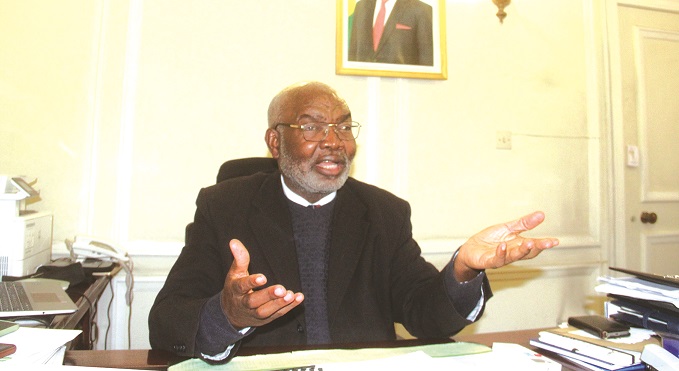
ZIMBABWE is preparing to host the 44th SADC Heads of State and Government Summit in August. The Government has since rolled out massive infrastructure development projects in preparation for the annual regional indaba. The Sunday Mail’s DEBRA MATABVU spoke to the Deputy Chief Secretary and National Coordinator for Flagship Programmes and Projects in the Office of the President and Cabinet, ENGINEER AMOS MARAWA (pictured above), on the ongoing preparations for the high-level summit.
********************
Q: Zimbabwe will host the 44th SADC summit later this year. Can you give us a brief outline of the progress made in preparation for the event?
A: Indeed, it is public knowledge that Zimbabwe will be hosting the 44th Ordinary Session of the SADC Heads of State and Government Summit, which will take place on August 17.
However, the summit will be preceded by other meetings.
The first is the meeting of senior officials — normally at permanent secretary level — from SADC countries that are participating at this summit.
The meeting of permanent secretaries prepares the agenda for the Council of Ministers, which normally involves ministers of foreign affairs, or their equivalent.
The ministers of foreign affairs then prepare the agenda for the Heads of State summit itself.
So, the SADC summit is actually a three-layered meeting.
The permanent secretaries will arrive on August 7, but their meeting will start on August 8 and run until August 12.
The foreign affairs ministers will arrive on August 12, but their meeting will start on August 13 up to August 15.
Then on August 16, the Heads of State begin to arrive. The summit takes place on August 17. Some Heads of State may come on the day of the summit itself.
Then on August 18, there will also be a programme led by His Excellency (President Mnangagwa) showcasing some projects Zimbabwe is undertaking that have an impact on the region.
One of those projects is the Museum of African Liberation, which is located somewhere in Warren Park, in the vicinity of the National Heroes Acre.
So, the Heads of State will be taken on a tour of the museum, where they will also see the progress being made in its construction.
There will also be a presentation on African history relating to the liberation of different African countries. But more importantly, because Zimbabwe is a member of SADC, the Government is allocating a piece of land to the SADC Secretariat to construct its own pavilion.
You may also recall that last year we had a visit from President (Filipe) Nyusi of Mozambique, where he led a groundbreaking ceremony on a piece of land allocated to Mozambique, where they can also put up their pavilion to showcase the Mozambican history of liberation.
We are giving liberation states at the museum about one acre to build their own pavilions and showcase their own history.
More importantly, we are giving SADC one acre, where they can put up a SADC pavilion, showcasing the history of SADC and objectives, et cetera. There will be a groundbreaking ceremony where we will hand over title deeds to the SADC Secretariat.
His Excellency (President Mnangagwa), as the incoming chairperson of SADC, the outgoing chairperson and the SADC Secretariat will perform the groundbreaking ceremony.
As you are aware, Zimbabwe has embarked on a major project in Harare — the Pomona Waste Management facility — which is employing modern and sustainable methods for handling waste. We used to talk of dump sites, but now we are talking about environmentally friendly ways of dealing with waste.
We are actually doing proper waste management there. We are burning waste that is combustible to produce energy, which will be fed into the national grid.
The other waste, which is non-combustible, is actually going to be put into properly constructed pits that are going to ensure that there is no seepage into the environment when the materials are rotting.
So, that is one of the first of its kind in the region.
So, on the same day, on the 18th, His Excellency, the President, is going to be showing his counterparts some of this technology at the site.
Q: And in terms of preparations . . .
A: In terms of preparations, we are at an advanced stage. In fact, our target is that all our preparations for the SADC summit itself should be done by June 30.
By and large, we want everything to be ready by that date. Currently, you will be aware that we had a visiting team from SADC, led by the Executive Secretary (Dr Elias Magosi). He had a technical team, which he was heading, and he had an audience with the Vice President (Dr Constantino Chiwenga), and he also made a courtesy call on His Excellency, President Mnangagwa.
On Wednesday afternoon (last week), he had a tour of the infrastructure and the other facilities that Zimbabwe is putting up to host the summit.
So, he had a bird’s eye view, from a helicopter, in terms of the road network that is being upgraded and rehabilitated, from the CBD (central business district) in town, all the way to Mt Hampden . . . looking at the Parliament building and also the new Government villas — 18 of them — that are being constructed by Government.
Q: Can you outline progress regarding development and rehabilitation of roads ahead of the summit?
A: Our foreign dignitaries from different countries, first and foremost, are coming by air; they arrive through the airport.
So, we are making sure that the arrival procedures for the delegates are streamlined, which means our immigration, our customs and other State agencies are all primed to be able to actually receive and seamlessly handle our guests.
We will create special channels that will ensure that there is smooth handling and passage through the airport so that they are not hampered by the general public that are using the facility.
So, that process is in place, but, more importantly, for our VVIPs — that is, the heads of delegations, the Heads of State and Government who are coming — we are in the process of constructing a new state-of-the-art pavilion, which again is going to be ready by June 30, like most of the other infrastructure that we are putting in place. So, the superstructure for the State Pavilion is already complete.
We are now doing the internal fittings . . . we are talking of lights, ventilation, the furniture, ablutions, kitchens and the lounges where they are going to be received and hosted.
Most of the equipment and furniture are already in the country.
I think in terms of progress, today I can safely say we are about 90 percent complete.
What is remaining are just the final touches that we will be doing through the month of June, which is starting basically at the end of next week (this week). So, as we take the guests from the airport, we are making sure that the access roads from the airport to the city centre and to all the major hotels and lodges, where we expect to host or accommodate the delegates, are all going to be revamped to ensure that there are no potholes.
Also that the street lights are working, and that there is beautification in terms of flowers along the way. That work is being done.
You know that Mt Hampden is actually being built as the new administrative city, a new capital for Zimbabwe. So, Mt Hampden is actually going to be the capital city of Zimbabwe. All Government ministries and other important systems like courts — that is, the Supreme Court, magistrates’ courts, where necessary — the State House and Government buildings are going to move to Mt Hampden.
So, to access Mt Hampden, the new city, we have two access roads.
Currently, people are using Old Mazowe Road — I think it is now called Xi Jinping Road — which starts from Westgate all the way to the new Parliament building on top of that hill.
So, to access that particular road, people normally use Julius Nyerere Way and they go into Second Street (Sam Nujoma Street), all the way to the intersection with Nemakonde Road (Lomagundi Road).
And then from Nemakonde Road, up to the traffic circle at the Westgate Shopping Centre, that road is being upgraded and dualised in sections. And the work is also on target.
We are expecting that the work is going to be finished by June 30.
So, it is going to be a dual carriageway, which means we have four lanes, two on either side.
And we are also revamping the street lighting and traffic lights along that road.
The contractor there is called Fossil and they are on target to actually complete the works, as I have mentioned. From Westgate on Xi Jinping Road, that section is being done by Bitumen World.
They are also on target to complete the rehabilitation . . . again, it is being dualised — two lanes on either side.
They will also improve the street lighting and any traffic signals that are along the way.
And they will then also construct the access roads to the Parliament building from Old Mazowe Road on both sides of the hill.
So, Old Mazowe Road is actually going past Mount Hampden hill, where the Parliament building is.
But they will do a loop road, which is now taking people from Old Mazowe Road up to the Parliament building.
That road is being done by Bitumen World.
But in order to connect the new Parliament building and the new city to the other access road, which is Bindura Road, we are building a boulevard that is 5,7 kilometres from the new Parliament building, all the way to its intersection with the new Mazowe Road, about two kilometres after we go past the current tollgate.
Development of that road is also on target.
In fact, work on a portion of that started this week (last week).
And we hope that it is going to be complete also by June 30, including street lighting, all the way from Old Mazowe Road through the loop road and the boulevard.
Now, at the intersection of Bindura Road, which is the new Mazowe Road, and the boulevard that I have mentioned, we are going to put up a traffic circle.
And that road from that intersection all the way linking through the current tollgate, all the way to Harare Drive here in Marlborough, and with the extension of Second Street up to the Lomagundi intersection, is being done by Exodus Company.
They are also dualising; they are putting two new lanes in addition to the current ones that are there.
So, they will then rehabilitate the existing two lanes and put in two brand-new lanes, as well as traffic signals and street lighting on the entire road, which is about 21km.
In fact, it will go beyond the intersection, all the way to the Henderson Research Institute.
You know the place where there is that Blue Ridge supermarket? That is where the new tollgate is going to be moved to.
So, that is 21,5km.
That road is going to be dualised, but the section up to the intersection with the boulevard to the new Parliament building is going to be complete by June 30, just like the other projects.
Q: With regard to accommodation for delegates, has the Government secured enough accommodation and what is the progress regarding construction of villas?
A: We are expecting that most of our delegates will be hosted at either Rainbow Towers, Meikles Hotel (Hyatt Regency) or Crown Plaza Monomotapa, which will all be used by Heads of State and their delegations.
Other delegates will be accommodated at other establishments, like Jameson Hotel, Holiday Inn, Cresta Lodge and Cresta Msasa, as well as other hotel establishments within the city. Of course, the Minister of Foreign Affairs (and International Trade) has also put in a brochure advising the would-be delegates that are coming for SADC meetings which hotels they are recommending for the delegates to stay.
Looking at the Heads of State, we have secured accommodation for up to 11 Heads of State and Government at Rainbow Towers and 48 standard rooms (king size) for VIPs and senior officials.
The renovations are already ongoing for the Heads of State accommodation and also their accompanying delegations.
This work, we also expect it will be completed by June 30. Under Hyatt, we are expecting to accommodate up to eight Heads of State. They are also offering 70 deluxe rooms to accommodate VIPs and other senior officials.
The renovations were done by the hotel owners using their own resources.
Hyatt is ready, as we speak, to host the Heads of State and their accompanying delegations.
The actual number of rooms available are being discussed with the Ministry of Foreign Affairs in line with requests that are coming from the SADC member states.
But we have enough rooms secured.
We are also expecting that at Monomotapa, we will have one presidential suite and two executive suites, which can also accommodate our VVIPs. And also, the coordination, as I mentioned earlier, will be through the Minister of Foreign Affairs, assisted, of course, by the Minister of Tourism.
But as a Plan B, the Government is also constructing 18 villas.
These are presidential villas and a conferencing facility in Mt Hampden.
We are expecting that these villas should be ready by mid-July. These are actually being constructed using a precast technology, which means we are actually manufacturing all the building elements outside the country, in the Middle East, in the UAE (United Arab Emirates) and in other places. And, as we speak, the panels are actually on the high seas, coming to the port of Beira.
And, as of next week (this week), we should start transporting the panels to the site.
And we already have a team of experts from the construction company called Mabetex from Switzerland.
We are expecting up to 500 experts who are coming to put together these villas.
And from the programme, they have told us a villa will take two days to erect.
They will have six teams working in parallel.
So, we are confident that they will be able to finish the whole process ahead of the summit.
As I said, by mid-July, they should be able to hand us the keys and we will be ready to host our VVIPs when they come for the summit itself.
We are also doing a conference centre and we hope it will be ready by mid-July; at the latest end of July.
This is where we are hoping to have some of the meetings, and, specifically, the summit itself can take place within the conference centre.
So, the meetings for the senior officials and Council of Ministers, we are convening them at the new Parliament building.
So, during the SADC summit, Parliament will be on break so that the whole facility is used for the summit.
Additionally, because we are putting in new developments in the new city, we need to upgrade the water system.
So, we are actually upgrading the water tank and water supply by improving the tank.
For the short term, we are drilling 10 more boreholes within the area and then the necessary pipework to feed the water into the water tank, which will then distribute water to the Parliament building, villas and the other developments that will take place in the new city area. This process is also ongoing and it will be completed by June 30.
But for the new villas, we are also dealing with wastewater reticulation.
Instead of a wastewater treatment plant, we are actually using modern technology, which are called biodigesters.
And this is also being done in conjunction with the City of Harare, and it is going to be complete like every other project by the end of June. And we are on target with regard to this work.
Q: How will the increased energy demand during the summit be met?
A: We are also upgrading the electricity supply because the new developments also create demand for power.
So, we are putting two dedicated 11kV lines, which are being erected by Zesa (Zimbabwe Electricity Supply Authority) from some supply points in Mt Hampden and the Westgate area.
So, we will have two dedicated lines and the associated substations and ancillary equipment. The work is ongoing.
They are also putting up the poles for the power lines and we hope that the cabling and everything else will be done also by the end of June.
The second line is also to boost power supply because we are talking of street lighting on this network of roads, which is in excess of 40 kilometres.
It is quite a huge demand, so one of the 11kV lines is actually dedicated to supply street lighting.
So, we are also on target on that one.
Q: What steps are being taken to ensure reliable internet and telecommunication services during the summit?
A: On the ICT (information and communication technology) side, all our institutions — TelOne, NetOne and Africom, as well as even Econet — are revamping their ICT connectivity to the Parliament building, especially to service the summit itself.
We are actually going to have 5G network at the Parliament building, and this will also be completed by June 30.
Q: How many jobs do you anticipate will be created from the infrastructure being put up for the summit?
A: On each of the road networks, I have mentioned Fossil, Bitumen and Exodus; I think at the peak of the works, each of the companies will have up to 500 people working, ranging from general hands to technicians and artisans.
This goes for electrification.
At the 18 pavilions we need artisans, carpenters, plumbers, et cetera.
In fact, on the villas, the contractor is bringing 500 and has asked for 300 local skilled people, who will be employed there for the next two months. In addition, areas around the hotels that will have delegates are going to be spruced up with an overlay of asphalt to ensure there are no potholes.
We are going to improve the street lighting along those roads.
We are also going to revamp all the roads in town.
This is also generating additional employment for people.
Q: How will traffic congestion be managed during the summit?
A: The congestion that is happening is simply because we have closed some sections of the roads. We hope that when the works are completed by June 30, the congestion will be reduced.
However, we still have peak hours like any city in the world, so we are working with our counterparts in the City of Harare, and ZRP (Zimbabwe Republic Police) will control traffic, especially on those roads leading to hotels.


 Online Reporter