Online Reporter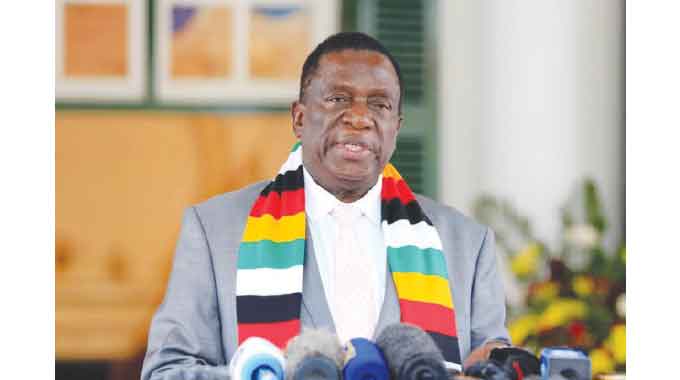
Lonias Rozvi Majoni
IN the constantly shifting landscape of global geopolitics, a single sentence can carry the weight of an entire nation’s destiny.
Such is the case during the ongoing 3rd session of the World Governments Summit in the United Arab Emirates.
This prestigious gathering, underway in Dubai, has brought together over 35 Heads of State and 150 governments to shape the future of governance.
It is on this premier global stage that President Mnangagwa, has once again demonstrated the poise of a seasoned grandmaster and a true statesman.
Amidst the high-level dialogues of the summit, the President was asked by renowned commentator Tucker Carlson to provide Zimbabwe’s official stance on the volatile situation in Venezuela.
The context of this inquiry is particularly sharp, as on January 3, 2026, the global community witnessed a significant shift in the region following the United States’ military operation that removed President Nicolás Maduro.
The question, therefore, sought to lure the President into a geopolitical trap; either to condemn a long-standing revolutionary ally or to endorse a process that might draw the ire of competing powers.
With the grace of a diplomat and a touch of characteristic Zimbabwean humour that disarmed the room, President Mnangagwa delivered a response of profound strategic depth.
He asserted that Zimbabwe would not pass judgment on the internal affairs of a sovereign state, as it remains the sole prerogative of the Venezuelan people to determine their own path.
This masterful display did not merely deflect a difficult question, but it reaffirmed Zimbabwe’s adherence to the principles of sovereign equality and non-interference.
It was not the passivity of the uninterested, but the strategic calculation of a leader who understands that in the theatre of global power, the most potent statement is often the refusal to become a pawn in someone else’s narrative. This masterstroke was far more than a mere tactical deflection, but it represented a robust application of core International Relations theories and established legal doctrines. By refusing to succumb to the exclusionary logic of the moment, the President’s stance became a living embodiment of sovereign equality as grounded in Article 2(1) of the UN Charter, which asserts that all states, regardless of their economic or military stature, enjoy identical legal standing.
His refusal to meddle in the internal affairs of Caracas upheld the long-standing principle of Westphalian sovereignty, a cornerstone of customary international law that prohibits external intervention in domestic jurisdictions.
In an era of escalating “Great Power Competition,” this display of strategic autonomy ensured that Zimbabwe remains a principled, independent actor rather than a client state or a narrative instrument for external interests.
Furthermore, this conduct serves as a vivid manifestation of the Second Republic’s “Engagement and Re-engagement” strategy, built upon the pragmatic philosophy of being “a friend to all and an enemy to none.”
Through maintaining this neutral, law-based position, the President protected the integrity of the “Brand Zimbabwe” image, ensuring it remains synonymous with stability, predictability and a profound respect for international norms.
Ultimately, these actions reflected the core of the national mantra; Nyika inovakwa, inotongwa, inonamatigwa nevene vayo, which posits that a country must be built and governed by its own people.
In defending Venezuela’s right to self-determination, the President was simultaneously safeguarding Zimbabwe’s own right to sovereign development and prosperity, free from the dictates of external powers.
This sophisticated conduct stands in stark contrast to the historical patterns of former opposition figures and certain media activists.
In the past, individuals such as Nelson Chamisa, Tendai Biti, and the late Morgan Tsvangirai frequently utilised international platforms to invite external pressure upon their own nation. Rather than maintaining patriotic and diplomatic interests, these figures often sought to dismantle Zimbabwe’s global standing for narrow political leverage.
Similarly, activist journalists like Hopewell Chin’ono have often used their reach to amplify negative narratives, risking the systematic character assassination of the Republic for the sake of external validation.
Where these figures have opened their beaks to invite meddling, President Mnangagwa has demonstrated the intelligence principle of compartmentalisation.
He recognises that high-level diplomacy is not a spectator sport for the uninitiated.
True patriotism involves the discipline of knowing when to speak and when to let the State’s silent, professional machinery work to protect the beautiful House of Stones from the crossfire of superpowers.
The President’s masterstroke has ensured that while the storms of global politics may rage, the Zimbabwean ship remains steady.
His leadership proves that Zimbabwe’s foreign policy is not a relic of the past, but a living instrument of national survival and sovereign prosperity.