Online Reporter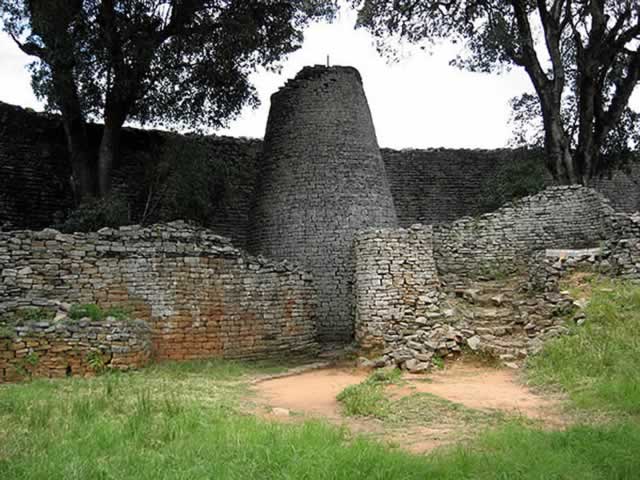
Ezra Chadzamira
MASVINGO province stands at the cusp of an economic transformation.
Based on the Zimbabwe National Statistics Agency (ZimStat) 2023 accounts, Masvingo province’s Gross Domestic Product (GDP) at market prices was estimated at approximately ZWL9,88 trillion, equivalent to US$2,6 billion.
These are the most recent figures available to us. We are confident that reaching an US$8 billion economy is achievable.
ZimStat has a significant role to play, given that a substantial portion of the province’s vast resources, such as land and water bodies, remain largely unmonetised.
Unlocking the economic potential of these resources through effective data collection, analysis and policy support is crucial for driving sustainable development and maximising Masvingo’s growth prospects.
The province’s economy is fundamentally rooted in its abundant natural resources. The economic activities are predominantly anchored in mineral extraction, irrigation-based plantation agriculture, subsistence farming and vibrant retail and trade sectors. Additionally, agro-processing and tourism, centered around the historic Great Zimbabwe Monuments and Gonarezhou National Park, play a significant role in driving economic growth and development in the region.
According to the ZimStat 2023 results, the major contributors to Masvingo’s economy, were:
- Wholesale and retail trade
The sector contributed 18,6 percent to total GDP in 2023. The volumes traded during each transaction tend to be relatively high, and this could have been caused by the province’s proximity to South Africa and its road network necessitates a lot of wholesale and retail trading in Masvingo urban, as well as various growth points within the province.
- Agriculture
The sector contributed 17,5 percent to the total GDP in 2023.
It encompasses the cultivation of key crops such as sugarcane, maize, cotton and groundnuts, as well as the rearing of livestock including cattle, goats and poultry.
- Mining and quarrying
The sector accounted for 12,5 percent of the total in 2023. Key minerals produced include gold, platinum, chrome, coal, asbestos, diamonds, iron ore and emeralds.
The Government is actively implementing supportive measures to promote industrialisation, such as reducing duties on capital equipment and facilitating the importation of specified raw materials.
- Manufacturing
The manufacturing industry contributed 9,2 percent to the provincial GDP. Masvingo province is endowed with diverse industrial resources and is home to some of the country’s largest manufacturing companies. The Government is implementing supportive measures to promote industrialisation in the province, including facilitating the importation of key raw materials.
- Information and communication
This sector contributed 7,5 percent to the provincial GDP. Mobile phones have demonstrated significant potential to enhance financial inclusion among rural populations, enabling banks and other lenders in urban areas to offer services such as loans and savings accounts to previously underserved communities.
It is important to point out that small and medium enterprises (SMEs) have a critical role in growing the provincial economy, hence the thrust on setting aside land in all the nine local authorities for the purpose of developing safe markets for the SMEs.
The role of the Government is to provide strategic policy direction to the broader economy, particularly by promoting the ease of doing business in its various aspects.
The Second Republic has consistently championed private sector-led investments, recognising their critical contribution to economic growth and development.
In line with this approach, the Government has facilitated the implementation of several key flagship projects, including the revitalisation of Sino Bikita Minerals, the 132 KVA power line from Tugwi (Mashava) to Bikita Minerals, the ZhongXin Mashava Chrome Smelter Plant and the 5 megawatt (MW) Great Zimbabwe Hydropower Plant.
Additionally, significant initiatives such as the Kilimanjaro irrigation project spanning 4 000 hectares (ha), the development of 722ha of new irrigation land across various locations (Banga, Pikinini Jawanda, Bwanya, Bindamombe, Malikango, Zvinyaningwe, Chizumba, Lowlands and Gororo), the construction of 102 business units, the Mwenezi Multi-Purpose Centre and the Munhumutapa Housing Scheme exemplify the Government’s commitment to fostering economic empowerment and infrastructure development.
Additionally, the Government has addressed critical infrastructure needs by reconstructing the Harare-Beitbridge road, thereby enhancing connectivity and trade efficiency.
Furthermore, through devolution funds, the Government has constructed over 30 health centres to improve healthcare access and ensure the well-being of the population. Schools were also built using the devolution funds in order to reduce walking distances.
New projects
A range of transformative projects are underway, fuelling the march towards building an US$8 billion economy, namely, a 15MW Tugwi Mukosi Hydro Power Project, the over-28 000ha new irrigation scheme being developed in the Lowveld using Tugwi Mukosi Dam water, a new sugar mill for Chiredzi, the proposed smart city around Tugwi Mukosi, the proposed Runde Tende Dam, a proposed 5MW power plant at Bangala Dam to start late this year, a US$600 million new lithium mine in Bikita district and the proposed Great Zimbabwe Monuments environs developments.
In addition, there is the granting of title deeds to A1 and A2 farmers, the proposed US$200 million solar plant in Chiredzi district, the ecotourism development in the Sengwe Tshipise area (Great Limpopo Transfrontier Park), the proposed new Masvingo City Airport, the establishment of the waste-to-energy project in Masvingo city, resuscitation of the Cold Storage Company in Masvingo province, resuscitation of asbestos mining at Mashava and new gold mines around Ngundu area in Chivi district. There is also the urban areas expansion in Masvingo city, Chiredzi town and all growth points, with Gutu Mpandawana already having town board status. Jerera, Nyika and Chivi growth points are angling for town statuses.
The provincial leadership aims to leverage low-hanging fruits such as the Tugwi-Mukosi Dam to drive overall provincial economic growth by harnessing its potential for irrigation, hydroelectric power and tourism development.Additionally, the Provincial Investment Committee will play a crucial role in attracting and supporting investors, thereby strengthening the ease of doing business and fostering sustainable economic development in the region.
The US$60 million lucerne project in Chiredzi South, spearheaded by Kwekwe-based dairy processor Dendairy, is still very much on the table.
Discussions with all relevant stakeholders are ongoing, with a focus on establishing a model that ensures a win-win situation for all parties involved. The project aims to establish a 12 000ha lucerne farm in northern Chikombedzi, within Chiredzi South. Lucerne, a high-protein forage legume cultivated under irrigation, is crucial for supporting livestock feed production, promoting sustainable and cost-effective livestock farming.
Beyond its primary role in livestock support, the project is expected to stimulate infrastructure development, including the construction of modern roads and a processing plant, thereby driving rural industrialisation and agricultural modernisation in the region.
Harnessing water resources
Masvingo province, home to 54 percent of Zimbabwe’s dammed water, is actively working to unleash its vast irrigation potential and position itself as the country’s breadbasket. Currently, over 4 039ha are under small-scale irrigation, supporting local farmers, while more than 54 000ha are dedicated to sugarcane production.
The province has already adjudicated over 28 000ha of new land to be irrigated using water from the Tugwi-Mukosi Dam, unlocking significant agricultural opportunities.
Moving forward, the focus is on developing both large-scale commercial irrigation schemes and expanding small-scale irrigation initiatives, including the 722ha already identified, to enhance productivity, food security and economic growth across the region.
Importance of the sugar industry
The Masvingo provincial leadership recognises the sugar industry’s critical role in the province’s economy. The sugar industry is the second biggest employer after the Government with over 10 000 workers.
Efforts are underway to improve the industry, stimulate growth and create jobs and tax revenue.
One key initiative is expanding the area under sugarcane cultivation, exemplified by the new Kilimanjaro project. The province is actively working to improve productivity by establishing a clear division of responsibilities. The Agricultural and Rural Development Advisory Services will oversee sugarcane cropping, while the Ministry of Industry and Commerce will manage sugar processing. Furthermore, the Government is committed to seeking efficiency gains within the sector through collaboration and negotiation with relevant stakeholders.
Giving back
The provincial leadership in Masvingo is actively advocating for big companies such as Bikita Minerals, Tongaat Hullet Zimbabwe and Renco Mine to make meaningful contributions that benefit the local communities where they operate.
In line with national and local laws, including the Community Share Ownership Trusts framework and the Mines and Minerals Act, the leadership emphasises the importance of corporate social responsibility (CSR) and equitable benefit-sharing. For example, Bikita Minerals did very well in this regard and this includes construction of roads, sinking of boreholes for the community, building and equipping clinics and schools.
Promoting value addition
Masvingo province is proactively working to promote value addition and transition the local economy from being predominantly extractive to a more diversified and industrialised one.
The provincial leadership emphasises the importance of adding value to raw materials such as minerals, agricultural produce and other resources to maximise benefits for local communities and the economy as a whole. To achieve this, Masvingo consistently coordinates and aligns all relevant policy frameworks, ensuring a unified approach towards industrialisation and value addition.
The province is actively engaging with stakeholders across Government, private sector and development partners to develop and implement strategies that encourage local processing industries, agro-processing and beneficiation initiatives.
For example, sesame and paprika processing plants were set up at the Rutenga Industrial Park in Mwenezi district. The Great Zimbabwe University is also into processing of traditional grains in Chivi district.
Furthermore, the province is advocating for investment in infrastructure, technology and skills development, which are essential for value addition activities. Examples include the Mapfura processing plant in Mwenezi district. By doing so, Masvingo aims to create more jobs, increase local revenue and reduce reliance on raw resource exports, thereby fostering sustainable economic growth and development.
Above are excerpts from an interview by The Sunday Mail’s George Maponga with the Minister of State for Masvingo Provincial Affairs and Devolution Ezra Chadzamira.



 Bongani Ndlovu