Online Reporter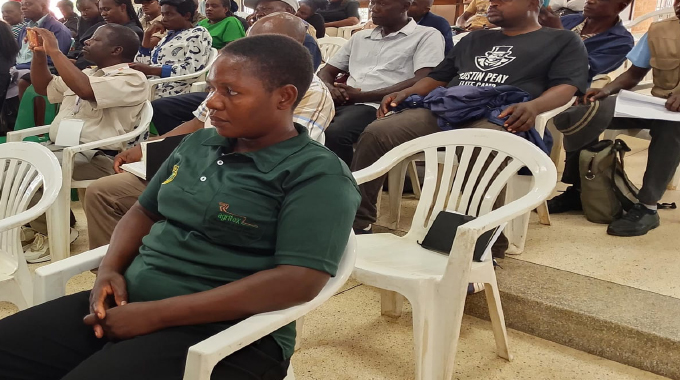
Sikhumbuzo Moyo, [email protected]
MATABELELAND North province has set a target of 3 000 hectares in the coming winter wheat season with farmers urged to identify quelea bird roosting sites as part of efforts to reduce crop losses.
Despite falling short of its 2 500 target last season, provincial agronomist Ms Khethiwe Nungu said the target was within the province’s reach, especially when over 1 700 farmers have registered to grow wheat.
Ms Nungu was speaking at a provincial winter wheat seminar held at Mhlahlandlela Government offices in Bulawayo yesterday, which was graced by the Agricultural and Rural Development Advisory Services (Ardas) chief director, Mrs Medlinah Magwenzi, Matabeleland North provincial director, Mr Sibangilizwe Dlodlo, Agritex officers as well as farmers from the province.
Ardas provides essential technical expertise, extension services, and rural development programmes to improve agricultural productivity.
“We had set a target of 2 500 hectares last season and managed to plant 2 358 hectares. This year, we are aiming for 3 000 hectares,” she said.
Ms Nungu said 1 754 hectares have so far been registered for wheat production this season, but warned that limited irrigation infrastructure could slow progress towards achieving the new target.
“We only have 14 irrigation schemes in the province, which remains a key limiting factor in expanding wheat production,” she said.
At national level, Zimbabwe is targeting 125 000 hectares under wheat this season as part of efforts to strengthen food security.
Mrs Magwenzi said early detection of roosting areas allows for more effective and cost-efficient control of the destructive birds before they descend on crop fields.
Quelea birds — particularly the highly destructive Red-billed quelea — are known to roost in large colonies in dense trees, shrubs and reed beds, often near water sources and feeding areas. These sites can host thousands to millions of birds, making them key targets for co-ordinated control operations.
“Early identification of these roosting areas allows for timely intervention, reducing the extent of damage to crops such as wheat and sorghum,” said Mrs Magwenzi.
In an interview at the end of the seminar, Mrs Magwenzi said the Indaba was held so as to apprise the farmers on the importance of wheat production towards improving food security in the country.
“We are saying to our farmers, arise and take up wheat farming seriously during this winter season. We also want to assure them that production resources from inputs are readily available in the form of contractors as well as through the Presidential Input Programme (PIP),” said Mrs Magwenzi.
She said the PIP comes from the President’s desk, targeting mainly the smallholder farmers and irrigation schemes, who are not able to access their own resources.
Mrs Magwenzi urged farmers to take farming, in whatever form, as a business.
“We have trained our farmers to appreciate that whatever they put in the soil or in the animals as a resource, they must be able to get what we call profit. Gone are the days of subsistence farming; we have graduated from that,” she said.