Online Reporter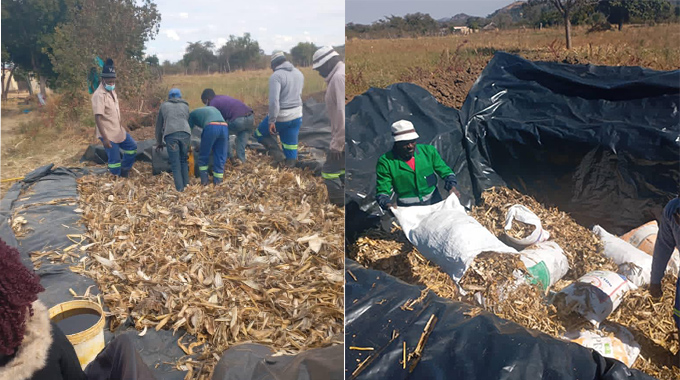
Sukulwenkosi Dube-Matutu, [email protected]
MATABELELAND South communal livestock farmers have embraced fodder production and feed formulation as part of efforts to sustain their animals during dry seasons.
Last year, the province lost about 19 000 cattle to the El Niño-induced drought. This served as a wake-up call for farmers, who have now taken up silage and fodder production for the first time, while others have intensified these activities.
Ms Beauty Nkomo, a member of Siyathuthuka Farmer Field School in Insiza District, said she had always overlooked the importance of growing fodder crops until the drought struck.
“I always saw some farmers growing fodder crops and extension workers also emphasised their importance, but I overlooked it. The drought we experienced last year left us in despair and as farmers we are still trying to recover. I lost 10 cattle and I was left with eight.
“Now I know the importance of growing fodder crops. In our garden project we have a variety of fodder crops such as lucerne, lablab, sunn hemp and bana grass. This farming season I am going to set aside a plot for fodder crops, which I will preserve and feed to my animals during the dry months,” she said.
Mr Khumbulani Nyoni, a communal farmer from Gwanda District, said Agritex, through its extension workers, had provided farmers with adequate knowledge on fodder production. He said fodder also helps to ensure that farmers have access to nutritious feed for their animals for better performance.
Mr Nyoni said fodder crops are more affordable compared to buying commercial feed.
“Growing fodder crops is an affordable method of ensuring that animals have access to quality feed during dry conditions. In addition to the education we have received on growing fodder, we have also been equipped with knowledge on feed formulation, where we mix our fodder crops to bring out the best nutritive value and then preserve it for future use.
“This is affordable as we can use locally available resources, unlike buying commercial feed which is beyond our reach. As communal farmers we now have a better understanding and we are embracing fodder production and feed formulation,” he said.
Government, through the Agricultural and Rural Development Advisory Services (ARDAS), has rolled out training on feed formulation for communal farmers as part of efforts to capacitate them.
This is also part of measures to prepare farmers for possible droughts.
Matabeleland South ARDAS deputy director, Mr Bhekilizwe Ncube, said the training formed part of climate-proofing and drought-mitigation strategies in the livestock sector.
He said by adopting feed preservation methods, the province can ensure livestock feed availability, support cattle production and enhance food security.
@DubeMatutu