Online Reporter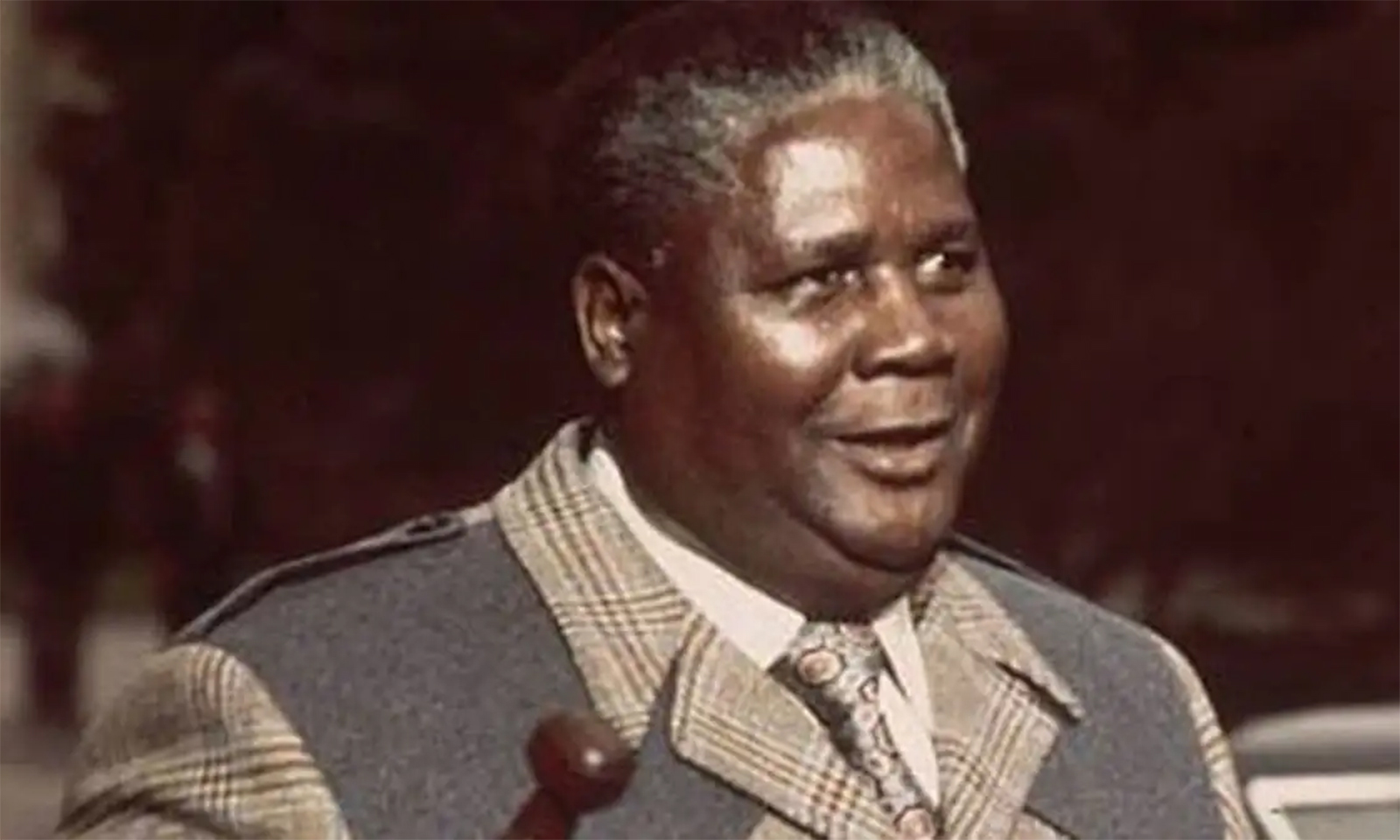
Richard Muponde
Zimpapers Politics Hub
THE sweeping wave of development unfolding in Kezi–Maphisa and surrounding districts ahead of the 2026 Independence Day celebrations represents far more than routine infrastructure preparation, but a symbolic and material fulfilment of the lifelong aspirations of the late Vice President Joshua Mqabuko Nyongolo Nkomo, affectionately known as Father Zimbabwe.
Born in the St Joseph’s Mission area of Matobo District, a stone’s throw from the Independence celebrations venue, the late Vice President Nkomo dedicated his life to the liberation of Zimbabweans.
Today, the flurry of projects across Matabeleland South signals the fruition of his enduring vision, a modernised, empowered and economically active region integrated into the national development matrix. The Government’s commitment to complete 43 legacy projects ahead of Uhuru celebrations demonstrates the Second Republic’s determination to anchor national events in tangible grassroots transformation.
Few liberation icons articulated the link between land, empowerment and prosperity as consistently as Father Zimbabwe. His famous philosophical inversion, that to become rich one must reverse the word mali (money) to lima (farming), captured his deep conviction that Zimbabwe’s wealth lay in productive land use and broad-based empowerment.
The late Vice President Nkomo did not merely preach agricultural transformation; he viewed it as the cornerstone of national dignity and self-reliance. His political journey, from nationalist mobilisation to post-independence nation-building, was driven by a desire to see ordinary Zimbabweans control productive resources and participate meaningfully in the economy.
The current development thrust in Matabeleland South, therefore, resonates profoundly with this philosophy. The upgrading of irrigation-linked road networks, rehabilitation of Kezi Hospital, drilling of boreholes and construction of schools collectively strengthen the productive capacity of communities, precisely the empowerment model the late Vice President envisioned.
The selection of Maphisa Growth Point as host of the 2026 Independence celebrations is historically and politically significant. This is a district steeped in liberation history, a corridor through which countless recruits passed on their route to the armed struggle and a site that hosted early unity efforts between nationalist formations.
Under the Second Republic led by President Mnangagwa, the rotational hosting of Independence celebrations has evolved into a deliberate development instrument. What was once largely ceremonial has become a powerful catalyst for infrastructure investment in previously underdeveloped areas.
In Matobo District, the impact is already visible. The planned completion of 43 projects, spanning clinics, schools, roads and water systems, reflects a targeted strategy to convert national commemorations into engines of local transformation. This approach speaks directly to Father Zimbabwe s lifelong emphasis on inclusive national development.
Honouring the legacy of a liberation giant
The decision to spruce up the late Vice President Nkomo’s homestead in Ward 8 carries deep symbolic weight. It is not merely heritage preservation, but an affirmation that the sacrifices and ideals of liberation heroes remain central to the country’s developmental trajectory.
For many in Matabeleland South, the upgrading of Father Zimbabwe’s home, alongside the broader modernisation of the district, represents long-awaited recognition. It signals that the region’s historical contribution to the liberation struggle is being matched by contemporary investment in its future.
Indeed, one can metaphorically suggest that Father Zimbabwe is smiling in his grave. The district that nurtured his early political consciousness is being transformed through roads, health facilities, schools and economic enablers. This is legacy preservation in its most meaningful form, translating memory into material progress.
Second Republic’s infrastructure offensive in Matabeleland
The development momentum in Matabeleland South does not exist in isolation. It forms part of a broader infrastructure offensive by President Mnangagwa across the Matabeleland region.
Key flagship projects, notably the modernisation of the Beitbridge Border Post and the construction of Gwayi-Shangani Dam are strategically repositioning the region within Zimbabwe’s economic geography. The Beitbridge upgrade is enhancing trade efficiency along one of Southern Africa’s busiest corridors, while the Gwayi-Shangani project promises long-term water security, irrigation expansion and industrial growth. The list includes the Hwange Thermal Power Station Units 7 and 8, Bulawayo Kraal irrigation, Victoria Falls International Airport expansion, among other massive projects in the region.
Within Matobo itself, the tarring of the Gwanda–Maphisa Road, resealing of the Bulawayo–Kezi–Maphisa route, and the re-gravelling of hundreds of kilometres of rural roads are unlocking rural productivity. These interventions reduce transport costs, improve market access for farmers and stimulate local enterprise development, practical expressions of the late Vice President Nkomo’s empowerment doctrine.
Devolution in action: No Place Left Behind
Perhaps the most significant policy lens through which to view the Kezi–Maphisa transformation is the Second Republic’s Devolution agenda. By rotating national events across provinces, Government has operationalised its oft-stated commitment to leaving no one and no place behind.
Matabeleland has historically carried perceptions of marginalisation dating back to the early post-independence years. The concentrated investment now visible in Matabeleland South directly confronts that narrative. With 188 devolution projects initiated province-wide and dozens nearing completion, the region is experiencing measurable service delivery improvements.
The provincial service delivery average of 73 percent, with an ambitious target of over 90 percent by 2030, indicates a structured, metrics-driven approach to development. This is not ad hoc spending, but a coordinated push aligned with national planning frameworks.
Infrastructure development in Kezi–Maphisa is already generating local economic multipliers. Construction works are creating employment, empowering local contractors and injecting liquidity into rural communities.
More importantly, the improved road network will permanently alter the district’s economic prospects. Farmers linked to schemes such as Makwe Irrigation and ARDA Antelope will enjoy faster access to markets. Tourism circuits in Matobo stand to benefit from better connectivity. Health and education infrastructure upgrades will improve human capital outcomes.
These are precisely the kinds of structural changes Father Zimbabwe believed were necessary for genuine empowerment. Development, in his worldview, was never about symbolism alone, it was about creating conditions for ordinary citizens to prosper through productive work.
The choice of Maphisa also carries powerful unity symbolism. It was here that early rapprochement efforts between nationalist rivals helped pave the way for the historic Unity Accord. Returning Independence celebrations to this soil reinforces the narrative of national cohesion.
President Mnangagwa’s presence at the 2026 commemorations will therefore represent continuity between liberation memory and contemporary development. The Second Republic signals that unity must translate into shared prosperity across all provinces.
This alignment between historical memory and present-day infrastructure delivery strengthens the legitimacy of the Devolution model while deepening national identity.
Vision 2030 and the late VP Nkomo Legacy
Ultimately, the Kezi–Maphisa development surge must be understood within the broader national ambition of achieving an Upper Middle Income economy by 2030. Guided by the philosophy “Nyika Inovakwa Nevene Vayo / Ilizwe Lakhiwa Ngabanikazi Balo”, the Second Republic is positioning citizens as both beneficiaries and drivers of development.
The ongoing projects in Matabeleland South align squarely with National Development Strategy 1 and NDS 2. By investing in roads, water systems, health facilities and education infrastructure, Government is laying the foundations for sustained rural industrialisation and agricultural productivity.
In this context, the spirit of Cde Joshua Mqabuko Nyongolo Nkomo looms large. His insistence on land-based empowerment, national unity and inclusive growth finds practical expression in the transformation of his home district.
Father Zimbabwe ‘Smiles’
As bulldozers reshape Maphisa and new infrastructure rises across Matabeleland South, the symbolism is unmistakable. The son of St Joseph’s Mission, Father Zimbabwe himself, would likely view these developments as deeply gratifying.
From the upgrading of his homestead to the modernisation of the wider province, the Second Republic has woven liberation memory into contemporary development practice. The doctrine of leaving no one and no place behind is finding concrete expression on the ground.
If the current momentum is sustained, the journey towards Vision 2030 will carry with it the quiet approval of the liberation generation. One can fittingly conclude that Father Zimbabwe is smiling in his grave at the National Heroes Acre, satisfied that the district that shaped him, and the nation he helped liberate, is marching forward under President Mnangagwa’s stewardship toward shared prosperity by 2030.