malvernmugadzikwa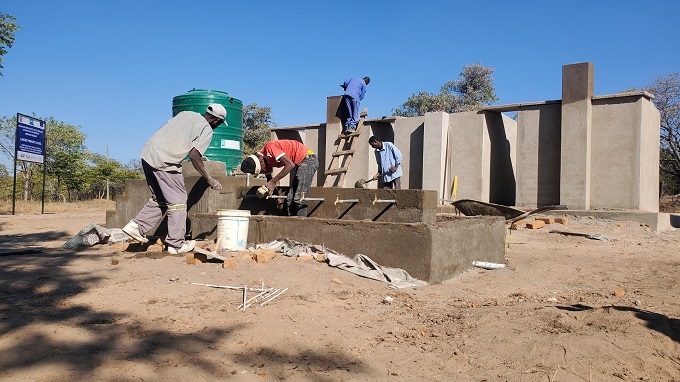
Theseus Shambare
IN the wake of the El Niño-induced drought, the story in some parts of Matabeleland South province is heartbreaking.
Mangwe and Matobo, which lie in natural regions 4 and 5, were the hardest hit among the province’s seven districts.
Some villagers in the affected districts did not harvest anything.
They also lost their livestock, including donkeys, which are hardy animals that are known to be drought-tolerant.
However, after President Mnangagwa declared a State of Disaster, the Government — in collaboration with UNICEF, the Food and Agriculture Organisation of the United Nations (FAO) and its implementing partners — launched the Enhanced Resilience for Vulnerable Households in Zimbabwe (ERVHIZ) project.
ERVHIZ led to the establishment of Tjingababili and Lingwe piped water schemes in Mangwe and Matobo, respectively, with villagers getting tap water at their doorstep.
The initiative seeks to increase access to potable water by drilling new boreholes and rehabilitating defunct ones in rural districts. It is also aimed at restoring defunct pipe water schemes in these areas.
There is a strong focus on solar power to ensure sustainable water supply under the School Improvement Grant (SIG) Water, Sanitation and Hygiene (WASH) programme.
Similar water schemes are set to be replicated in the remaining five districts of Beitbridge, Bulilima, Gwanda, Insiza and Umzingwane.
SIG also provides funding to financially constrained primary and secondary schools, as well as children with special needs.
This has helped Tjingababili Primary School to establish a one-hectare nutrition garden that also supplements the institution’s feeding programme.
“Before the system was connected, we used buckets to draw water for watering the school orchard and flowers twice daily, during break and lunchtime. It was tough,” said Awakhiwe Ndlovu, a Grade Seven learner at the school.
“We no longer walk long distances to fetch water. We just connect the hosepipe to water the orchard or school flowers, which is very convenient. This means we now have more time to rest, even to study during break time.”
Tjingababili Primary School headmaster Mr Christopher Mguni said: “Having young children carrying buckets and making several trips between the water source and the orchard was of concern to us.
“Without water, we would record at least 80 cases of absenteeism per day, which is a huge number from our enrolment of 472 learners.”
The school also received US$6 000 to construct a new kitchen to complement the institution’s feeding scheme. Learners are now entitled to two meals per day.
“This has seen our learners effectively participate in sports, drama and other non-academic activities,” Mr Mguni said.
In Lingwe, the water scheme employs sand-abstraction technology to pump water from the “dry surface” of Tshatshani River, supporting at least three surrounding villages and Lingwe Primary School.
Sand abstraction is an alternative technology for tapping subsurface water in silted and intermittent rivers for domestic use.
This method involves extracting water that accumulates in the sand beneath riverbeds, which can be a reliable source even during dry periods.
Headman Matshina, Mr Midas Ndebele (82), of Ward 8, under Chief Bidi, said the borehole, equipped with a solar-powered pump and an online chlorination system, has drastically reduced cases of waterborne diseases.
Mrs Martha Banda, a community WASH lead person, highlighted numerous challenges faced before the programme’s implementation, especially by children and women.
“We would travel for eight kilometres along bush paths to fetch just a bucket of water from ichibi (shallow water sources) in the Tshatshani River, which was not safe to drink. We also had reports of young girls getting raped along the way.
“Issues of gender-based violence were high, with conflicts often arising from water usage, which negatively affected children’s upbringing.”
An estimated 1 350 people from the three surrounding villages are directly benefitting from the water and sanitation project.
A local business centre and a dip-tank that serves at least 1 360 cattle also get water from the scheme. With the community depending largely on livestock, tick-borne diseases have been drastically reduced through intense dipping, which has now become a weekly routine at the Lingwe dip-tank.
Blessed with new water sources at their doorstep, beneficiaries can now produce horticultural products all year round, in line with the Presidential Rural Development Programme, which seeks to boost nutrition and generate income for both schools and rural households.
A one-hectare Lingwe Village Business Unit has since been set up and is currently teeming with horticultural crops, including cabbages, carrots, tomatoes and maize, which were previously foreign to the area.
A green belt is gradually emerging in Matabeleland South province, replacing the once arid landscape.


 Online Reporter