Judith Phiri, Zimpapers Business Hub
COMMERCIAL layer farmers across Matabeleland have called for more technical support, training and capacity-building initiatives to improve productivity, reduce operational costs and strengthen the sustainability of their poultry businesses.
Despite layer farming in Zimbabwe being a proven, reliable agricultural enterprise focused on producing table eggs for the growing urban and rural food economy, for years farmers have grappled with mounting operational losses, often struggling to keep their businesses afloat amid rising production costs and other challenges.
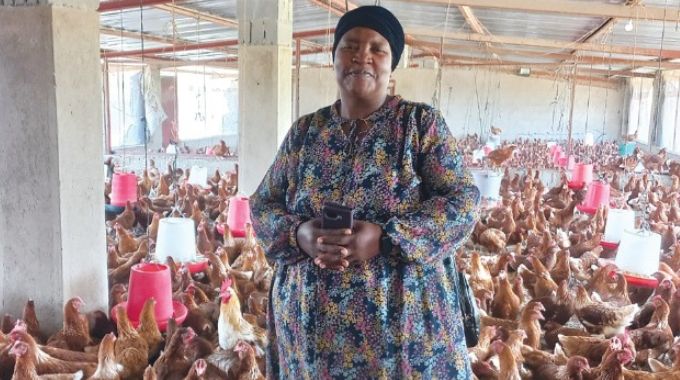
Having lost over 10 000 layer birds at one point, Mrs Joyce Tshuma of Sunfield Farm in Umguza District, who has been in the industry for over 10 years, knows too well the devastating impact that production challenges can have on poultry farming.
Disease outbreaks, high operating costs and inadequate technical support are threatening the sustainability of commercial layer enterprises.
“I do both layer birds and broilers, but my strength is in layer birds for egg production. I have encountered several challenges and some of them include staff turnover, the people that we get do not want to stay for a long time.
“Some come here to save some money and leave as soon as they get to their target. This then affects our production because it will take time to get new staff. While others also steal from us despite getting their salaries in full,” she said.
She said they are also faced with seasonal price drops in October and November as large-scale poultry producers release huge volumes of eggs onto the market, increasing supply and pushing down prices.
Mrs Tshuma said this makes it difficult for small-scale commercial layer farmers to compete and recover their production costs, further squeezing their profit margins.
She added: “We also have electricity challenges because not all of us can afford solar at the moment.
“However, this is one of the things I am considering doing here because reliable electricity is very important in poultry production. We need power to operate equipment, provide adequate lighting and ensure that the birds are kept under the right conditions.”
Concurring with Mrs Tshuma, Mrs Veronica Musarurwa, a commercial layer farmer based in Kensington who has been in the industry for over 15 years, also highlighted the challenges facing poultry producers, revealing that she had suffered significant losses in her farming operations.
“The high cost of production, disease management and other operational challenges continue to put pressure on commercial layer farmers, underscoring the need for greater technical support and capacity-building initiatives to improve the viability of our businesses,” she said.
She said that without adequate support, farmers were often left with little choice but to reduce their egg prices to remain competitive and retain customers, particularly when faced with competition from large-scale producers flooding the market with cheaper supplies.
This, she said, placed further pressure on already thin profit margins, making it difficult for commercial layer farmers such as them to recover production costs, reinvest in their businesses and sustain operations.
“Targeted support measures, including technical assistance, access to affordable inputs and training, are critical to help us as farmers improve efficiency and withstand market fluctuations.”
Mr Benjamin Tesa from Figtree said inconsistent supplies of day-old chicks and concerns over their quality were undermining production planning and increasing losses.
He said farmers sometimes waited between four and six months to secure chicks, with some experiencing high mortality rates after delivery.
“It’s very difficult to get day-old chicks. Sometimes you are in the queue; you wait for almost four to six months without getting those chicks and when you get them, they are of poor quality.
“For example, you buy 2 000 chicks and you have a mortality of almost 30 to 40 percent. So you find that the chicks that are sold in Bulawayo are of poor quality and this affects us as farmers,” he said.
Having visited the commercial layer farmers at their farms, global supplier of automated equipment for poultry, egg and pig production, Big Dutchman, sales executive for Zimbabwe (Layers), Mr Charles Ziwa said from his interactions and assessments, one thing has become increasingly clear.
“The success of a layer enterprise depends not only on the quality of birds, feed and infrastructure, but also on consistent and reliable technical support. During my engagements with farmers, I have observed several challenges that directly affect productivity and profitability.
“These include poor feed conversion efficiency, inadequate water and feeding systems, high mortality rates, biosecurity gaps, inconsistent production performance, manure management challenges and, in some cases, housing facilities that are not optimally designed or managed,” he said.
He said some farmers have significant investments in their operations, yet lack access to regular technical assessments that can identify problems early and recommend corrective measures.
Mr Ziwa said commercial layer production is a highly technical business and a small management mistake, if left unattended, can translate into substantial losses when multiplied across thousands of birds.
“For instance, a farmer experiencing a decline in egg production may assume the problem is nutritional, when the underlying cause could be heat stress, water availability, disease pressure, lighting management or a combination of several factors. Without proper technical guidance, farmers may end up addressing symptoms rather than the actual causes,” he added.
“Another concern is that technical support is often sought only when a crisis has already occurred.
What farmers need is a proactive support system involving regular farm visits, performance monitoring, technical training, proper record keeping and practical recommendations tailored to the individual farm. Early intervention is far more beneficial than waiting until production has significantly declined or losses have accumulated.”
He, however, said there was another dimension that should not be overlooked, being the emotional and psychological well-being of farmers.
Mr Ziwa said poultry farming is not just about birds and eggs; it is about people’s livelihoods, investments, families and dreams.
“Imagine a farmer who has invested their life savings into 10 000 layers, only to wake up to devastating mortality, a disease outbreak, a hailstorm-damaged facility, or another unforeseen disaster. Beyond the financial implications, such experiences can be emotionally overwhelming.
“We often talk about counselling in the context of other professions, but farmers also need someone to listen to them, encourage them and help them navigate difficult periods,” he said.
“When a farmer loses birds or experiences a major production setback, they need more than someone who simply points out what went wrong. They need professional guidance, reassurance and a practical recovery plan.”
He said that at Big Dutchman, their philosophy is to contribute to sustainable and efficient poultry production through appropriate technology, knowledge and support.
He said there was a need to move towards a culture where farmers are not left to figure out every challenge on their own and the industry needs stronger collaboration between equipment suppliers,
nutritionists, veterinarians, breeders and farmers.
“Ultimately, a productive layer farm is not built by infrastructure alone. It is built through knowledge, good management, continuous technical support and people who care about the farmer behind the business.
“If we want to increase egg production, improve efficiency and strengthen Zimbabwe’s commercial poultry sector, investing in the farmer’s technical capacity and well-being must become a priority,” he added.