Gibson Mhaka, Zimpapers Politics Hub
ACROSS Southern Africa, abundant energy resources sit uneasily alongside unreliable electricity supplies.
Mines need dependable power to process minerals, factories to manufacture goods, farmers to irrigate their fields and households to meet basic needs.
Yet Southern African Development Community (SADC) remains constrained by shortages, inadequate infrastructure and underinvestment.
The challenge is not simply to generate more electricity, but to mobilise capital, build cross-border infrastructure and turn available resources into affordable power, productive industries and jobs.
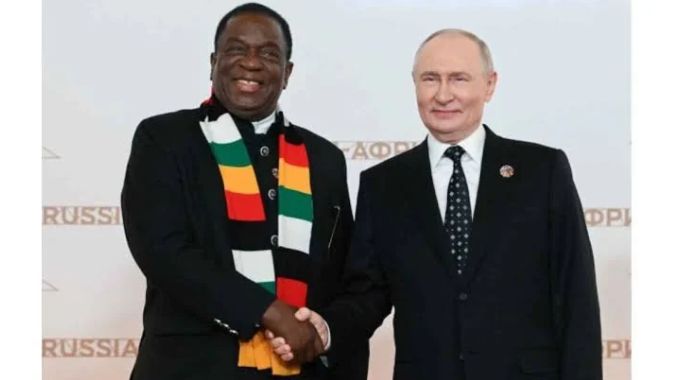
Against this background, the Eighth Summit of the Gas Exporting Countries Forum (GECF), held in Moscow on 27 October 2026, and the Russia–Africa Summit of 28–29 October offer SADC countries an opportunity to rethink how they finance and develop their energy sectors.
Their outcomes do not provide an instant solution to the region’s power shortages nor should they be treated as a substitute for domestic planning.
However, the renewed emphasis on resource sovereignty, long-term gas investment, technology cooperation and African industrial capacity creates an opening that governments, regional institutions and private investors should seize.
If pursued decisively by SADC member states, the frameworks, financing proposals and resource-sovereignty commitments emerging from Moscow could help address Southern Africa’s power crisis, while turning shared energy infrastructure into a foundation for deeper regional integration.
The urgency is clear. Speaking at the 11th Mozambique Mining and Energy Conference and Exhibition in Maputo last year, Zimbabwe’s Minister of Energy and Power Development, July
Moyo, said SADC faced “a persistent and significant energy supply challenge”, with only about 32 percent of rural communities having access to electricity.
“There is dependence on coal, approximately 74 percent of SADC’s electricity is generated from coal, contributing to environmental problems and limiting diversification,” he said.
Minister Moyo also noted that South Africa, Zimbabwe and Zambia had experienced widespread load-shedding, while climate change was affecting the water resources required for hydroelectric generation.
Zambia’s Energy Minister, Makozo Chikote, also called on SADC countries to collaborate in addressing regional energy challenges.
He argued that the region had the potential to meet its energy needs but lacked sufficient collaboration and harmonised policies to attract investment.
South Africa’s Minister of Electricity and Energy, Dr Kgosientsho Ramokgopa, speaking while co-chairing the 44th Joint Meeting of SADC Ministers Responsible for Energy and Water in South
Africa on 17 July 2026, stressed that “Energy security remains one of our region’s foremost priorities”.
He called for accelerated investment in electricity generation, regional transmission infrastructure, power interconnectors, energy efficiency and renewable energy technologies.
Their assessment highlights the need for regional investment. SADC does not lack energy resources; it lacks sufficient investment to develop and connect them.
The Zambezi and Inga river basins offer hydropower potential, Mozambique has extensive natural gas deposits, while Angola possesses significant oil resources. These assets will not deliver energy security without coordinated infrastructure, bankable projects and investor confidence.
For a region pursuing rapid industrialisation under the SADC Industrialisation Strategy and Roadmap, unreliable power is more than an inconvenience — it is an economic chokehold.
Factories operate below capacity, mining beneficiation is curtailed, and the promise of the Southern African Power Pool (SAPP), which links nine national grids into a regional electricity market, remains constrained by insufficient generation capacity and ageing transmission corridors.
The Moscow Declaration reaffirmed countries’ sovereign rights over their natural gas resources.
For SADC, resource ownership must translate into the ability to determine how gas is produced, processed, transported and used.
Sovereignty should mean negotiating partnerships from a position of informed choice and ensuring local economies capture lasting value.
Tanzanian oil and gas expert Fatma Amour described Russia’s proposal for an international gas bank as “a very important milestone”.
She argued that Africa’s central constraint was not a shortage of resources, but limited access to capital.
“If we create this bank, we will be able to jointly secure long-term financing for gas projects,” she said, while stressing that African countries must participate directly in decision-making and that the mechanism should be based on equality and transparency.
For SADC, such a financing instrument could help bridge the gap between resource potential and infrastructure development.
Gas projects require investment in exploration, processing plants, pipelines, storage facilities, transmission networks and power stations.
A transparently governed bank offering long-term finance could support projects that individual states struggle to fund, including those intended for domestic gas use rather than export facilities alone.
Amour cautioned against simply selling unprocessed resources. “We must not stop at simply selling our resources,” she said, arguing that gas should support industrial development, job creation and improved electricity access.
Mozambique’s gas could support power generation and regional supply, as well as fertiliser, petrochemical and manufacturing industries, creating value chains for local workers and businesses.
Amour also called for technology transfer and skills development, saying cooperation must become “a bridge for building our competencies, not create additional dependence”.
SADC governments should therefore negotiate training, research, local supplier participation and maintenance capacity into investment agreements.
Technology transfer should be measured by the number of engineers trained, businesses equipped and infrastructure that African institutions can independently operate.
Dr Kelvin Kemm, chairman of Stratek Holdings and chief executive of Nuclear Africa, said the Moscow Declaration’s affirmation of sovereign rights over gas resources was “terribly important”.
He urged African countries to treat gas as a long-term development resource rather than merely a temporary bridge between fossil fuels and renewable energy.
“It’s important for African countries to be able to develop gas as an actual long-term solution and not as an interim solution,” he said.
Kemm argues that energy choices must reflect African conditions. His “technology triangle” concept promotes solutions suited to local climates, infrastructure and markets. SADC should assess gas, hydropower, solar, wind, coal and nuclear options against reliability, cost, environmental impact and national needs. No single technology can resolve every country’s energy challenges.
Kemm also backed the proposed gas bank but said its success would depend on capable engineers, managers and credible project preparation. “Africa must be part of the solution for Africa,” he said.
External capital cannot compensate for weak institutions, unclear regulations or poorly prepared projects.
Governments must strengthen regulators, improve procurement transparency and develop dependable power-purchase agreements.
Analyst Soava Andriamarotafika cautioned that the Moscow Declaration provides coordination instruments but no binding legal safeguards against external pressure.
“Sovereignty must not remain a political declaration — it must become a real economic and institutional capacity,” he said.
Warning against replacing one form of financial dependency with another, he urged African countries to diversify partnerships and protect their national interests.
Regional integration presents another major opportunity. The Southern African Power Pool provides a framework for electricity cooperation, with nine SADC member states connected through a regional grid.
However, effective interconnection requires investment in transmission lines, generation, storage, cross-border trading and harmonised regulation. A power station can benefit neighbouring countries only when the necessary infrastructure and commercial agreements allow electricity to move reliably.
The Zimbabwe–Mozambique energy partnership illustrates the potential of such cooperation.
The two countries agreed to strengthen their energy ties, including plans to increase Zimbabwe’s fuel imports through the pipeline from three billion to five billion litres annually.
Such arrangements can strengthen supply security, but infrastructure development should be approached regionally, allowing neighbouring countries to share capacity, markets and investment.
Zimbabwe’s ambitions underline the scale of the task. Under its National Energy Compact, the country targets 5 432 megawatts of installed generation capacity by 2030, increased renewable energy capacity and universal household electricity access.
Achieving these targets requires private investment and reforms to address legacy debt, currency risks and tariffs.
Similar challenges across SADC reinforce the case for shared project preparation and stronger regional cooperation.
The Russia–Africa Summit’s action plan for 2027–2029 offers a broader framework for engagement, while GECF provides a platform for gas-producing countries.
SADC should use both platforms to attract investment, negotiate technology partnerships and develop infrastructure serving domestic and regional markets. Although the Trans-Saharan Gas
Pipeline is outside Southern Africa, its underlying principle of linking resources, markets and industries across national borders remains relevant.
Ultimately, the outcomes of the Moscow summits will matter only if they are translated into bankable projects and accountable partnerships.
SADC governments must coordinate their energy plans, reduce regulatory uncertainty, improve project preparation and offer fair returns to investors without sacrificing public benefit.
They must also ensure that gas development complements renewable energy and climate resilience rather than locking the region into poorly planned infrastructure.
This is where regional institutions must move beyond declarations and focus on coordinated, measurable delivery.
The choice before the region is not between energy sovereignty and cooperation, but how to use cooperation to make sovereignty meaningful.
By pooling markets, connecting electricity grids, mobilising long-term finance and insisting on local skills development and value addition, SADC countries can harness their energy wealth to power factories, mines, farms and homes.
Energy is the bloodstream of regional integration. Linking Mozambique’s gas fields, Angola’s oil resources, the Zambezi and Inga hydro-power basins, and Zimbabwe’s expanding solar and thermal generation capacity into a well-financed regional network could lower manufacturing costs, support cross-border value chains and create employment opportunities.
The Moscow summits have opened a window for SADC to strengthen its energy security and accelerate regional integration.
The task now is to turn that opportunity into tangible investment, reliable electricity and shared prosperity.