admin
admin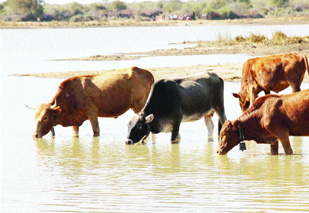
Cattle contribute to the growth of the beef industry both locally and internationally.
To most communal farmers, cattle are a cheap source of draught power, milk, meat and their skins are processed into leather products like mats and so on.
According to the ministry’s fact sheet, current cattle population stands at 5,2 million. Dynamic and well-researched livestock management programmes have been put in place to ensure that drought and other vicissitudes do not deplete the natural herd.
Livestock management includes improved methods of animal husbandry, cattle breeding, reduced livestock mortality enhanced support from public and private sector, improved access to markets and sustained economic beef and cattle prices.
Government departments such as Agritex and that on livestock production and veterinary services symbiotically work towards an improved livestock yield.
However, animal disease, high livestock mortality, poor animal husbandry skills, lack of support and markets and shortage of grazing have always been regarded as the biggest challenges undoing cattle ranching across the various farming regions in the country.
A recent Sunday News, story made sad reading. It highlighted that more than 200 000 cattle faced the threat of succumbing to starvation in Matabeleland South.
It was reported that unless urgent intervention is taken to feed cattle in the drought-prone region of Matabeleland South, thousands of them would die of starvation.
“Once the cradle of cattle ranching in the country, Matabeleland South’s livestock population has continued to dwindle over the years owing to a myriad of catastrophes such as recurrent drought and a spate of diseases,” it read in part.
There have been very serious calls from various stakeholders to declare the loss of grazing in the province a national disaster to ensure that the Government expedites crafting and implementation of strategies to contain the unfolding crisis.
The response to this imminent threat has, all the time, been wildcat panic which has seen farmers selling off their livestock at very meagre amounts.
Sometimes, farmers have sold their animals at prices as low as $200 per beast and below. Where the idea of selling has not been a choice, farmers resort to feeding their cattle with leaves.
Others choose to repatriate their cattle in search of green paddocks.
Commenting on the shortage of grazing, a livestock specialist in Matabeleland South, Mrs Simangaliphi Ngwabi, said:
“Some farmers are getting used to this scenario (lack of pasture) and will be prepared for any eventuality.”
Clearly, the farmers are in a serious predicament which threatens to exterminate their herds.
In the light of the challenge in Matabeleland region, the Government is urged to treble its resource allocation towards cattle ranching to enable farmers to buy stockfeed and other animal feed like guar beans, reportedly saving cattle in the Lower Zambezi in Mashonaland Central.
Agriculture, particularly cattle ranching, has great potential despite these challenges.
To that end, the Deputy Minister of Agriculture Mechanisation and Irrigation Development, Seiso Moyo said:
“The sector has a lot of potential though hindrances like high production costs and drought in areas that mainly specialise in cattle ranching is worrying.
“Farmers should come up with ways of supplementing the available resources for the sector to keep surviving. As Government we will keep helping farmers in any way we can because agriculture is the backbone of our economy.”
Cattle feeder reserves must be a priority to any serious farmer. The fire-fighting mentality of looking for alternatives when a disaster looms, must stop. Disaster preparedness is an acclaimed antidote to any natural catastrophes.
Enough Government money must be allocated to agriculture to enable farmers to pile up stockfeed reserves so that cattle do not die of starvation.
Farmers themselves must stop the cry-baby syndrome. They must stop begging all the time. They must be weaned off completely and left to fully run their enterprises. Serious farmers must never be caught in cattlefeed catastrophe.
They must plan ahead early enough to curb them. They must create sufficient food reserves to feed their cattle during times of severe drought and starvation. Farmers must reciprocate Government effort of setting up fodder banks in affected provinces.



 derick.khumalo