

 Chronicle Editor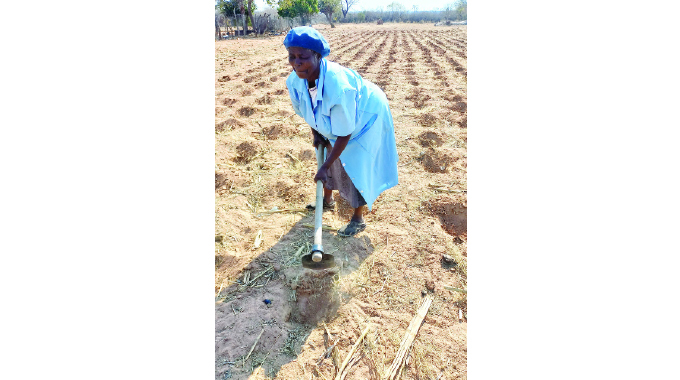
Sukulwenkosi Dube-Matutu, Chronicle Reporter
FARMERS in Matabeleland South province are eager to receive traditional grains seed for the 2022/23 farming season under the Climate-Proofed Presidential Inputs Scheme, popularly known as Intwasa/Pfumvudza saying it will help them realise good yields.
A majority of farmers in Matabeleland provinces that fall under agro-ecological regions three, four and five characterised by low rainfall provinces will receive inputs for traditional grains.
Government announced that this year that the distribution of seed types and varieties for the Pfumvudza/Intwasa programme will depend on the climate and soils of each region in order to boost production.
Farmers in regions four and five will get an input package to plant one mandatory sorghum plot, one millet plot and one sunflower plot with farmers getting the option to choose between maize, African peas, ground nuts, sorghum and millet for the two remaining plots.
Generally, Matabeleland region receives low rainfall with increased chances of mid-season dry spells that have also been increasing in length.
Gogo Khekhe Nyathi from Diba Village in Bulilima District said she had finished land preparation on one plot. She said she is targeting five plots.
Gogo Nyathi, who is the village agriculture coordinator in her area, said she had formed a group with nine other women where they were assisting each other with the land preparation.
“We have just done one plot at my homestead working with other women who are part of my group. We have now moved to another homestead but in the meantime I will continue with my area until I have reached five plots.
We decided to form a group in order to ease the burden associated with land preparation. By the time rains come we will be done with our plots,” she said.
“I heard that we will receive traditional grain for inputs which makes me hopeful for a good harvest as maize crop hasn’t been performing well in our area as we receive low rains.”
She said ever since the start of the Pfumvudza/Intwasa programme she was now producing traditional grains for commercial purposes unlike before when she was producing for household consumption.
Gogo Nyathi said they have also adopted a smart and orderly manner of production because of the programme.
Ms Sithabile Dube, also from Diba Village said she had learnt from experience the consequences of growing maize instead of traditional grains. She said last farming season she had concentrated more on growing maize and she lost all her crop due to low rains.
Ms Dube said the small portion of traditional grains that she had planted survived the weather conditions.
“I learnt the hard way last farming season as I watched my fellow farmers that had planted traditional grains harvest. This time around I will comply with advise that we are getting from agricultural experts to focus more on traditional grains,” she said.
Mr Gift Moyo from Sizeze area in Gwanda District said he has started land preparation on his first plot.
He said over the years the Pfumvudza/Intwasa programme has yielded positive results for him, especially with traditional grains. Mr Moyo said it was a huge relief for him as Government will be providing them with more of traditional grains than maize seed.
Acting provincial director of agricultural rural development and advisory services for Matabeleland South, Mr Mkhunjulelwa Ndlovu said they were targeting 130 000 farmers under Intwasa/Pfumvudza programme.
He said over 50 000 farmers have been trained.
“We have trained over 50 000 under the Climate-Proofed Presidential Inputs Scheme, Intwasa/Pfumvudza. The adoption rate is very high as farmers are eager to take up traditional grains.
Farmers are now busy with land preparation as the training spreads throughout the province,” he said.
The Pfumvudza/Intwasa programme is set to benefit 3,5 million farmers in communal, A1, small scale commercial farming, old resettlement and peri-urban farms in the production of cereals, oilseeds and legumes including a special pack for 500 000 urban farmers.
The programme is supporting five Pfumvudza/Intwasa plots, each measuring 39m x16m in size per household.
In low rainfall agro-ecological regions, three plots will be put under maize, sorghum and pearl millet. The maize plot is for household food and the other two plots under traditional grains are for sale.
This year farmers are expected to plant two million hectares of maize. For sorghum the Government has set a target of 380 000 hectares to produce 304 000 tonnes while 250 000 ha are set to be put under pearl millet to produce 150 000 tonnes.
Farmers are expected to plant 25 000ha of finger millet to produce 13 750 tonnes of the crop. Some farmers have started land preparation while others are procuring inputs.
Government has already released $20 billion towards the programme. This year’s target means an additional 1,2 million households will benefit from the Pfumvudza/Intwasa programme, after 2,3 millon households participated last year.
Under the programme, each farming household will get an input package comprising 10kg maize seed, 5kg sorghum. 2kg pearl millet, 5kg soya beans, 2kg sunflower/castor beans and 5kg of either sugar beans, cowpeas or roundnuts.
Some farmers will get 5kg of summer wheat, long season variety, 2x50kg of Compound D fertiliser, 1x50kg top dressing fertiliser and chemicals to control fall armyworm or stalk borer. – @DubeMatutu



 Blessing Chizhande
 Online Reporter