Online Reporter
Nqobile Bhebhe in Plumtree, [email protected]
MATABELELAND South Province is strategically positioned and plays a pivotal role in Zimbabwe’s regional integration and international trade, owing to its hosting of five major border posts, Provincial Affairs and Devolution Minister, Albert Nguluvhe has said.
Speaking at the International Customs Day commemorations held in Plumtree yesterday, Minister Nguluvhe said the province’s geographic location and historical trade links make it a cornerstone of cross-border commerce and connectivity.
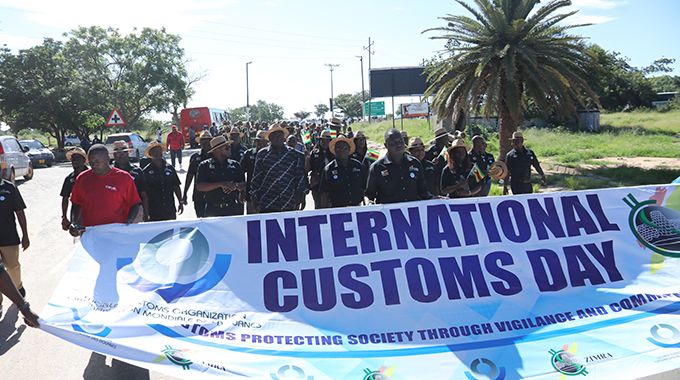
“Allow me to take this opportunity to sincerely commend and thank the Zimbabwe Revenue Authority for heeding the national call for devolution, as demonstrated by their decision to have this important national event hosted here in Plumtree, thus moving away from the traditional metropolitan centres where these events used to be held,” he said.
“Hosting this event in Plumtree sends a powerful message that national programmes no longer belong to Harare alone, but to every community in Zimbabwe. This is what devolution entails as it brings institutions closer to the people thereby ensuring that development is visible, inclusive and geographically balanced.”
The International Customs Day was held under the World Customs Organisation theme, “Customs Protecting Society through Vigilance and Commitment.”
Minister Nguluvhe told delegates that Matabeleland South, dubbed the Rainbow Province, is strategically positioned and plays a critical role in Zimbabwe’s regional integration and international trade since it is home to five key border posts, namely Beitbridge, Plumtree, Maitengwe, Mphoengs and Mlambapele.

“These ports of entry are vital gateways for trade, tourism and the movement of people between Zimbabwe, South Africa and Botswana among other countries that make use of these ports of entry or exit,” he said.
“As such, these borders contribute significantly to economic activity at both local and national levels.”
The minister noted that the province continues to be recognised nationally for its centrality in border management and trade facilitation.
“In 2024, the International Customs Day celebrations were hosted right here in my province, at our iconic Beitbridge Border Post, further reinforcing Matabeleland South’s central role in regional and international trade as well as border management,” he said.
Minister Nguluvhe said the province’s long-standing links in trade and transport make it an attractive investment destination.
He said the province has a the history of trade, transport, communication, tourism and regional connectivity.
“For us in Matabeleland South, borders are not lines of separation, but are lines of opportunity. They are spaces where trade meets tourism, where policy meets people, and where local livelihoods are directly connected to regional and international economies,” said Minister Nguluvhe.

He also indicated to delegates that Plumtree’s unique historical importance in Zimbabwe’s development trajectory.
“You may be aware that Plumtree holds a special historical significance in our country. Traditionally called Esititshini or Titshi, meaning “the station”. The place is home to Zimbabwe’s first railway station, that was established in the late 1890s beside a plum tree, hence the town’s name,” said Minister Nguluvhe.
“This heritage makes Plumtree not just a border town, but a landmark in the history of trade, transport, communication, tourism and regional connectivity.”
Minister Nguluvhe said beyond its strategic location, Matabeleland South is a land of open horizons, resilient communities and warm hospitality, endowed with immense tourism and investment potential.
“We are home to attractions such as the Matobo Hills World Heritage Site, the Tuli Circle, rich cultural heritage sites, and we have vast opportunities in mining, agriculture and wildlife-based tourism,” he said.