Chronicle Editor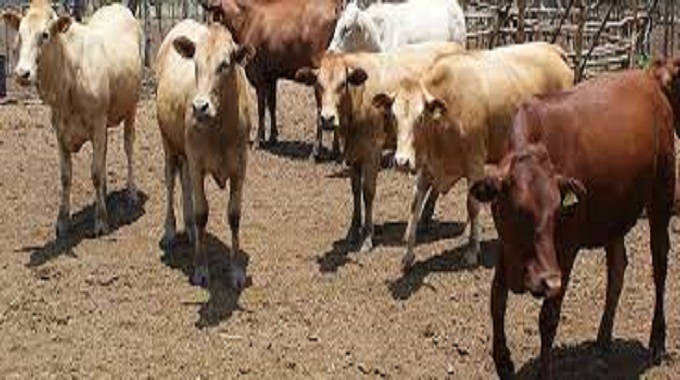
Sukulwenkosi Dube-Matutu, [email protected]
MATABELELAND South Province has set an ambitious target to increase its livestock head to 1,2 million by 2025 from about 600 000 in 2021 as part of efforts to grow its economy and contribute to national food and nutrition security.
According to the reviewed economic development plan for the period 2021-2025, the province seeks to boost livestock production by about 20 percent per annum over the five-year strategic period from 624 970 cattle in 2021 to an estimated 1 249 940 by 2025.
Matabeleland South is pushing to increase the area under citrus production from 2 671ha to 4 000ha and maize hectarage from 80 000ha to 115 000ha.
The province is also targeting to increase the production of traditional grains from 37 000ha to above 70 000ha. This would also be buttressed by scaling up irrigation production from 4 500ha, which was recorded in 2021 to about 10 000ha in 2025.
“The province seeks to achieve improved food security during the planned period. The targeted outcomes will be to increase the livestock herd from 624 970 to 1 249 940, increased citrus production, which comprise of oranges, lemon, grape fruit, mango and olive from 2 671ha to 4 000ha,” reads part of the provincial economic roadmap document.
“The province will also target to increase the area under maize from 80 000ha to 115 000ha and yield from 0,8 tonne to at least seven tonnes annually, and increase traditional grains from 37 000ha up to above 70 000ha with its yield from 0,7 tonnes to at least five tonnes annually between 2020 and 2025.
“A number of strategic interventions in trying to improve the provincial food and nutrition security are underway through the Livestock Recovery Plan, Horticultural Recovery Plan, Accelerated Irrigation Revitalisation, Rehabilitation and Development Plan.”
In line with the National Development Strategy (NDS1), Matabeleland South is already working on improving animal nutrition development through programmes such as the establishment of pasture green belts for fodder and hay bailing, which is targeting 300 000 bales annually.
According to the provincial economic plan, another strategy is to improve animal genetics using artificial insemination and natural breeding. The focus will be on establishing a bull and semen collection and processing centre or facility, proper selection of breeds with the best desirable characteristics preferably at Matobo Research Station.
Efforts are also being made to improve animal health by strengthening the Foot and Mouth Disease (FMD) vaccination programme, localising the manufacturing of vaccines, dip-tank rehabilitation and implementing the blitz on tick-grease application and intensive dipping programmes.
“Other strategies are to commercialise small stock production, particularly goats, sheep, and piggery through small stock breeding and genetic improvement centres and champion farmers,” reads the document.
“These centres and champion farmers will breed and distribute improved breeds targeting export markets. With regards to horticulture, the focus will be to stimulate both conventional and rural horticulture production, to accelerate domestic and export horticulture production, productivity, and profitability, as well as value addition.”
Matabeleland South Province has diverse climatic conditions for all agricultural production activities namely horticulture, crop, livestock (beef and dairy), fisheries, and apiculture.
Due to climate change-induced droughts, Matabeleland South has witnessed a drastic reduction in provincial herd and crop production over the past 10 years.
Contacted for comment, Minister of State for Matabeleland South Provincial Affairs and Devolution, Dr Evelyn Ndlovu, said agriculture is one of the province’s major economic drivers whose development will go a long way in ensuring food and nutrition security.
“The 2021 -2025 Provincial Economic Development Plan for Matabeleland South is premised on the adoption and swift implementation of bold policies and programmes aimed at achieving economic transformation through the creation of a thriving private-sector led, open and competitive economy and a business-friendly environment,” she said.
“Through the broad-based stakeholder consultative process food and nutrition security was identified among, the Matabeleland South provincial economic development plan priorities.
“Implementation of programmes, policies and interventions to realise these priorities will transform the Matabeleland South economy from a natural resource economy to a knowledge-driven economy. This will also move the country from a lower middle-income society towards an upper middle-income society by 2030,” she said.
Other priority areas include sustainable inclusive economic growth, devolution and governance, human capital development, infrastructure, utilities, and digital economy, housing delivery and health and social protection. — @DubeMatutu.



 derick.khumalo