Chronicle Editor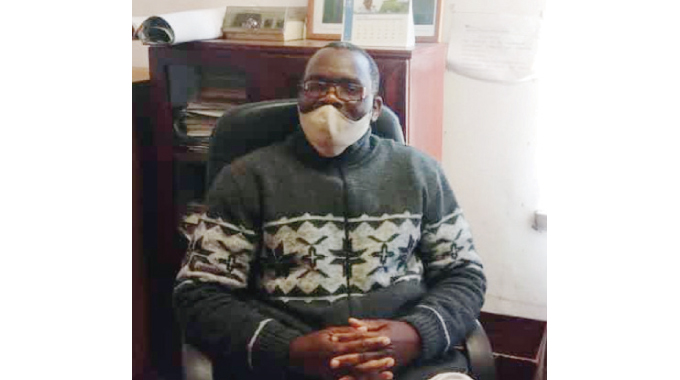
Sukulwenkosi Dube-Matutu, Chronicle Reporter
MATABELELAND South Province has identified 500 hectares of land in Insiza District which is set to be developed into an agricultural incubation centre for youths.
The centre will run under the Provincial Integrated Youth Skills Development Centres (PIYSDC) programme.
Construction of infrastructure is expected to start next month and youths should be operating from the incubation centre in September.
President Mnangagwa in January launched the PIYSDC for each of the country’s 10 provinces where 500 youths will be recruited annually to learn agriculture skills.
Each Provincial and Devolution Minister was tasked to identify 500 hectares of land to be dedicated for youth projects as Government moves to empower them. Youths in Matabeleland South received 70 heifers. The project now has 12 heifers.
The idea is that once the heifers give birth, the offspring will be passed on to other youths as the scheme cascades to the grassroots.
During the launch of the agricultural incubation centres the President distributed 698 heifers to youths across all the provinces under the Presidential Heifer Pass-on Scheme.
Under the PIYSDC, the President said Government will provide the necessary infrastructure and tools to train youths on various aspects of agriculture guided by the “farm to fork” agenda.
Government under the Second Republic has introduced a policy of a 20 percent youth’s quota under the land reform programme. Youths who will undergo training at the centres will receive inputs from Government to boost crop and livestock production.
In an interview after a closed door meeting to assess the scope of work in constructing the agricultural incubation hub, Matabeleland South acting provincial agricultural director rural development services Mr Mkhunjulelwa Ndlovu said:
“We have identified 500 hectares of land in Insiza where we will establish the agricultural incubation hub for youths. We are starting with 70 heifers and 70 youths from all districts in the province who have received training and graduated. The purpose of the meeting was to deliberate on the scope of works and to come up with timelines,” he said.
“Temporarily we asked one of our farmers from Insiza to offer space to the animals as we develop our incubation hub. The plan is to move animals in September after major works have been completed. We have done the land use plan, bill of quantities, technical designs and we are at the verge of getting a contractor to lead the works there,” said Mr Ndlovu.
He said they have also started baling to support the project with feed for animals.
Mr Ndlovu said the hub will bring together all farming activities that are taking place in the province which include livestock production, irrigation farming, horticulture, fodder production.
He said once the provincial hub has been established all districts will be expected to identify land which can be turned into incubation hubs.
“We want to teach youths that the land does not increase but they need to maximise utilisation of the land through intensive farming. The youths will be trained in various farming skills so that they conduct their operations as a business. The youth hub will be turned into a centre of excellence where youths will acquire different skills,” he said.
“Once the incubation hub is up and running then this will improve the agricultural sector and maximise our output as a province. It will assist in improving genetics of our provincial herd thereby improving the national herd.”
He said infrastructure that will be developed at the incubation hub includes housing for workers, irrigation infrastructure, handling facilities for livestock including dip tanks, pens, paddocking and perimeter fence.
The National Development Strategy (NDS1) envisages to increase the number of youths accessing empowerment opportunities in all sectors of the economy from 16 000 in 2020 to 200 000 by 2025. – @DubeMatutu.


 Online Reporter