Sukulwenkosi Dube-Matutu, [email protected]
VAST stretches of grazing land in Matabeleland South are being lost to land degradation, veld fires and unsustainable land-use practices, raising fears for the future of a province whose economy is heavily dependent on livestock production.
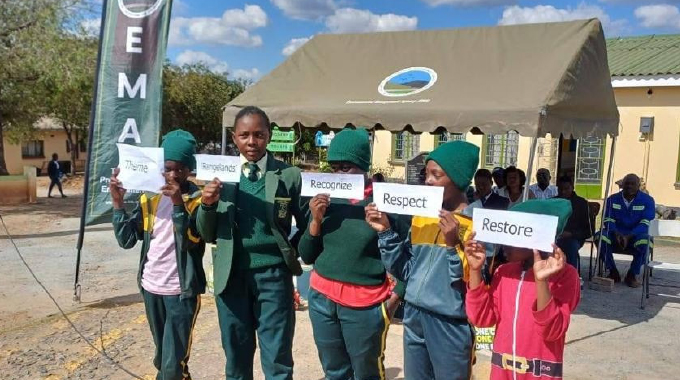
The warning was sounded during the 2026 World Desertification and Drought Day commemorations held at Senondo Primary School in Gwanda on Tuesday, where Government officials, environmental experts, community leaders and learners gathered to discuss the growing environmental crisis facing the province.
For a region where cattle are both a source of wealth and household survival, the gradual destruction of rangelands is emerging as a major threat. Large areas of once-productive grazing land are becoming degraded as vegetation cover disappears, soil quality declines and recurrent veld fires strip the land of grass needed to sustain livestock.
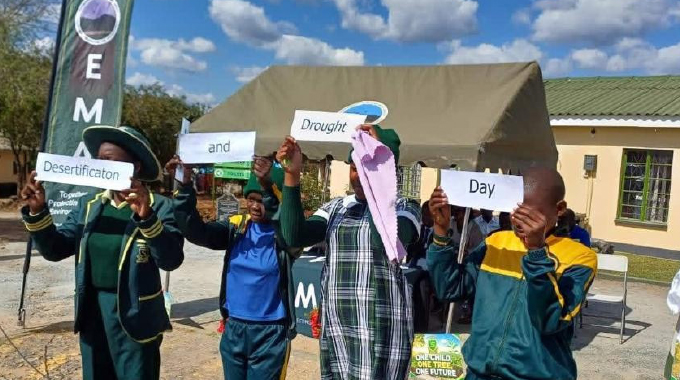
Observed globally every year on 17 June, World Desertification and Drought Day was established by the United Nations General Assembly in 1994 to raise awareness about land degradation and promote efforts to combat desertification. This year’s theme,
“Rangelands: Recognise, Respect, Restore,” highlighted the urgent need to protect grazing lands and grasslands that underpin rural livelihoods and local economies.
Speaking during the commemorations, Environmental Management Agency (EMA) Matabeleland South Provincial Manager
Mr Descent Ndlovu described desertification as one of the most serious environmental challenges affecting communities across Zimbabwe.
“Desertification is a very serious environmental challenge that needs our attention. Simply defined, desertification is a gradual process of soil productivity loss and the thinning out of the vegetative cover as a result of human activities and climatic variations such as prolonged droughts and floods,” he said.
He identified several human-induced causes of land degradation in Zimbabwe, including streambank cultivation, overgrazing, veld fires, brick moulding, deforestation and illegal mining activities.
“Human-induced drivers of land degradation here in Zimbabwe include streambank cultivation, overgrazing, veld fires, brick moulding, illegal mining activities, deforestation, among other activities. We will continue to deal with these decisively so that we uphold sustainable land management,” he said.
Mr Ndlovu warned that the continued degradation of rangelands could have severe consequences for communities that rely on livestock production. As grazing areas shrink, farmers are increasingly forced to contend with shortages of pasture, particularly during periods of drought.
The loss of vegetation also exposes topsoil to erosion, reduces the land’s ability to retain moisture and weakens ecosystems that support both livestock and wildlife.
Environmental experts say this creates a cycle in which degraded land becomes less productive and increasingly vulnerable to drought and climate shocks.
Matabeleland South’s economy depends heavily on cattle production, with livestock providing income, food security and draught power for thousands of households. However, the destruction of grazing lands through veld fires and other environmentally harmful activities is placing growing pressure on farmers already grappling with erratic rainfall and rising temperatures.
Mr Ndlovu said addressing the crisis requires more than regulation and enforcement, stressing the importance of involving communities in protecting and restoring degraded land.
“Nature-based solutions, strong community involvement and shared responsibility are key to neutralising land degradation.
Schools have a special role to play because young people are both the most affected by environmental decline and the most capable of driving long-term change,” he said.
It was against this backdrop that young people were encouraged to become environmental stewards and take an active role in restoring the province’s damaged landscapes.
People’s Own Savings Bank Gwanda District Manager Mr Clarence Mlobane challenged learners to become custodians of the environment by protecting trees planted at school and in their communities.
“The trees we plant today will benefit our community. They will stand as a lasting reminder that environmental stewardship begins with each one of us and that the actions we take today can positively impact future generations.
“Think of it as the beginning of a movement. Take ownership of the trees planted here today. Water them, protect them and watch them grow. Your responsibility shouldn’t end at the school gate. When you return home, encourage your parents and guardians to plant trees at your homesteads as well,” he said.
Mr Mlobane said the destruction of natural resources should concern everyone, adding that environmental protection cannot be left to government institutions alone.
He said the theme of this year’s commemorations reflects the reality confronting Matabeleland South, where healthy rangelands are essential for livestock production, agriculture and household livelihoods.
“We must also respect our natural resources. Respect means protecting trees, preventing veld fires, reducing waste and using our environment responsibly. Every one of us has a role to play in safeguarding the natural resources that sustain us. We must also restore what has been degraded. Tree planting is one of the most practical ways of restoring our environment. Every tree planted today represents hope, renewal and a commitment to a greener future,” he said.
The commemorations included a tree-planting exercise organised by the Forestry Commission, symbolising efforts to restore vegetation cover in areas increasingly affected by environmental degradation.
For Matabeleland South, the battle against desertification is closely linked to economic survival. Healthy rangelands support livestock production, conserve water and reduce soil erosion. Their loss threatens not only cattle farmers but also the wider rural economy that depends on the land.
As veld fires continue to destroy grazing areas and land degradation spreads across vulnerable landscapes, stakeholders say restoring rangelands has become an urgent priority. The challenge now is ensuring that communities — particularly young people — take a leading role in protecting the land before further damage undermines the province’s most valuable natural asset.