Online Reporter
Raymond Jaravaza, [email protected]
TOBACCO harvesting is in full swing across Matabeleland, and what is happening in the fields tells a wider story of renewal under President Mnangagwa and the Second Republic. From well established farms to newly broken ground, 325 growers — a mix of experienced producers and first time farmers — are delivering the golden leaf to auction and contract floors, fuelling optimism for another strong season for Zimbabwe’s flagship cash crop.
Figures from the Tobacco Industry and Marketing Board (TIMB) show that growers in Matabeleland North and Matabeleland South are producing Naturally Cured Virginia (NCV) tobacco on 370 hectares. It marks a notable shift in a region traditionally shaped by cattle ranching and small grains, as tobacco steadily carves out space in the local farming economy.

On the national stage, tobacco continues to anchor Zimbabwe’s agricultural success. Last year, the country produced 354,9 million kilogrammes valued at US$1,2 billion, retaining its place as Africa’s largest producer and the world’s second largest exporter of flue cured Virginia tobacco after Brazil.
Beyond production, the Second Republic has placed renewed emphasis on processing and value addition, pushing to ensure the country earns more from finished tobacco products rather than exporting raw leaf. Plans are under way to establish additional processing plants to deepen value chains and boost export earnings.
That commitment was underscored last year when President Mnangagwa commissioned a US$100 million tobacco processing plant in Harare, highlighting the industry’s growing importance to livelihoods across the country.
“As a result, Zimbabwe now ranks sixth globally in tobacco production. Over and above these milestones, the industry sustains more than 160 000 households, empowering rural communities and uplifting the livelihoods of many across the nation,” he said.
The President also urged industry players to look beyond immediate gains and invest in long term resilience.
“I call upon stakeholders to continue investing in value addition and beneficiation, while also promoting sustainable and climate-smart farming, as well as developing innovative local financing mechanisms,” he said.

The impact of those efforts is already reflected in export earnings. According to TIMB, Zimbabwe earned US$489 million in the first quarter from exports of 71 million kilogrammes of semi- processed tobacco, compared to 43,2 million kilogrammes worth US$293 million during the same period last year.
The Far East remains the strongest market, with China, Japan and Indonesia importing 44,5 million kilogrammes valued at US$378 million.
In Matabeleland, tobacco production is largely driven by contract farming, with growers selling through a licensed contract floor in Mangwe. NCV tobacco, increasingly popular among farmers in the region, uses sunshades and drying racks rather than firewood or coal, offering a more environmentally conscious alternative to traditional curing methods.
The growth has been especially striking in Marula village. When tobacco was introduced during the 2023/24 season, only 17 communal farmers responded to the call to move from small grains and maize into commercial tobacco production. Today, that number has grown to more than 320, according to TIMB.
Overall, TIMB says 325 growers are cultivating 370 hectares of NCV tobacco in Matabeleland North and Matabeleland South. Nationally, tobacco sales have also gained momentum. As of March 31, 3 445 300 kilogrammes had been sold at auction floors.
“Currently, tobacco production in the Matabeleland region is largely under contract farming with growers selling through a licensed contract floor in Mangwe (Matabeleland South Province),” said TIMB.
The board said that auction floors are meant for self financed growers, and that the number of such farmers in Matabeleland remains too low to justify a dedicated facility at present.
“Once the number of independent growers increases and a formal application for an auction floor license is submitted, the Board will consider and facilitate the licensing accordingly,” said TIMB.
On individual farms, the story unfolds more personally. At Mswelangubo Farm in Nyamandlovu, farm manager Mr Peter Musapurwa recently harvested the farm’s first NCV crop from one and a half hectares.
“As a trial run, we decided to plant 25 000 plants on one and a half hectares and we managed to produce a good quality crop despite the above normal rainfall that Nyamandlovu received this year. Some parts of the tobacco field were waterlogged, thus affecting a few thousand plants, but we still managed to harvest a good crop,” he said.
Encouraged by the outcome, Mswelangubo Farm now has its sights set on expansion.
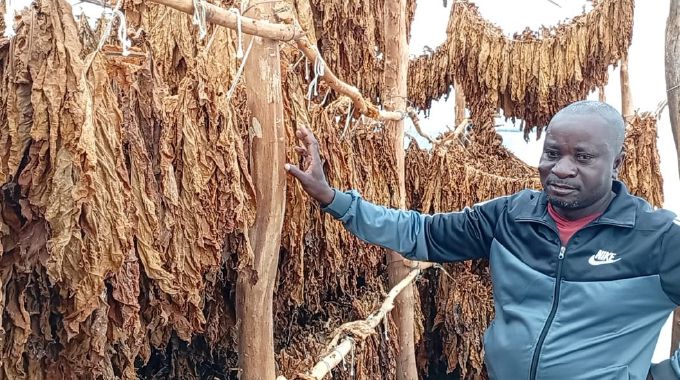
“We are looking at utilising five hectares of land for tobacco farming next year. This year’s harvest will be collected by the contractor that we worked with as soon as the tobacco has dried to a satisfactory level,” said Musapurwa.
For him, the environmental benefits of NCV tobacco are just as important as the financial returns.
“The good thing about NVC tobacco farming is that we don’t have to cut down trees or burn coal from Hwange to cure the tobacco, thus we conserve the environment while embarking on a project that is commercially viable.”
In Umguza, first time grower Mr Pius Ngwenya has also seen the rewards of venturing into tobacco. His maiden crop yielded 1 100 kilogrammes, sold at US$3,70 per kilogramme.
“Tobacco farming is labour intensive but is worth all the hard work compared to maize that I have been growing all these years. When the community heard that I had ventured into tobacco farming, they were concerned that I would chop down trees to cure it but the only few trees that I did cut down were for the construction of a barn and drying rack.
“The barn and dying rack are structures that I will use for many more years to come as long as I grow the tobacco and I will not a have a reason to cut down trees in future,” he said.
Beyond communal and commercial farms, tobacco is also playing a role in rehabilitation programmes. At Khami Prison Farm outside Bulawayo, a five hectare project run by the Zimbabwe Prisons and Correctional Services (ZPCS) is expected to yield about 3 000 kilogrammes per hectare.
The project is being implemented with technical support from Atlas agri, led by tobacco specialist, Mr Rodrick Musiiwa.
ZPCS Officer Commanding Bulawayo Metropolitan Province, Commissioner Mkhulunyelwa Ngwenya, said inmates involved in the project are gaining practical agricultural skills and earning income.
“The inmates that we call trainee farmers, who are part of the project will be paid and that money will be sent to their families to assist with their upkeep. The tobacco project is part of our broader rehabilitation programme that aims to empower inmates with skills that will assist them to be active participants in our economy when they are released,” he said.
Commissioner Ngwenya added that the project also feeds into national development goals.
“From this project, the prison will generate money that will be sent to the national fiscus to assist in the development of the country for the attainment of Vision 2030, as led by President Mnangagwa,” he said.
Looking ahead, the programme is set to grow.
“This will mean that more trainee farmers who are the inmates will be attached to be part of the tobacco farming project. The trainee farmers have contracts with ZPCS and they will be paid after the crop has been harvested,” he said.