admin
admin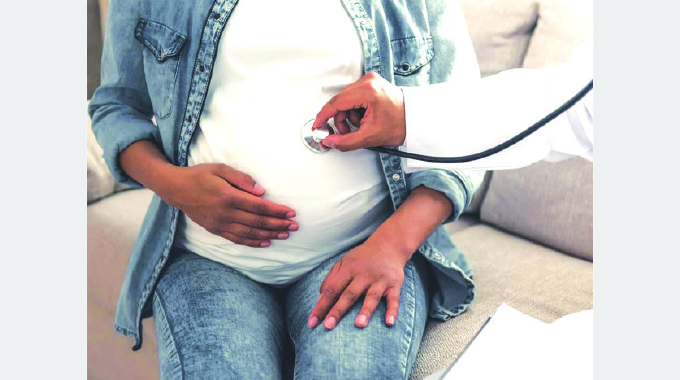
Loice Vavi-Health Matters
Maternal health refers to the health of women before and during pregnancy, at child birth and during the post partum period.
The choices made this time can affect maternal health and their babies.
The health of women during pregnancy and delivery is very crucial for mothers and their children to prevent mortality and morbidity.
There are services provided during pregnancy, labour, delivery and after delivery which most women ignore for different reasons, which can be either religion beliefs ,traditional beliefs,myths nor knowledge deficit. These reasons may cause problems between caregivers, patient and patient’s relatives whenever there is any complication encountered during this period therefore, it is very important to register pregnancy as early as possible and attend all antenatal clinic (ANC) bookings.
Common labour complications
Women should be aware of labour complications for them to be responsible and cooperate well during this time.
Failure to progress — refers to prolonged labour last longer than expected.
Studies suggest that this affect around 8 percent of women giving birth.
Prolonged labour that happens at 2nd stage of labour may need medical assessment and interventions. In most cases it is very disturbing and unfortunate that some women do not bother to seek interventions early. They present at a health facility late ,in most cases we hear them say, “Kukasika kuenda kuchipatara kwakaipa ndichaenda ndaibva ndonosvika ndichisununguka nekuti ukagarisa mulabour unochekwa” meaning I will go to hospital when am about to give birth because if you stay longer in labour ward they will operate on you. Women should desist from such misleading Information to prevent more complications.
Some of the complications are reversible if women seek help early.
2. Foetal distress –(kuneta kwemwana asati azvarwa) this can only be picked when the woman is being monitored at a health facility
This is when a foetus does not appear to be doing well with irregular heart beat.
The underlying causes can include maternal and foetal causes for example Pregnant induced hypertension, Maternal anaemia , Intra uterine growth restriction, Insufficient oxygen e.t.c. In some cases a caesarian section may be necessary.
3. Birth asphyxia – failure to establish and maintain breathing at birth. It can happen before ,during or immediately after delivery due to inadequate oxygen supply. It is a non specific term that involves complex range of problems and can lead to low levels of oxygen , increased carbon dioxide levels, increased levels of acid in the blood, multiple organ malfunction and low Apgar score. This is a very common labor complication and I would like to clear the myth I usually hear in the community, “Mwana wangu anga atori right hamheno zvaaitwa nana mbuya kwavamhanya naye vazongondiratidza mwana afa“meaning the midwives did something, my baby was fine. Resuscitation is done soon after delivery to establish and maintain breathing but unfortunately in most severe cases early neonatal deaths are irreversible there is nothing bad midwives or health care providers do it is just resuscitation to help the neonate breath and save life.
4. Shoulder dystocia — this is when the head is delivered vaginally but shoulders stuck inside. Shoulder dystocia is responsible for half of caesarian section deliveries in this group. Health providers may apply specific manoeuvres to deliver the shoulders and these manoeuvres can only be done by experts at a health care facility. Most women try this at home or church shrines and fail then they present late at hospitals or clinics with more complications associated with shoulder dystocia.
Post partum hemorrhage – excessive bleeding of more than 500ml vaginal delivery and 1000ml caesarian section delivery. It occurs within 24 hours post delivery up to 12 weeks in case of secondary bleeding.
Low blood pressure from haemorrhage result in organ failure, shock and maternal death.
Treatment aims is to stop bleeding as soon as possible options include:
The use of medication
Uterine massage
Removal of retained placenta and hysterectomy all these options are possible at a clinic or hospital level for timeously interventions to save life.
6. Placenta previa — when the placenta becomes the presenting part or covers the opening of the cervix. A caesarian section delivery is usually necessary. The main symptom is bleeding without pain in the third trimester and the bleeding can range from light to heavy It can also increases chances of placenta acrreta a potentially life threatening condition in which the placenta becomes inseparable from the uterine walls.
Treatment for placenta previa is usually supervised hospital bed rest. It is very disheartening that most women present late with unregistered pregnancies severely bleeding and it takes preparations to save life especially when it comes to blood transfusion and theatre preparations some will lost lives in the process depending with available resources .
Uterine rapture — this complication happens in previous caesarian section delivery because there is a minimum chance that the scar could rapture during future labour.
Other risk factors include: the induction of labour either medically or any other forms, for example mishonga yemasuwo and miteuro and maternal age of 35 and above. It is important to give true past obstetric especially when induction of labour is to be done at hospital level.
Women who plan for vaginal after previous caesarian section should aim to deliver at a health care facility. This will provide access to facilities for caesarian section delivery and blood transfusion, should they be needed.
Women should watch for the following signs of uterine rapture:
Abdominal pain and scar tenderness
Vaginal bleeding
Conclusion
Complications can be fatal where there is lack of proper care. Plan for your pregnancy ,book , plan for place, time and mode of delivery to prevent complications and have good relationship with health care providers they are there to do good than harm. Your health your responsibility.
For more information contact [email protected] or 0772224231



 Online Reporter