admin
admin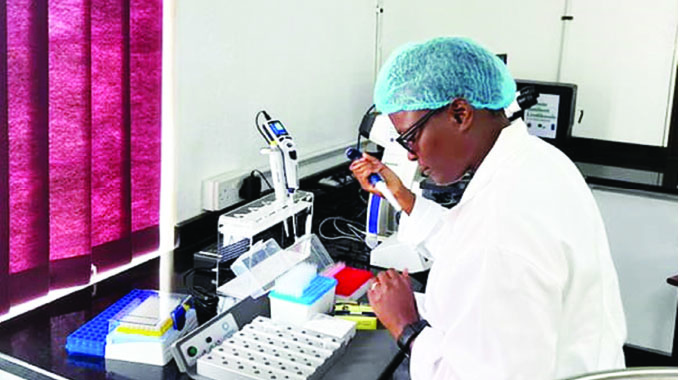
Gibson Mhaka
Zimpapers Politics Hub
AGRICULTURE remains the backbone of Zimbabwe’s economy, yet recurrent droughts and the escalating impacts of climate change, including rising temperatures and reduced rainfall, are increasingly threatening its sustainability.
Despite the increasing threats posed by rising temperatures and reduced rainfall, Zimbabwe’s agriculture sector has demonstrated remarkable resilience. Under the Second Republic, the sector has experienced a significant transformation, expanding from a US$2 billion industry to more than US$8 billion in less than five years.
This growth is a testament to the effective policies implemented by the Government, through the Ministry of Lands, Agriculture, Fisheries, Water, and Rural Development, in partnership with various stakeholders, and the resilience of Zimbabwean farmers.
Given Zimbabwe’s heavy reliance on rain-fed crop production, the adoption of climate-smart technologies and innovation platforms can play a pivotal role in driving agricultural success.
These innovation platforms offer solutions to the challenges posed by climate change, such as erratic rainfall and rising temperatures. By harnessing the power of innovation, Zimbabwe can enhance agricultural productivity, resilience and sustainability.
To ensure national food security and mitigate the negative effects of climate change on all production systems, these innovation platforms are rapidly emerging as essential components of agricultural research for development projects and programmes.
Despite its critical role in assisting Zimbabwe and the broader SADC region to adapt to the impacts of climate change through initiatives such as cattle semen harvesting and artificial insemination, traditional grains and forage seed multiplication and fodder production, feed formulation, agroforestry, and rangeland improvement, the innovation platform at the Matopos Research Institute, located about 30km from Bulawayo, remains largely untold.
The innovation platform demonstrates that with appropriate support, it can address many of the country’s economic challenges and contribute to achieving Zimbabwe’s goal of becoming an upper-middle-income economy by 2030.
The innovation platform is an equitable and dynamic space that brings together diverse stakeholders to share their knowledge and collaboratively find solutions to common challenges.
The innovation platform fosters a culture of collaboration, inclusivity, and open innovation, where individuals from different backgrounds can contribute their unique perspectives and expertise.
A recent tour of the research institute established through its innovation platform revealed that it has already established an animal Gene Bank to aid in the preservation and conservation of indigenous breeds through artificial insemination.
Additionally, the institute has also established a regional crop Gene Bank, which serves as a bio-reservoir for sorghum, pearl millet, chickpea, pigeonpea, groundnut, and finger millet, crops that are particularly well-suited for semi-arid regions in Southern Africa.
The innovation platform was established under the Building Climate Resilience of Vulnerable Agricultural Livelihoods in Southern Africa Programme, which is being spearheaded by the Ministry of Lands, Agriculture, Fisheries, Water, and Rural Development in partnership with the Green Climate Fund, with the United Nations Development Programme (UNDP) being the implementing partner.
The Gene Bank is expected to provide for the harvesting of approximately 1 500 to 3 000 semen straws per bull per season for artificial insemination. Under natural mating, a bull can only service around 25 to 30 animals per season.
Breeds that are being preserved at the Gene Bank laboratory include adaptable cattle species such as the African Tuli, Nguni, Afrikanda, and Brahman.
Matopos Research Institute laboratory research officer, Ms Theresa Rukuni, said the facility will play a crucial role in assisting farmers to preserve their breeds.
She said there are unforeseen disasters such as drought and diseases, which can threaten the sustainability of animals, adding that farmers can approach the institution to have their breeds preserved.
“Apart from us collecting semen from within the farm, we also have farmers around who have bulls and want them to be preserved. A bull can cost up to US$4 000 and this process will help farmers to protect their investment,” said Ms Rukuni.
Matopos Research Institute research officer for the beef section, Ms Sikhulile Siziba, said this programme would also go a long way in improving production and productivity under the livestock sector thereby enhancing food security.
She said at the moment they were working on the institute’s breeds and then they will engage the community.
Ms Siziba said indigenous breeds adapt easily to the environmental changes, pests and are disease resistant and as such survive under minimum supplementation while providing quality beef hence the need to preserve their genetics.
Matopo Research Institute chief research officer, Mr Givious Sisito, said the innovation platform is focused on building climate-resilient agricultural livelihoods.
“The platform brings together stakeholders to develop, test, and promote innovations that can help build resilience within their communities.
“This platform operates under three main strategies. These include cattle semen harvesting and artificial insemination, traditional grains and fodder seed production and multiplication and agroecology.
“We have successfully established an animal Gene Bank and are conducting tests on semen quality from various livestock breeds that have proven adaptable in our communities.
“We have also observed that the genetic material in these communities is already eroded. Our goal is to improve this genetic material to enhance food security and nutrition,” said Mr Sisito.
Under the traditional grains and fodder seed production and multiplication initiative, Mr Sisito explained that the innovation platform aims to address the challenges farmers face in accessing quality seeds by working collaboratively with stakeholders to multiply seeds and evaluate their suitability.
“It also promotes awareness of the value of traditional grains and fodder for livestock. One of the challenges we have observed in the country is that farmers have difficulty accessing seeds due to issues such as quality and high prices.
“As an innovation platform, we have brought together all relevant stakeholders to collaborate on seed multiplication. We work with farmers to evaluate different seed varieties and select the best ones.
“Our approach involves testing both existing and new varieties in various environments to ensure their suitability. In addition, we are raising awareness among our communities about the value of traditional grains and the role of fodder in livestock production.
“The third aspect of our strategy is agroecology. We are promoting agroecology and fodder production by focusing on proper management of agroforestry and feed formulations. This approach aims to empower communities at the farm level to produce their own feed, addressing the challenges they face due to factors such as distance, price, and other constraints,” said Mr Sisito.
Matopos Research Institute research officer for traditional grains and forage seed multiplication Ms Olivia Mukondwa said under the innovation platform, they are working with 315 farmers across seven districts in Zimbabwe, including Matobo, Mangwe, Insiza, Beitbridge, Mwenezi, Buhera, and Chiredzi.
“Within each of these districts, we have selected five wards to participate in seed production for sorghum, pearl millet, chickpea, pigeonpea, groundnut, finger millet, and velvet bean. Each ward is cultivating at least one hectare of each crop.
“The primary objective of this project is to improve farmers’ access to high-quality seeds at affordable prices and at the right time. In the past, farmers have complained about the limited availability of traditional grain seeds from seed companies, often due to profitability concerns.
“To address this issue, we are empowering farmers to produce their own seeds using improved varieties and providing them with the necessary information and training,” said Ms Mukondwa.
She said despite experiencing drought last season, there are success stories from districts like Mwenezi and Chiredzi, where model farmers harvested over one tonne of seed per plot.
“This indicates promising results and suggests that the yields would have been even higher in the absence of drought. In total, the project harvested 4,6 tonnes of sorghum, 150 kilograms of finger millet, and 2,3 tonnes of pearl millet seed across all districts. Forages were the most affected, with a harvest of 145kg.
“The project’s goal is for farmers to sell their seed and generate income. However, 20 percent of the harvest is to be reinvested into the project. Each farmer hosting a seed multiplication plot is expected to serve as a farmer field school leader and share 20 percent of their harvest with other participating farmers,” she said.
A research officer for agronomy at the Institute, Mr Jephias Dera said under the GCF programme, they develop and design technologies to assist farmers in implementing effective crop management practices.
“Through the GCF project, we received assistance in the form of machinery, including two tractors and their accessories such as a plow, reaper, planter, and ridgers.
“We are using this equipment to promote mechanized conservation agriculture. Many farmers in conservation agriculture practice basin farming, so we aim to introduce the use of rotavator to reduce the drudgery associated with this method (basin farming).
“We are pleased to report that most of the farmers participating in our project, as assessed in our mid-year evaluation, have adopted water conservation technologies such as infiltration pits and open-ended contours.
“We also identified that many farmers were facing challenges with mulching material. To address this, we have implemented a project encouraging farmers to use leaf litter material.
“Our research has shown that leaf litter is highly effective in water conservation and can significantly improve crop yields when applied at a rate of at least 30 percent,” said Mr Dera.
Green Climate Fund project climate smart agriculture expert Dr Nelson Chanza said the facility was established as part of efforts to address barriers faced by farmers in adapting their farming practices to climatic disturbances and other shocks.
“The GCF project is working with agricultural research institutions and colleges found in the three provinces where the project is being implemented, which is Matabeleland South, Manicaland, and Masvingo Provinces.
“These innovation platforms have been set up to address barriers that farmers face in adapting their farming practices to climatic disturbances and other economic shocks.
“Under this project, we are looking at these innovation platforms as participatory places that are created for the joint analysis of problems and the collective identification for solutions for farmers to be able to effectively transform their subsistence oriented farming to climate resilient and sustainable livelihoods,” said Dr Chanza.
He said barriers being addressed include limited access to climate resilient quality seeds, access to climate resilient livestock breeds, poor nutrition triggered by drought, degradation of landscapes, and market access.



 Online Reporter