

 admin
admin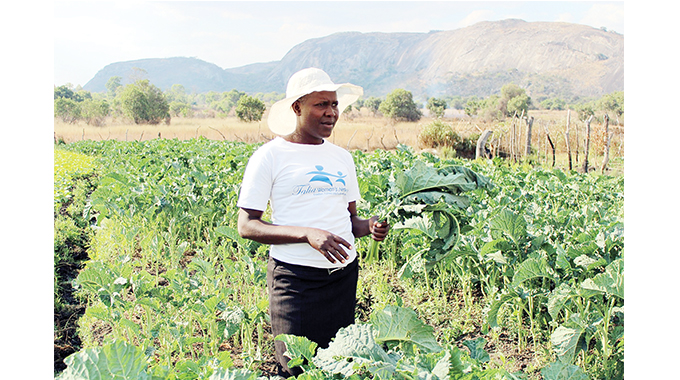
Hazel Marimbiza
There is a general consensus among scientists, economists, and policy makers that the entire globe is facing a real and serious long-term threat from climate change.
Although there is still a significant uncertainty regarding the climate change scenarios for sub-Saharan Africa with conflicting scenarios about which areas will get wetter and which will get drier, there is no doubt that the climate change phenomenon is slowly setting in and the general consensus appears to be that southern Africa will experience hotter and drier climatic conditions in the medium to long term.
Projections suggest that, by the end of the 21st century, climate change will have had substantial negative impact on agricultural production and, hence, the need to find ways to secure agricultural production so as to reduce poverty.
Zimbabwe and other southern African countries have been of late experiencing frequent droughts alternating with periods of very high rainfall. In some cases, floods and mid-season prolonged dry spells have been experienced during the same season. It is against this backdrop that, Talia Women’s Network (TWN) aims to empower women who are smallholder farmers through adaptation strategies.
Saliwe Mutetwa-Zakariya, director at TWN said after noticing the negative impacts of climate change in their work they were now working at alleviating poverty among less privileged farmers.
“We have seen water sources drying up and erratic rainfall patterns and so our programme initiative gives women the skills and the capacity to be able to maximise their agricultural potential despite the climate change,” said Zakariya.
She added: “The impacts of global climate change and variability are becoming more evident with increased incidences of droughts, floods, hailstorms, more hot days and heat waves. Climate change is one of the biggest threats facing global development with the developing countries being more vulnerable due to their low adaptive capacity. Climate change has been widely recognised and accepted as a reality and that it poses serious problems with far reaching social, political, economic and environmental consequences, particularly in vulnerable countries.”
According to research, African agricultural production and access to food will be less, since agricultural land will be lost and there will be shorter growing seasons and lower yields. The Sub-Saharan African region will be hit hardest because current information is the poorest, technological change has been slowest and the domestic economies depend most heavily on agriculture.
Climate change impact studies, although they are still uncertain on the frequency and severity of adverse weather events, have shown that the effects are significant for low input farming systems, such as subsistence farming that are located in marginal areas and due to socio-economic, demographic, and policy trends which have the least capacity to adapt to changing climatic conditions.
Research indicates that agriculture is a very important sector in southern Africa in terms of subsistence, with contribution to GDP (about 35 percent), employment (70-80 percent of the total labour force), and foreign exchange earnings (about 30 percent). It also remains the main source of livelihoods for most rural communities in the region. To the Zimbabwean economy, the agricultural sector plays an important role through its impact on overall economic growth, households’ income generation, and food security.
According to the Zimbabwe National Gender Profile of Agriculture, rural women constitute about 70 percent of household labour in rural areas. While Zimbabwean women farmers are a force to be reckoned with, climate change has presented them with challenges of increasing their agricultural potential.
Clarieta Mudzidza, a beneficiary of TWN said farming nowadays was presenting her with extreme challenges.
“When I used to farm long back I had adequate water surrounding my garden but now the ponds have dried up. It is difficult because I rely on my garden to fend for my family,” said Mudzidza.
In response to the challenges faced by the farmers Zakariya highlighted various strategies which they have employed to help them sustain their businesses.
“To increase household food security we gave the women capacity to generate surplus from the agricultural ventures so that they can earn income from what they are selling,” said Zakariya.
TWN has donated solar driers meant to dry vegetables to the women and these have yielded positive results.
“Sometimes selling the vegetables does not yield much profits so to avoid throwing them away before they become unfit for consumption we go with them to a solar drier and dry them. We dry vegetables like rape, viscose(chomolia), cabbages, black jack and tomatoes. We were taught not to throw away anything as all vegetables can be dried and sold,” said Juliet Chikwanda.
TWN also equips women with knowledge on other potential income sources such as poultry farming- road runners and broilers – because these ventures require less water for them to be successful. Chipo Ngiratsi, another beneficiary of TWN, is grateful because she has been empowered to venture into poultry farming.
“Due to water problems, I have decided to venture into poultry farming. I rear layers and road runners and I sell them and get income. Now I don’t have to always wait for my husband to give me money,” she said.


 Online Reporter