admin
admin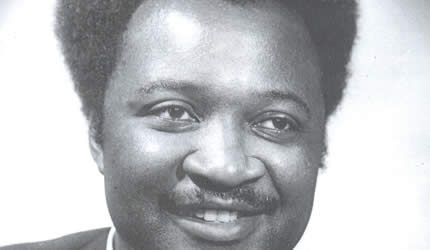
Mayowe, who died in South Africa on Saturday, has been declared a national hero.
He was 60.
Cde Mayowe succumbed to cancer in Johannesburg where he was undergoing treatment.
Zanu-PF secretary for administration Cde Didymus Mutasa confirmed the development in an interview with The Herald at State House yesterday.
“Masvingo Province requested that he be declared a national hero. We sat down as a committee of Politburo and agreed that he be declared a national hero,” Cde Mutasa said.
He said Cde Mayowe joined the liberation struggle from university alongside Cde Sobusa Gula-Ndebele, Cde Christopher Mutsvangwa and the late national hero Cde Zororo Duri.
Read More. . .
“The way Cde Duri contributed to the liberation struggle is the same way that Cde Mayowe did and so we saw it fit to declare him a national hero.”
Family spokesperson Rufaro Mayowe said burial arrangements would be announced in due course.
The Ministry of Foreign Affairs expressed shock and sorrow on Cde Mayowe’s death.
“A veteran of Zimbabwe’s liberation war, Ambassador Mayowe rose through the ranks, ending up as Zanu-PF’s representative to the Scandinavian countries.
“At Independence, Ambassador Mayowe was among Zimbabwe’s first crop of diplomats and served as ambassador to Romania, Senegal, Mozambique and Sweden, before his current appointment to the Democratic Republic of Congo.
“The Minister of Foreign Affairs, Honourable Simbarashe S. Mumbengegwi; the Deputy Minister, Honourable Rabson Makhula; the Secretary for Foreign Affairs, Ambassador Joey M. Bimha; and the entire staff of the Ministry, extend their heartfelt condolences and deepest sympathy to Mrs Mayowe and the Mayowe family.”
Zanu-PF national chairman Cde Simon Khaya Moyo also expressed shock at Cde Mayowe’s death.
“I knew Cde John Mayowe as a distinguished freedom fighter and a liberator of impeccable credentials. He was a true patriot, humble, principled and a down-to-earth revolutionary.
“Unlike others, he never believed in grandstanding but in serving his country with dignity and pronounced focus.”
Cde Khaya Moyo described Ambassador Mayowe as a seasoned and polished diplomat who defended Zimbabwe’s image and sovereignty with precision.
“Zanu-PF has lost an exceptional cadre. A man of purposeful courage. A man of honesty, who hated corruption to the marrow. A dedicated servant of the people.”
He said Zimbabwe had become poorer after Cde Mayowe’s death.
Comrade Mayowe worked closely with the late Zanla commander Cde Josiah Magama Tongogara as director of the Chitepo School of Ideology.
At the school, he provided intellectual direction to cadres in the later part of the liberation struggle, including the initial training of many political commissars.
He contributed to the strength of the party during the liberation struggle and provided knowledge for use in training and liberation studies, including a written presentation of the national grievances and the Mwenje II booklet.
Cde Mayowe left the country in 1975 to join the liberation struggle and received military training in Mozambique and Tanzania.
He was among the first Zimbabwean diplomats in 1980 and served in various portfolios including Head of Policy, Research and Training in the Ministry of Foreign Affairs.
While serving as Ambassador of Zimbabwe to the Republic of Mozambique, he was the driving force behind the establishment of the Chimoio Monument to commemorate the many people who lost their lives in Mozambique during the struggle.
Cde Mayowe contributed in the construction of another monument in Zambia.
He is survived by his wife Tendai and five children Waraidzo, Chiedza, Rumbidzai, Ushemasimba and Rufaro.
Mourners are gathered at No. 17 Huxham Road, Greendale, Harare.
The deceased’s body arrived in Harare last night.


 leeroy