


 Online Reporter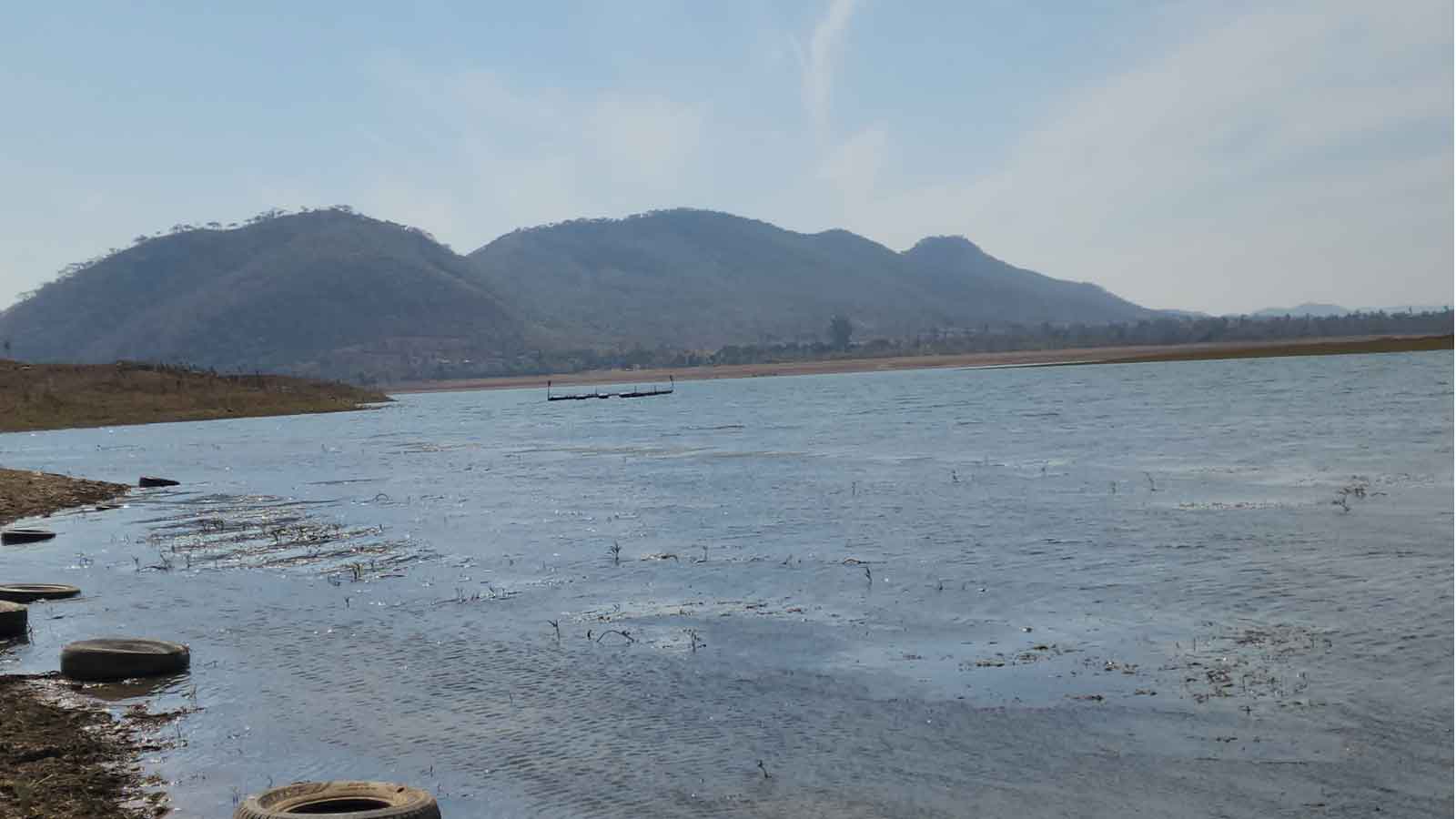
Trust Freddy and Theseus Mauruki Shambare
THE first thing visitors notice is not what they see, but what they no longer hear.
There was a time when Mazowe Dam announced itself long before it came into view.
Apart from the characteristic cool breeze, laughter drifted across the water as children played along the shoreline, while the roar of speedboats interrupted the afternoon calm.
During holidays and weekends, and for some during weekdays, anglers celebrated impressive catches, while families spread picnic blankets beneath trees overlooking one of Mashonaland Central province’s most treasured recreational destinations.
The breeze carried the scent of fresh water, mingling with smoke from braai stands and the sweet fragrance of nearby citrus orchards.
For many Zimbabweans, this was as close as they would ever come to spending a day at the beach.
The vast water body created the illusion of an ocean in a landlocked country, with waves rolling towards the shore and providing the soundtrack to childhood holidays, fishing competitions and family outings.
Today, that soundtrack has fallen silent.
The waves are gone.
The shoreline has retreated so dramatically that visitors have to walk across cracked earth and dry sand before reaching what remains of the water.
Standing above it all is the resort’s famous zip line, which has become an unintended monument to what Mazowe Dam used to be.
Not long ago, thrill-seekers soared above the intimidating and shimmering blue water while families watched from boats and the shoreline.
Today, the same cable hangs over the exposed lakebed, uncovering what was once hidden beneath metres of water.
The ride has not changed, but the landscape beneath it has.
From the platform, it is difficult to imagine that this valley once hosted fishing competitions, boating excursions and busy weekends that transformed the dam into one of Zimbabwe’s favourite recreational destinations.
Today, the few remaining boats sit idle.
The competitions are gone and even fishermen have almost disappeared.
Among the few who still return is Terence Matemavi, who quietly untangles his fishing line before casting it into the shallow water. The hook lands with barely a ripple.
“I have been here since morning and I have not caught anything,” he said, staring at the motionless float.
“It never used to be like this. You would come here knowing you would catch three or four good breams before going home. Nowadays you can spend the whole day here and leave empty-handed.”
He pauses.
“I sometimes wonder whether this is the end of Mazowe Dam as we knew it.”
The Zimbabwe Parks and Wildlife Management Authority (ZimParks) has suspended fishing activities, particularly using nets, as declining water levels continue to affect the water body.
Yet, along the nearby Harare-Bindura highway, vendors still display large fish to passing motorists.
To travellers unfamiliar with the situation, it appears business is thriving.
“The fish are no longer coming from this dam. They bring them from places like Lake Chivero and Darwendale.
“hey sell them here because people still associate Mazowe with good fish,” revealed Matemavi.
It is a business built on memory.
The name still carries the reputation earned over decades, even when the water that created that fame has largely disappeared.
Nearby, empty picnic shelters overlook the shrinking reservoir and braai stands remain cold.
A worker at one of the recreational facilities reckons business has declined sharply.
“People came because of the water. They came to swim, fish and enjoy the scenery. When the water disappears, people also disappear.”
For decades, Mazowe Dam was more than a tourist attraction.
Built in 1920, the century-old reservoir has for generations been at the centre of life in the area, sustaining citrus orchards and irrigated agriculture. It also sustained fishing and recreation.
For more than 100 years, its waters supported an economy built around farming and leisure, turning the surrounding landscape into one of Mashonaland Central’s most productive agricultural zones.
Dejected farmers
The same water that entertained weekend visitors sustained thousands of hectares of irrigated farmland stretching towards Concession and Mazowe Citrus.
Every winter, the countryside transformed into a greenbelt of wheat fields and motorists travelling along the Harare-Bindura highway often slowed down to admire the emerald landscape.
This winter, that familiar picture never came.
Instead of wheat swaying in the breeze, dry maize stalks rattle beneath the winter wind.
The irrigation pumps are silent.
At Pellier Farm, where wheat production formed part of the annual farming cycle, not a single hectare was planted this season.
For workers who depended on the farms, the disappearance of water has become the disappearance of certainty.
By the roadside, Mai Tanaka bends over a bucket of dried maize cobs while her young daughter watches quietly.
Not long ago, she would have been working in wheat fields, chasing quelea birds away from ripening grain.
Today, there are no birds to chase and no wheat fields to tend — only memories.
Until recently, she worked at Pellier Farm, which relied on Mazowe Dam for irrigation.
“The farm is no longer functioning the way it used to. I resigned last week because there was simply nothing left for me to do,” she said.
Normally, after harvesting maize, tractors would already be preparing the land for wheat.
“This year, nothing happened.”
More than 400 workers and their families now face an uncertain future.
“My husband is still employed, spraying the citrus orchards, but even his future is uncertain because everyone knows this problem cannot be solved overnight,” said Mai Tanaka.
Mashonaland Central Agricultural and Rural Development Advisory Services provincial director Mr Misheck Chitokomere said farmers who relied on Mazowe Dam were the most affected.
“Most of the farmers who relied on Mazowe Dam did not plant wheat at all,” he said.
“If you travel through Mazowe Citrus and towards Concession, you will notice there is virtually no winter wheat.”
However, production losses were absorbed elsewhere through expansion in areas such as Mvurwi, Guruve, Shamva and Muzarabani.
“The hectares lost around Mazowe were compensated for by increased planting in those areas,” he said.
But statistics, he acknowledged, tell only part of the story.
For those whose livelihoods depended on Mazowe Dam, there has been no replacement.
The 2025/2026 rainfall season exposed the vulnerability of Mazowe Dam.
While major reservoirs such as Tugwi-Mukosi, Manyame, Osborne and Mutirikwi recorded significant recoveries following good rains, Mazowe Dam remained severely depleted.
The contrast raised a difficult question among communities living around the reservoir: If the rains came, why did Mazowe not recover?
“We received rains, so why is the dam empty?” queried Matemavi.
Environmental degradation
For communities around the reservoir, the answer lies upstream.
Experts say the health of a dam is determined long before water reaches its walls.
Mazowe Dam depends on the wider Mazowe River catchment, where years of environmental degradation, illegal mining activities, stream-bank cultivation, deforestation and changes in land use have affected the natural movement and quality of water flowing into the reservoir.
The result is a catchment carrying less clean water and more sediment.
The chief director for the Department of Agricultural Engineering and Farm Infrastructure Development in the Ministry of Agriculture, Mechanisation and Water Resources Development, Engineer Edwin Zimunga, who has spoken extensively on water resource management, notes that dams cannot be managed in isolation.
“A dam is only as good as the catchment feeding it.
“When rivers feeding a dam are degraded, the reservoir suffers because you begin receiving more silt and less water,” he argued.
Protecting water bodies, he said, requires attention beyond dam walls.
“Catchment management is critical. We have to protect wetlands, control erosion and ensure activities taking place upstream do not compromise the future of the water body.”
Earlier this year, the Government declared a State of Disaster on 17 rivers affected by severe environmental degradation, highlighting concerns around illegal mining, pollution and siltation.
Research by environmental experts has shown that when vegetation is removed along riverbanks, soils are easily washed away during heavy rains.
Instead of slowly filtering into rivers, water rushes across damaged landscapes, carrying sediment into reservoirs and reducing their storage capacity.
The problem was not only how much rain fell, but also the journey the water had to travel before reaching the dam.
Today, the exposed shoreline has become a record of that failure.
Where waves once rolled, weeds now spread.
Where boats once floated, grass grows. Where children once raced towards the water, the shoreline continues its slow retreat. Yet hope remains.
Resort workers still unlock gates.
A few anglers still arrive with fishing rods over their shoulders.
Farmers still look towards the sky whenever clouds gather.
Because, for those who live around Mazowe, the dam has always been more than a body of water.
It has been a neighbour, a provider, a playground, a workplace and a source of identity. As the afternoon sun sinks behind the hills, the zip line sways gently in the breeze. There are no great waves beneath it now, only exposed earth bearing silent witness to what has been lost.
When the waves stopped coming, Mazowe did not only lose a recreational attraction; it lost a way of life that generations believed would always be there.



 Bongani Ndlovu