Vusumuzi Dube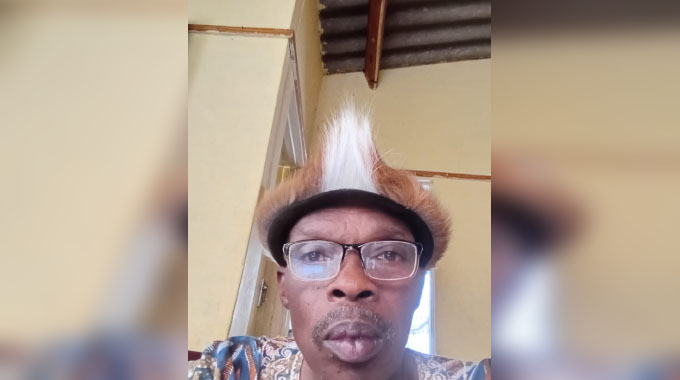
Mbulelo Mpofu, Zimpapers Arts and Entertainment Hub
DUMISANI Bafana Mbambo, a revered figure whose life bridges education, history, art and community leadership, is spearheading a unique cultural movement, which advocates for the deployment of irony as a powerful tool to decolonise Zimbabwe’s languages and reclaim indigenous wisdom.
The retired educator and headmaster, with 38 years of service shaping young minds, now turns his focus to empowering communities through the deliberate revitalisation of sophisticated linguistic tools inherent in local speech.
Born in Lupane District, Matabeleland North Province, Mbambo’s journey began in the very heartland of Zimbabwean culture.
“I was educated at Kwarai, Gumede, and Jotsholo Government schools, where foundational understanding of community and language was deeply rooted. I honed my pedagogical skills at Hillside Teachers’ College and furthered my expertise with a Bachelor’s Degree in Educational Administration, Planning, and Policy Studies from the University of Zimbabwe.
“I taught at primary, secondary and tertiary levels in both Zimbabwe and South Africa, profoundly impacting students, particularly in arts and culture,” he said.
Later, he applied his leadership acumen as a Human and Industrial Resources Manager in the private sector.
Beyond the classroom and boardroom, Mbambo is a polymath — an artiste, historian, writer, published author (“Amangwe Heritage” and “Memoirs of Jotsholo Secondary School”) and a respected coach and adjudicator in music, drama and public speaking.
His commitment to community arts is evident in his role spearheading the launch of Cowdray Park Community Arts in 2023 and founding Voices and Visions Productions last year.
This organisation is producing a ground-breaking video documentary aimed at uniting, empowering, educating and entertaining communities across Zimbabwe and beyond, reflecting his lifelong dedication to cultural expression and Ubuntu/Hunhu.
At the core of Mbambo’s mission is a profound belief in the power of indigenous linguistic devices to assert cultural identity and challenge the lingering effects of colonialism on language and thought.
He argues that decolonisation isn’t just about political structures but also about reclaiming the subtlety, depth and humour embedded in native tongues.
“Irony is the use of language, metaphor, irony, exaggeration, jokes, sarcasm and so on. It is not limited to words; it also extends to actions and examples of it are found every day. It is most evident in the construction and maintenance of a home, where there are many aspects that can be discussed and studied,” Mbambo said.
Mbambo passionately advocates for the conscious revival and everyday use of traditional linguistic forms, describing them as the essential “password,” “pin code,” or “code” to cultural understanding and liberation.
These vital forms include Ukuzila (taboos and respectful avoidance), Amazwi ahlakaniphileyo (clever, witty speech), Izaga (proverbs), Izitsho (idioms/idiomatic expressions), Inganekwane (folktales), Inkondlo (poetry), Imbongi/inkondlo (praise poetry/praise singer), Ingoma (songs), alongside metaphors, symbols, parables, puns, wittiness and confidentiality.
He contends that these elements, particularly irony and wit, are sophisticated tools for critique, social commentary, preserving history and asserting cultural values in a way that is deeply rooted and often subversive.
Their deliberate use in everyday conversation, education and media is, for Mbambo, an act of resistance against linguistic homogenisation and cultural erasure.
Through his community arts initiatives, Voices and Visions Productions, his adjudication work and his own prolific writing spanning poetry, biographies, history and uplifting essays, Mbambo actively creates platforms for these linguistic traditions to flourish.
His documentary project aims to capture and amplify these expressions, showcasing their power to educate and unite.
For Mbambo, “encouraging Zimbabweans to consciously employ irony, proverbs, metaphors and storytelling in daily life is more than linguistic exercise; it’s about unlocking a cultural password. It’s about fostering a generation fluent not just in the vocabulary, but in the rich, nuanced and inherently liberating wisdom of their own languages, ensuring that the true depth of Zimbabwean heritage continues to spark, critique and inspire.”
His mission is a call to rediscover the sharp wit and profound meaning embedded in everyday speech as a vital step towards true cultural autonomy. — @MbuleloMpofu


 Online Reporter