Online Reporter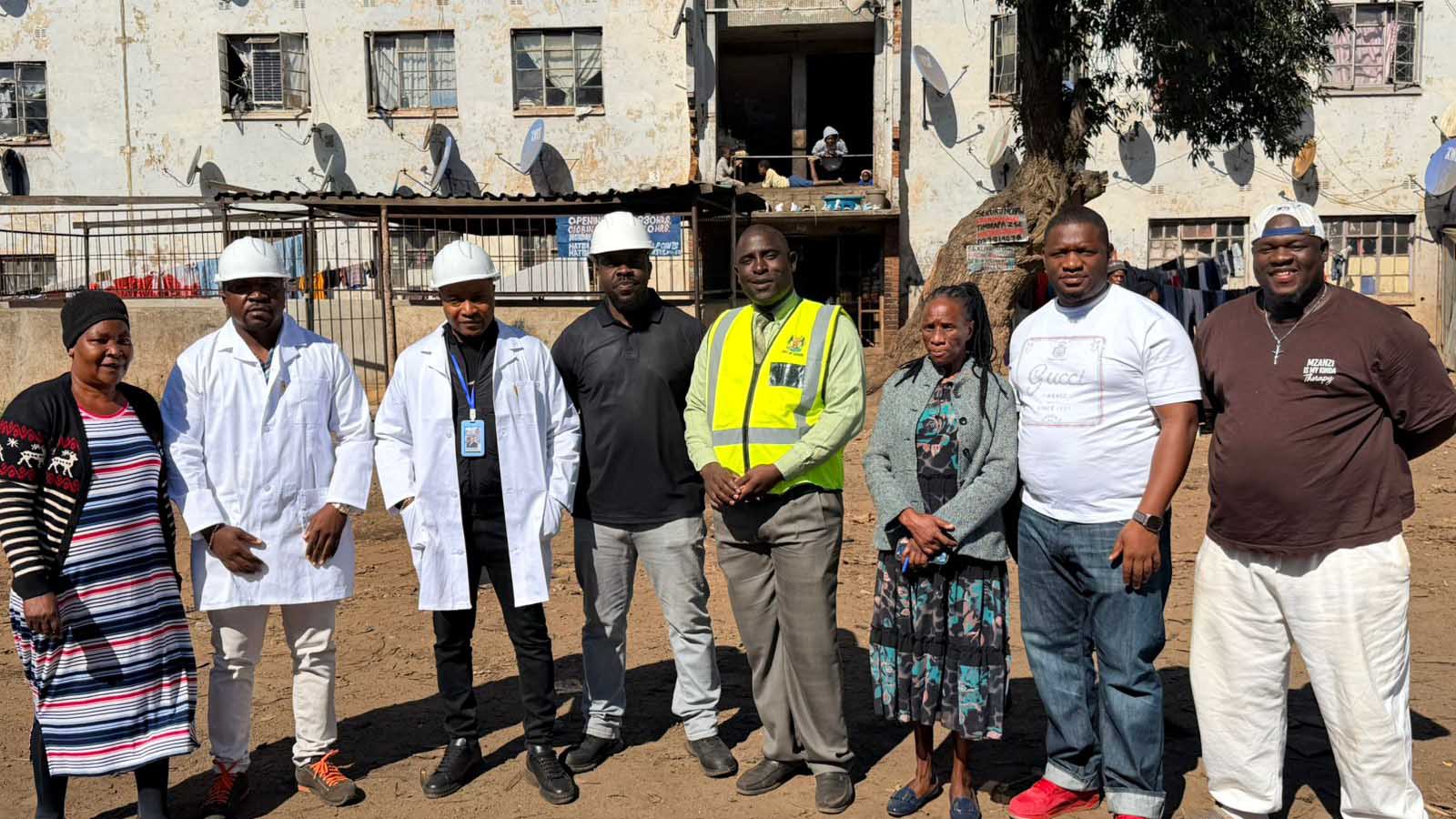
Takemore Mazuruse
Housing is a basic human need, and long before today’s policy language became common, development experts placed shelter for humankind at the top of priorities because humane foresight understands that dignity cannot exist without a safe place to live.
For those who have security in place, calls for housing that meets basic human standards may seem distant.
Yet for families whose homes are overcrowded, unsafe and unfit for everyday life, decent shelter is not a luxury; it is the foundation for health, productivity, community stability and national development.
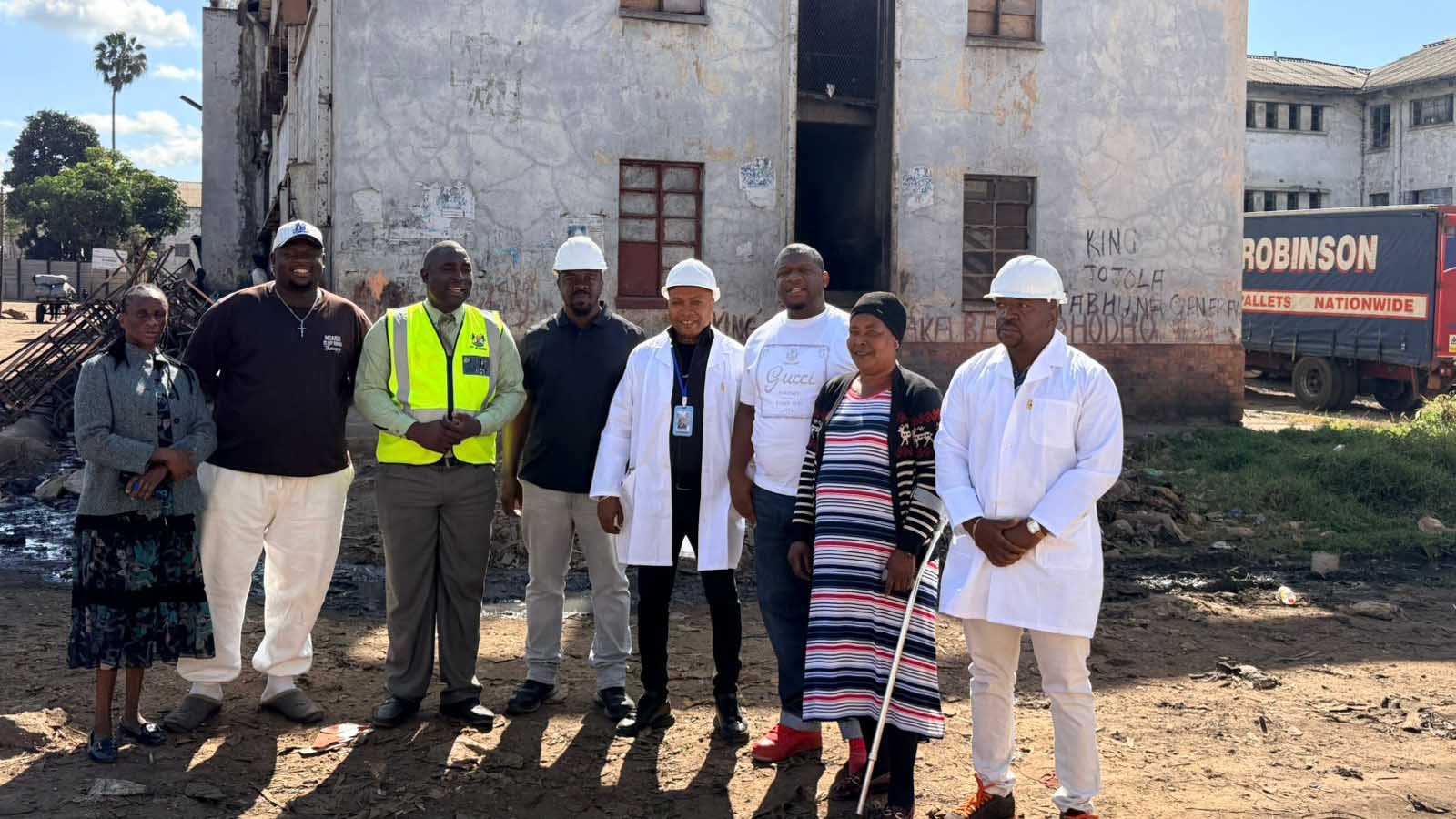
Over the years, the story of Matapi Flats has dominated public attention, with many raising concerns about its deplorable conditions.
What should have been a refuge became, in too many instances, a breeding ground for crime, a hotspot for disease outbreaks and a community habitat that weakened family safety and unity.
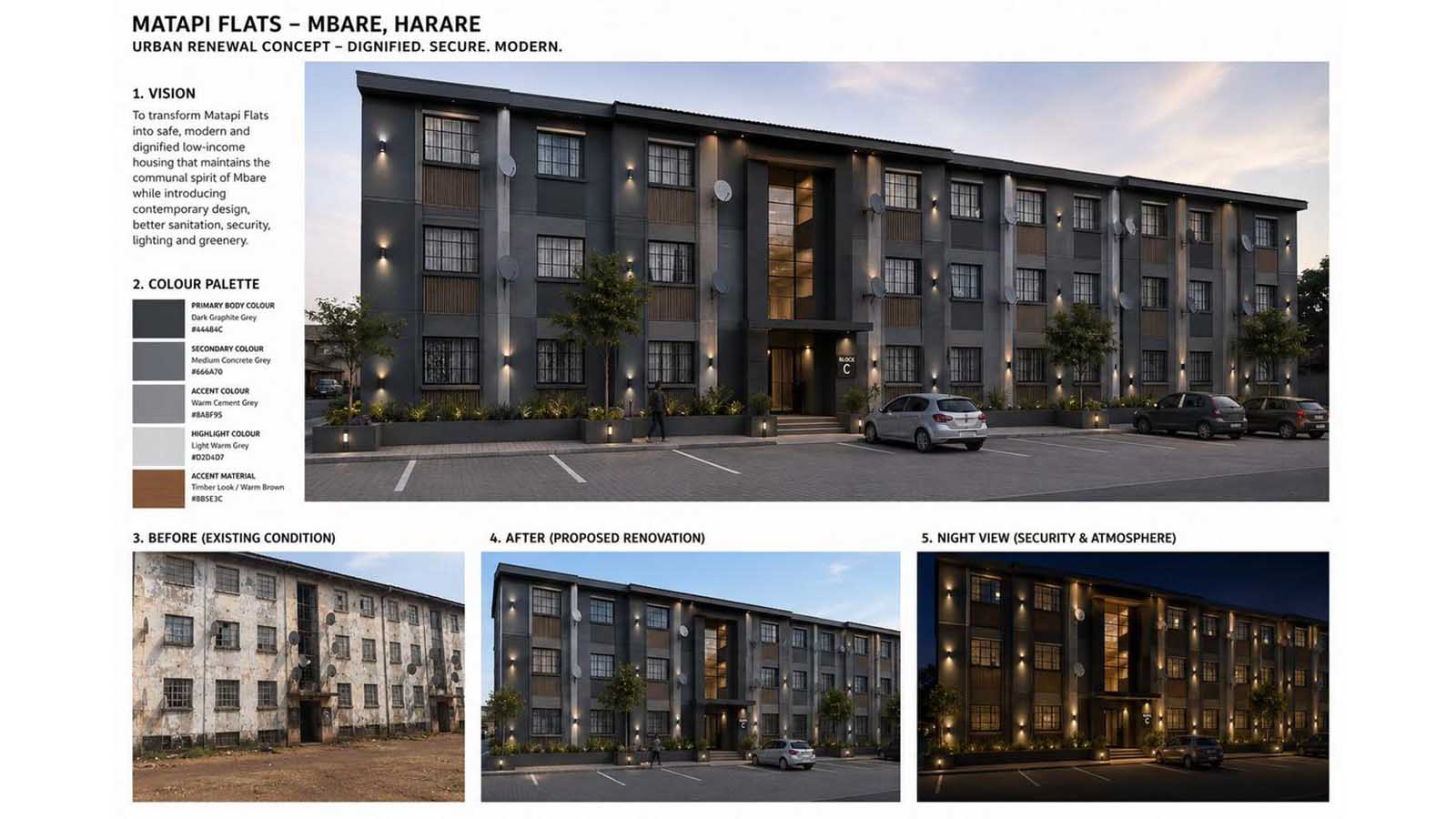
Repeatedly, proposals emerged, some calling for demolition, others urging rehabilitation, each with one end goal: to transform Matapi Flats into a homely, secure and healthier environment for residents.
In development practice, upgrading a human habitat is never “just construction.” It is risk reduction, public health protection and community recovery.
Whether the approach is rehabilitation or demolition followed by reconstruction, the purpose remains the same: to advance human welfare and move communities closer to decent housing standards without leaving anyone behind.
When news broke out that Engineer Collins Takunda Mnangagwa, a new-generation entrepreneur and community builder, had taken it upon himself to upgrade Matapi Flats for the benefit of the broader Mbare community under an ED AID1 programme, the move was widely received with cheerfulness.
The intervention arrives at a time when the city is pursuing broader efforts to address unlawful structures and improve urban living conditions, yet it also reflects something more meaningful than compliance.
It reflects human-centered development.
As a development practitioner with close to two decades of experience, I fully understand the urgency of direct community intervention: ensuring that the hungry are fed, the sick are supported, the poor are protected and the homeless are sheltered.
I have managed communications for local and international organisations during humanitarian responses and disaster management operations, among them the Tokwe Mukosi Floods disaster of 2014 in Masvingo, and the Cyclone Idai response of 2021 in Chimanimani and Chipinge, where I witnessed how quickly lives can be upended and how families can easily become homeless, hungry and overwhelmed.
In disaster moments, people do not have the comfort of choosing where help should come from, or who should qualify. The first assistance received often becomes another chance at life.
That is why this Mbare intervention, by whoever the beneficiary is intended for, and whatever the programme label may be, must be met with the respect and recognition it deserves from all progressive citizens.
It is, therefore, no surprise that the Matapi Flats initiative should be viewed as more than a housing project.
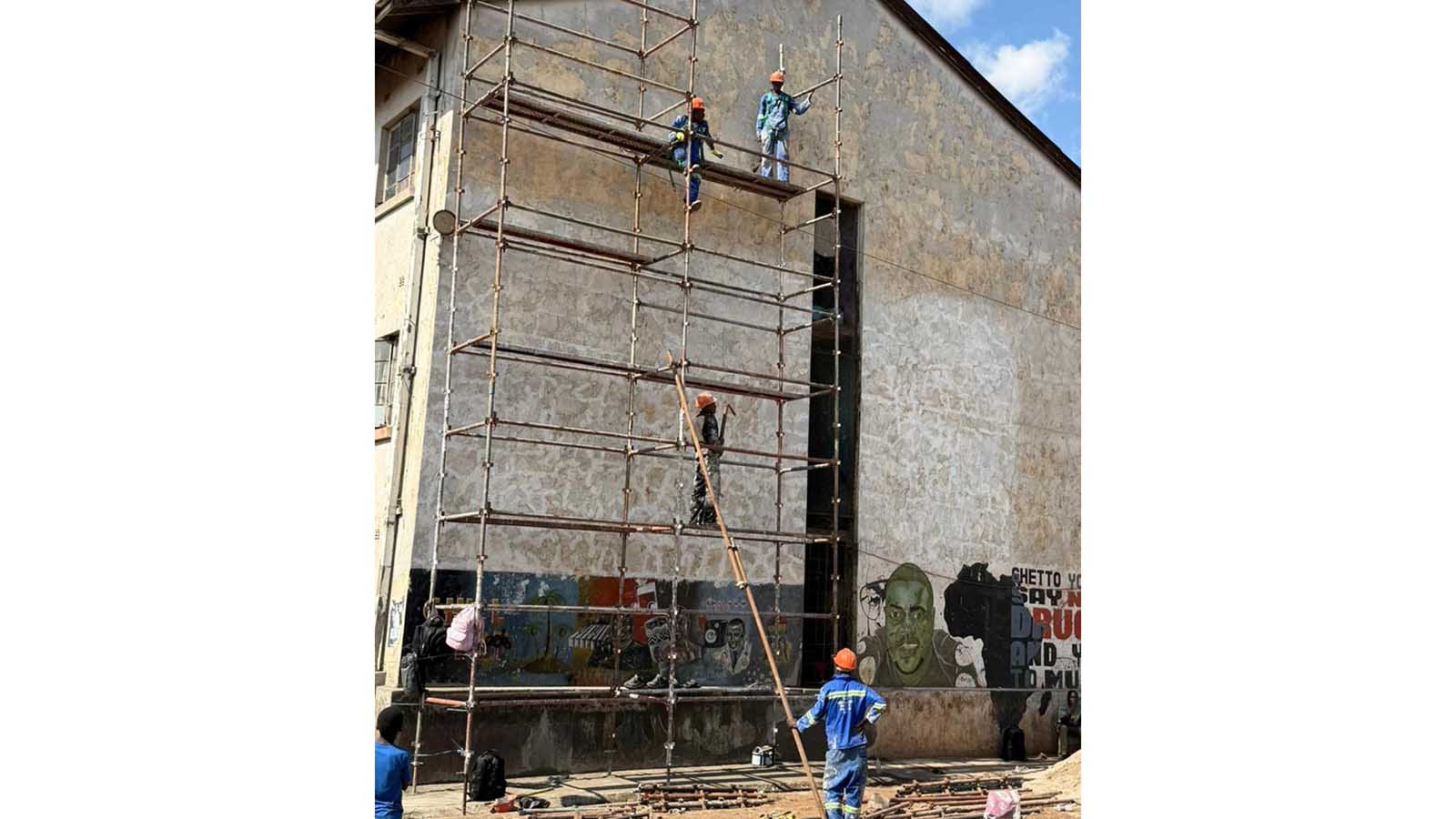
Eng Mnangagwa’s intervention must be assessed for what it is: a practical act of development leadership rooted in community welfare, rather than public talk.
The situation at Matapi Flats was a disaster waiting to happen – socially, medically and physically.
The ED AID1 intervention is the kind of preventive, community-first action that history records with appreciation, especially in a context where many large institutions could have stepped in earlier, but too often offered delayed attention.
At an age when many are still formulating priorities, Eng Mnangagwa — hardly 40 — has chosen a path of community investment rather than distant commentary.
Nobody is required to like the man or agree with his background. But the older wisdom is clear: a stitch in time saves nine.
And in this case, the “stitch” is visible, timely and humane.
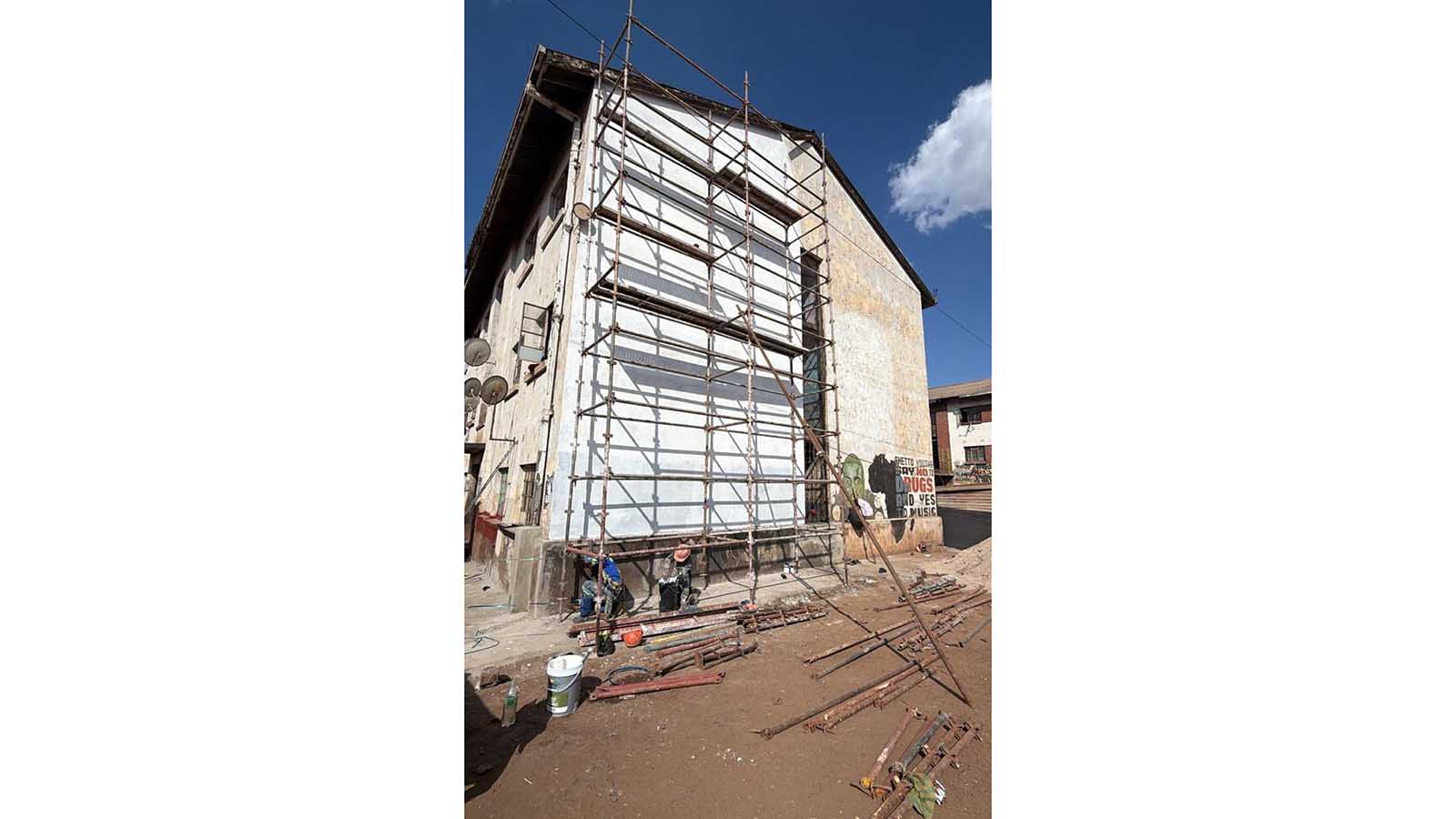
Over the years, Eng Mnangagwa has built ventures across mining, logistics and energy, while also creating employment, nurturing talent and supporting vulnerable communities, often with little or no mainstream media attention.
The Mbare intervention, therefore, fits a pattern: it is another community development act, delivered with purpose and without losing sight of the people who live there.
Matapi Flats is not merely a location. It carries memories of neglect and emotional meaning for many residents.
Those who know the folklore behind it understand why rehabilitation matters — not only to infrastructure, but to confidence, safety and the restoration of dignity.
The youth-led ED AID1 intervention is also a reminder that concern for humanity still exists, even when public systems led by city fathers fail and their power is not always accompanied by responsibility.
The project is further strengthened by the fact that it forms part of a broader ED AID1 community intervention with an international scale.
This matters when Zimbabwe is working through ongoing development priorities under National Development Strategy 2, which emphasises improved livelihoods, community resilience, inclusive growth and the reduction of vulnerability.
It also aligns, in spirit and direction with global Sustainable Development Goals — especially those focused on health, safe communities, reduced inequalities, and decent housing.
Eng Mnangagwa has also been recognised repeatedly for leadership and impact, including awards such as 40 Under 40 Businessman of the Year by the Institute of Corporate Directors Zimbabwe (ICDM) and 40 Under 40 Project Manager of the Year by the Chartered Institute of Project Managers Zimbabwe (CIPMZ).
He was voted Outstanding CEO by Zimbabwe CEO’s Network and more recently he received the Exceptional Community Leadership Award from the Community Builders in Africa Awards.
These accolades are not an end in themselves, but they do reflect a demonstrated capacity for execution and responsibility in the real world.
Eng Mnangagwa’s commitment means good times have come to Mbare, and to Matapi Flats in particular.
On this occasion, the harbinger of such positive development, Eng Mnangagwa, deserves to be saluted for taking such a bold action that is set to change the lives of hundreds.
To Eng Mnangagwa: this effort should be counted among many community efforts under the ED AID1 banner.
Zimbabwe is watching and hope for disadvantaged communities like those at Matapi Flats is rising once again.
(Takemore Mazuruse is a youth advocate, journalist and development practitioner with close to two decades of experience working with both local and international development organisations in Zimbabwe and beyond.)