admin
admin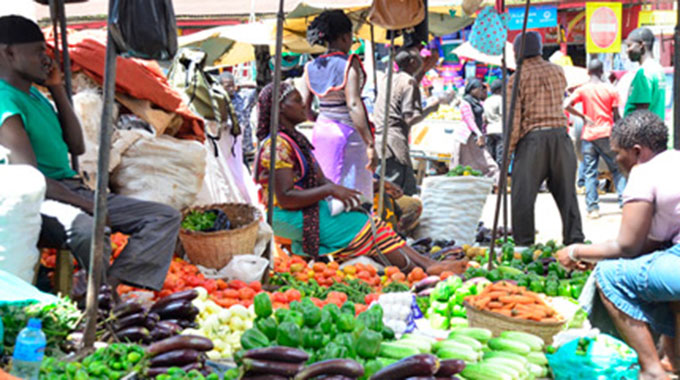
Mangaliso Lawrence Kabulika
FRESH agricultural produce from regional countries is slowly making its presence felt at Mbare Musika in what analysts believe is a response to the recently adopted African Free Continental Trade Area (AfCFTA) protocol that is setting the stage for inter-regional trade among African countries.
Capitalising on the unavailability of particular local products at the bustling food market, regional countries have responded positively to the AfCFTA modus operandi to come in and fill the void.
Knowledge Transfer Africa (KTA) chief executive officer Dr Charles Dhewa recently observed that marketing dynamics at the grand market were shifting with countries such as Zambia supplying unique products such as cassava meal, Egypt supplying grapes at the price of selling at a price of US$4 a pallet while darts were coming in from the Democratic Republic of Congo (DRC) and trading at a price of US$2 and onions were coming from South Africa at a price of between US$5 and US$10 for a 10kg pack.
While the influx of foreign traders at Mbare Musika brings a sense of diversity in terms of markets for producers, the development is essentially an endorsement of Mbare Musika’s transitioning into both a regional and international market.
However, this reshaping of dynamics at Mbare Musika is also bringing to the fore the stark reality that there is inadequate storage space for horticultural products, which is in contrast to the situation in countries like South Africa, DRC and Egypt.
This has seen producers failing to adequately and properly store their produce creating the gap regional markets have tapped into to sell their products.
According to a survey conducted by Agricultural Marketing Authority (AMA) in 2022, tomatoes were smuggled into the country from Zambia. This could have been triggered by scarcity of storage space leading to foreign traders feeding into the demand.
Seasonal production of horticultural products has also opened a freeway for foreign traders at Mbare Musika As the local farmers face challenges in meeting year-round demand for certain products due to planting according to season, foreign traders have recognized an opportunity and seized upon it. With the ability to source goods from different regions and countries, these traders fill the gaps in supply by offering a wide range of agricultural products throughout the year.
In light of the above, this should be an indication to local vendors and farmers that they must adapt to the changing landscape of seasonal production.
Trade in foreign currency has enticed foreign traders specializing in horticultural products to establish a presence in Mbare Musika.
The ability to conduct transactions in foreign currencies offers significant advantages to these traders, enabling them to capitalize on exchange rate differentials and potentially achieve higher profits.
Efforts to get a comment from the Agricultural Marketing Authority were fruitless as they could not be reached through the phone during the compilation of this story.
The growing presence of foreign horticultural product traders in Mbare Musika has the potential to reshape the future dynamics of the market. The influx of foreign goods not only diversifies the product offerings but also raises concerns about the local agricultural production and the long-term viability of traditional supply chains.


 Online Reporter