malvernmugadzikwa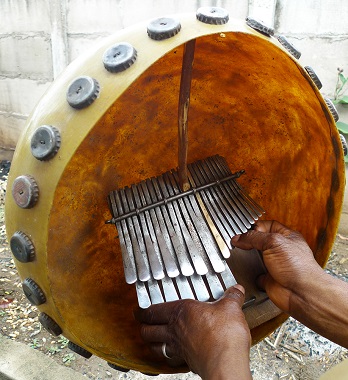
Charles Mavhunga
COLONISATION committed a cultural genocide in Africa to remove Africans from the global scene. Western powers labelled African cultural values as evil. As such, these values were considered not worth of respect or branding.
However, the growth of Pan-Africanism and the ultimate demise of colonisation on the African continent motivated production of this article, which focuses on mbira as an African cultural symbol, which deserves recognition in tourism branding.
The instrument originated from Africa more than 1 300 years ago, along the Zambezi River, in what is now known as Zimbabwe and Malawi. In 2020, mbira music was endorsed by UNESCO on the representative list of the Intangible Cultural Heritage of Humanity, and the patent holders should be the Shona people of Zimbabwe.
Mbira is played at various functions such as weddings, funerals, traditional religious gatherings (mabira) and installation of chiefs to earn the power of visionary leadership.
The music is a prayer for the Shona to get connected with their ancestral spirits and the Almighty God as they seek advice on political, economic, social and technological aspects of life.
The Shona meditate to renew their social and psychological life through playing mbira, or through listening to the music. Mbira is a tool for reconciliation and a model for a rejuvenated lifestyle.
Mbira music and colonisation
When the colonial masters learnt about the importance of mbira music in the lives of the Shona, they felt uncomfortable to allow the culture to prevail. They proceeded to ban mbira, along with other indigenous instruments, because of their role in religious expression.
The major objective of the colonial system was to destroy the culture of Africans. The Rhodesian colonial powers confiscated all musical instruments, particularly mbiras, and banned them. What they encouraged were church hymns, instead.
Missionaries were at the forefront; they spread the message that the Shona were worshipping the devil, and that possession of mbira was evil and backward. Mbira players were threatened with imprisonment by the colonial government. Spiritual ceremonies were considered evil.
The rise of mbira music in Zimbabwe
The repression of mbira music and traditional instruments by the colonial powers created animosity between colonialists and black Africans in Zimbabwe. Mbira music, however, became popular in the country.
The late Ambuya Stella Chiweshe, who was a mbira player, held that this type of music played a significant role in the rise of anti-colonial movements and the liberation struggle.
The messages in the music motivated freedom fighters to execute the war against colonialism. Liberation war fighters used to carry the mbira, in addition to the war material, to motivate the inner spirit to fight colonialists.
Freedom fighters used to launch a war zone through a bira ceremony. This was meant to mark their presence in an area. The main instrument used at the event was the mbira.
The major reason was to connect the liberation struggle with the ancestral spirits so that they would guide the war. It would also motivate the freedom fighters to become spirited in waging the war. The Smith regime, which was losing the war, finally settled for the Lancaster House Agreement in 1979, and Zimbabwe marked its independence on April 18, 1980.
The relevance of instrument
The mbira is a symbol of the Shona culture and an identity of peace and tranquillity of the locals. Mbira players (gwenyambiras) are considered sacrosanct people, religious priests and priestesses in the Shona culture. Mbira music is sacred and seeks to connect people with the Creator to get guidance on various issues.
The late Ephat Mujuru — who taught mbira music at the University of Washington in Seattle, United States, in the early 1980s — held the view that mbira is associated with peace, love, tranquillity and religion, and should be included in church ceremonies because of its natural connection with the Almighty.
Mbira players are not cruel; they are associated with priesthood. This means mbira needs to be rebranded so that it is not associated with evil.
The colonialists knew the musical instrument would spread the gospel of peace and reconciliation. They felt uncomfortable with this.
The oppressors considered blacks in Africa as inhuman, barbaric and objects of pity and, therefore, deserved no human rights. However, mbira music rejuvenated the spirits of blacks to fight for freedom. As a result, blacks in a free Zimbabwe can now talk about liberation, innovation, beneficiation, globalisation and other key developmental issues just like other human beings on Planet Earth.
However, the only outstanding issue is failure to introduce mbira music in churches in the country. This seems to be the million-dollar question, which demands answers from religious leaders.
Mbira music was popularised by Mbira DzeNharira, Mujuru, Chiweshe, Dumisani Maraire, Cosmas Magaya and Musekiwa Chingodza, among others, who travelled widely, playing this unique and original type of music.
This means the African identity is largely framed by Zimbabwe’s musical instrument at the global level. This also means the cultural values of the African people are derived from symbols such as the mbira of Zimbabwe.
Africans in Zimbabwe should feel proud to be associated with mbira, which needs to be recognised as the epitome of Zimbabwe’s tourism brand.
Charles Mavhunga co-authored textbooks in business enterprising skills and is currently studying for a PhD in Management at Bindura University. He can be contacted at: [email protected], Cell:0772989816



 Online Reporter