Charles Mavhunga
Tourism Branding
In October 2001, at Gatwick Airport, Zimbabwe lost its greatest Mbira cultural ambassador.
Ephat Mujuru died on October 5, 2001, on his way to teach at Grinnell College in the United States. This October 2026 marks 25 years since his departure, yet his legacy has refused to die.
Tourism branding is not a logo, a slogan, or a brochure.
It is the story a nation tells the world about who it is, and the proof that the story is true. Ephat Mujuru did not need a campaign to tell that story.
He lived it, played it and carried it across oceans.
The First Lady’s Recognition
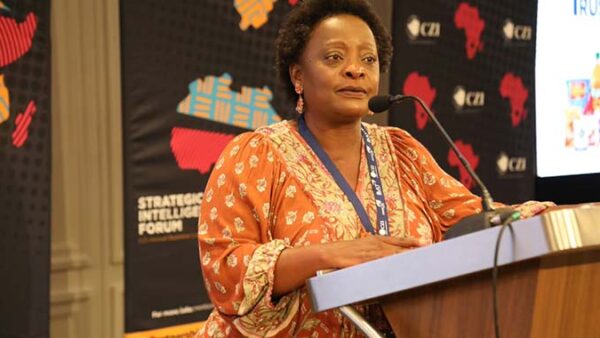
At the Mbira Festival in May 2026, Her Excellency, the First Lady of Zimbabwe, awarded the late Mbira Guru Ephat Mujuru a Global Cultural Ambassador Certificate posthumously, in recognition of his great works.
We thank and applaud her for it.
Honouring a cultural pioneer is not sentiment. It is a brand strategy at its most honest.
Her leadership is advancing the decolonisation of African memory by going deep into our culture and identifying the real cultural issues that form the background of this nation.
For generations, knowledge about Africa was undermined by colonialists who told the world our heritage was primitive.
Recognising Ephat corrects that record. It tells citizens and visitors alike that our heritage is an asset to the world.
International stints of Ephat Mujuru
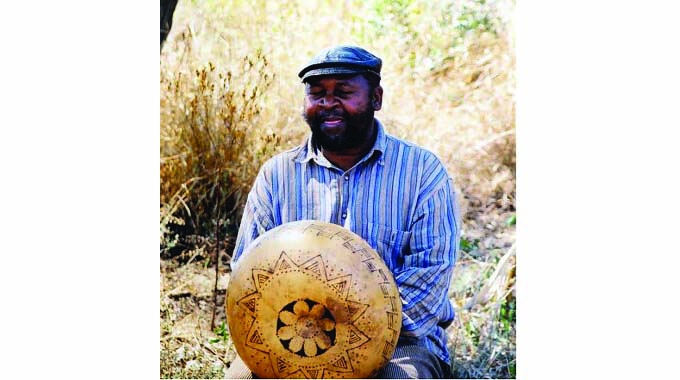
Ephat was among the first Mbira players to take the Zimbabwean brand to the United States.
He produced films that showed the good in our cultural heritage and demonstrated how rich it is. He was also among the first to speak of heritage as gnosis, a form of knowing, not merely entertainment. His students in places such as the US, Japan and Germany still play mbira pieces like “Dangurangu”, “Nhemamusasa” and others because of him.
At home, he was among the founders of the National Dance Company and the first to introduce mbira lectures at the Zimbabwe College of Music.
Before him, there was no classroom for mbira. He kept lecturing about Zimbabwean culture in the global arena while the world’s knowledge of Africa was still being distorted.
A personal memory: Chinhoyi, 1998
In 1998, Ephat played mbira at the graduation ceremony of Chinhoyi Technical Teachers College.
He took the instrument from the village hut and placed it on the graduation stage, a first.
The class of 1998 of Technical and Vocational Teachers remembers it. I was among the graduates, as was Charles Mavhunga. That day taught us that heritage is not the opposite of education.
It is the highest qualification.
25 years of global cultural ambassadorial work
Every other ambassador receives a salary, a car and a flag. Ephat was different: he volunteered. He taught mbira freely at the Zimbabwe College of Music, with the National Dance Company and at Chinhoyi. He died while travelling to volunteer at Grinnell. Twenty-five years later, his posthumous certificate is the first formal honour his country has given him.
That is the real meaning of tourism branding: authentic ambassadors who give before they receive.
Today, his teachings live on through the National Mbira Team, and we remember him by promoting cultural heritage.
Global perspectives
Globally, his story is a branding asset. He died at Gatwick, the gateway to the world, while on his way to teach. The world is now bowing to the man whose knowledge it once undervalued.
Today’s international tourists seek authenticity, healing and intangible heritage.
UNESCO recognises mbira as Intangible Cultural Heritage, but Ephat Mujuru is its human face.
This October, let us not only mourn. Let us invite the world home. Let Grinnell College come. Let his foreign students come and receive their mbira certificates from the land where their master taught.
African and regional perspectives
Across Southern Africa, Ephat is a reference point. While other countries are trying to create cultural ambassadors, Zimbabwe already has one. Much of the mbira taught regionally carries his tuning, teaching and spirit.
In a region competing for cultural tourism, authentic mbira heritage is Zimbabwe’s distinct advantage. SADC visitors want Victoria Falls, but they also want the sound that heals.
Branding October as Mbira Month, with a National Mbira Festival in Harare, would position Zimbabwe as a capital of spiritual heritage tourism in Southern Africa.
Regional dance companies could be invited to compete for the Ephat Mujuru Trophy.
The place of the tourist
Tourists are not spectators of culture. They are participants and witnesses. Today’s traveller wants to learn, listen and be changed.
Tourism in Zimbabwe cannot grow on wildlife alone, because the world is tired of only seeing lions and wants to hear the spirit. Visitors should be able to sit in an mbira class, attend a village ceremony respectfully and leave as carriers of the story.
A tourist who learns “Nhemamusasa” becomes an ambassador in their own country, extending the work Ephat began.
Lessons for Zimbabwe in branding the nation
Through the Heritage First policy, launch the Ephat Mujuru Sacred Trail: a pilgrimage starting at his home village, stopping at St Beed’s Clinic, where Mbuya Chiramwiwa gave him the prophetic warning “Cherechedza Gomba Iro,” and ending at the Zimbabwe College of Music.
This is domestic tourism with soul. Every Zimbabwean student and graduate should walk it.Second, institutionalise mbira in schools, colleges and tourism training, as Ephat began to do.
Third, honour volunteer custodians of culture while they live, not only after death.
Fourth, ensure Zimbabwe is well represented. Our culture is an art of real life and it must be presented with accuracy, dignity and pride, in our own voice.
Conclusion
Ephat Mujuru’s pit became our platform. His departure became our invitation. Twenty-five years on, the First Lady’s recognition closes a circle and opens a road. Let Zimbabwe brand itself not by borrowing images, but by amplifying the sound it already owns.
Come home to the sound that never died
Charles Mavhunga is a Zimbabwean scholar, author, and cultural ambassador pursuing a PhD in Management at Bindura University of Science Education. He is the author of Mbira Virtuosos: Stories of Zimbabwean Mbira Legends (available on Amazon) and co-author of Business Enterprising Skills (Forms 1–4), published by Gramsol Books, Harare and approved by Zimbabwe’s Ministry of Primary and Secondary Education.
/A recognised Global Cultural Ambassador and member of the Council for the Development of Social Science Research in Africa (CODESRIA), he contributes weekly to The Herald, where he has published over 300 articles on tourism branding. He can be reached at charles.mavhunga@ gmail.com or +263 772 989 816.