

 admin
admin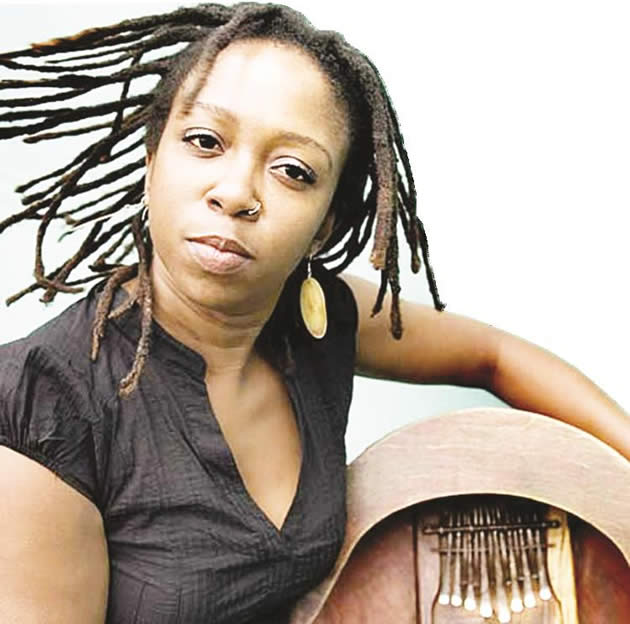

Harare Bureau
THE late mbira queen Chiwoniso Maraire was buried on Monday at her rural home in Chakohwa Village in Mutambara, Manicaland, amid a family feud which saw her body spending another night outside her home during the funeral wake on Sunday.Traditionally, the body is supposed to lie in state in the house but Chiwoniso’s body, which was first denied entry into her father’s home in Bluffhill, Harare, was also denied at the rural home to the bemusement of the village elders.
Chiwoniso lived at the Bluffhill home but her body was denied entry by her family.
The elders and mourners questioned why she was not given a proper send-off worthy of a mbira icon with some of them walking out.
Controversy surrounds the family’s decision not to afford Chiwoniso a traditional funeral wake and consequently the family was fined $50 by the village elders for breaking a traditional custom.
A family member who requested anonymity confirmed the developments but said it was not clear why the family denied Chiwoniso’s body entry into her rural home.
“The decision to deny the body entry into the home was made when the family met at the funeral parlour but it was not clear why they decided to do that. What we know is that the doctors confirmed that she died of pneumonia,” the family member said.
Some villagers could not hide their disapproval as the body remained on the hearse during the funeral wake.
Contrary to the glowing condolence messages from non-family members, there were no graveyard speeches from her relatives as is the norm.
Mourners were addressed at the home by a guest, Deputy Prime Minister Professor Arthur Mutambara, Zanu-PF Parliamentary aspirant Cde Monica Mutsvangwa as well as Pastor Charles Charamba who preached before he led mourners in prayer.
Despite the glaring divisions in the Maraire family, Prof Mutambara described Chiwoniso as a unifier not only to her family but also to Zimbabweans as seen by mourners from across the political divide who thronged Chakohwa village during the funeral wake.
“She not only unified her own family or Andy Brown’s family but also all the Zimbabweans through her music. She performed Zimbabwean music beyond our borders because she was a cultural ambassador,” he said to wild applause from the crowd.
Cde Mutsvangwa also hailed Chiwoniso as a heroine of Zimbabwean arts and culture. She said Chiwoniso remained committed to her culture even though she was born and raised in the United States.
Dub poet Albert Nyathi who was a friend to Chiwoniso described her as a talented musician who transcended racial barriers.
“Just days before her death Chiwoniso and I were busy working in the studio and she helped me a lot with ideas and I even told her that she would make a good producer,” he said.
Josh Hozheri, one of the music promoters who worked with Chiwoniso, commended the mbira queen for inspiring other women to pursue music as a career.
“She was understanding and she loved everybody. She worked with so many people in music and was passionate about her music,” he said.
Upcoming mbira songstress Hope Masike, who was part of the mourners, described Chiwoniso as an inspiration.
“Her music was so amazingly great. How is it that we only seem to see this, or appreciate this better now that she is gone?” she said.
Jazz musician Victor Kunonga said he had lost a sister, friend and advisor.
“She was a sister, friend and advisor. I will remember her for all the time we shared together,” he said.
The mbira star’s death came just over a year after her ex-husband Andy Brown died.
An accomplished singer, songwriter, and exponent of Zimbabwean mbira music, Maraire, was born in 1976 in Olympia, the United State.
She was the daughter of renowned Zimbabwean mbira player and teacher Dumisani Maraire. She spent the first years of her life away from her homeland, as her father had moved the family to Washington in the US.


 Online Reporter
 derick.khumalo