Theseus Mauruki Shambare
Features Writer
IMAGINE sand irrigating crops.
Imagine green mealies thriving in the scorching heat of Zimbabwe’s Zambezi Valley, vegetables flourishing in household gardens and families harvesting food while the rains fail.
It sounds like a contradiction.
How can sand, often associated with dryness and barrenness, become the source of water that sustains crops?
In Mbire, the answer lies beneath the riverbed.
Here, where temperatures can approach or exceed 40 degrees Celsius, and the Musengezi River can lose its visible surface water within an hour of a heavy downpour, communities are looking beneath the sand for a resource that could help them withstand another difficult agricultural season.
The river may appear dry, but water can remain trapped beneath its sandy bed in layers of sand, offering an opportunity to sustain households, livestock and, where supplies permit, small-scale irrigation.
Communities are now tapping this hidden resource through a sand abstraction project as they prepare for the anticipated El Niño-influenced 2026/27 agricultural season.
In Chikwasha Village, the prospect of bringing that water closer to households is already mobilising residents.
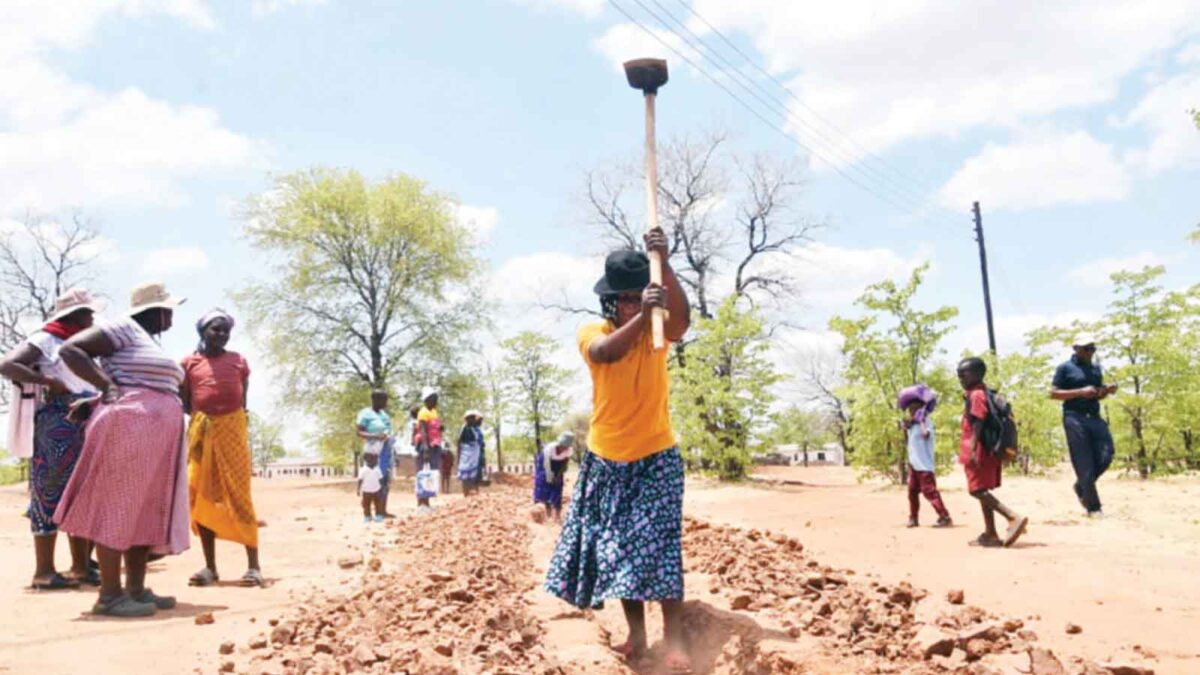
Women are digging trenches through which poly-pipes are expected to carry water towards their homes.
Under the unforgiving Zambezi Valley sun, they are helping prepare infrastructure that could turn a distant water source into a more accessible lifeline.
Among them is 35-year-old Melody Chikwasha, a mother of six who understands what it means to live where water is never guaranteed.
For years, accessing water has been a daily struggle for her family and other villagers.
The Musengezi River, which communities have traditionally relied on, offers little security when its visible water disappears shortly after rainfall.
Even a heavy downpour does not necessarily provide a lasting surface supply.
Chikwasha said the disappearing water means another struggle to secure her family’s daily needs.
“The biggest challenge is that even when it rains heavily, the Musengezi River does not hold water for long.
“You can have a heavy downpour, but within an hour the water on the surface will have disappeared. As a mother of six, I still have to find water for cooking, washing, bathing, and cleaning.
“When there is no water nearby, we have to travel long distances to look for it and carry it back home. It is exhausting because the children need water every day, and household chores cannot wait.
“Sometimes the little water we manage to bring home is not enough for everything. You have to prioritise what is most urgent, while activities such as growing vegetables are affected because you cannot maintain a garden without a reliable water supply. We have always wished to have water closer to our homes so that we can look after our families and also produce food,” she said.
For Chikwasha, the proposed household connections represent more than the arrival of pipes.
They offer the prospect of spending less time searching for water and more time attending to her children and productive activities.
She hopes that once water reaches her home, she will be able to establish a vegetable garden, providing food for her family and potentially generating income from surplus produce.
But the taps are not yet a completed reality.
The sand abstraction project is nearing completion, while residents are preparing the trenches through which distribution pipes are expected to pass. Household connections and a dependable supply must still be established before the anticipated benefits can be considered fully realised.
Another Chikwasha Village resident, Ever Maumbe, is among the women participating in the trench-digging exercise.
Their contribution is helping prepare the route through which water is expected to reach households, bringing rural women closer to a convenience often associated with urban homes. For Maumbe, digging the trenches is an investment in a better future for her family.
“We are doing this because we want water closer to our homes. As women, we spend a lot of time looking for water, yet we still have household chores and children to care for.
“Digging these trenches is not easy in this heat, but we are prepared to do our part because we know what it means to have reliable water. When the pipes reach our homes, I hope to establish a vegetable garden to feed my family and sell any surplus,” she said.
The involvement of women is particularly important in communities where they often carry the greatest responsibility for collecting and managing household water.
Their participation also gives residents a direct stake in the infrastructure being developed. However, the long-term success of the scheme will depend on more than the community’s labour. It will require functioning pumps, reliable distribution pipes, proper maintenance, and clear arrangements for managing the resource.
The science behind the intervention lies in the way sand rivers store water. Unlike conventional rivers where water is visible on the surface, sand rivers can retain water within deposits beneath their beds.
Rainwater and seasonal flows infiltrate the sandy layers, where some of the water remains protected from direct exposure to the sun.
In Mbire’s hot and dry environment, this underground storage offers a potential alternative to relying entirely on water flowing across the surface. Through suitable abstraction infrastructure, water can be drawn from these deposits and pumped towards communities.
The approach, however, requires proper technical assessment. The amount of water available, the depth of the water-bearing sand, the rate of replenishment and the volume abstracted all determine whether the source can sustain demand over time.
Water quality should also be tested before it is supplied for domestic use.
Mbire District water technician Mr Victor Maringisa said the site in Musengezi Ward 5 was selected after sand probing established that it had the strongest water potential among the locations assessed.
“We probed several points, but this site proved the best, with a depth of six metres. During pumping tests, we recorded a maximum output of 10 litres per second. We reduced the rate to establish a safe yield, which was agreed at 3,5 litres per second to ensure sustainability, particularly as we prepare for El Niño and the possibility of a declining water table.
“This is the first sand abstraction scheme of its kind in Mbire, and we believe it offers a solution for communities along the Musengezi and Angwa rivers, where conventional boreholes often struggle.
“Once completed, the scheme is expected to supply communities within a 13-kilometre radius, including Musengezi Primary School and Musengezi Secondary School, Musengezi Clinic and two dip tanks,” he said.
Maringisa said the reliable supply would also help livestock farmers maintain their weekly dipping schedules, which are sometimes disrupted by water shortages.
“We are implementing this intervention in anticipation of the predicted El Niño, with water provision and livestock support as our two main components. The pipeline network is expected to extend approximately to 18 kilometres. “We are also supporting communities to prepare livestock feed through urea-treated stover, with a target of producing about 90 tonnes across the district. Our approach is to act before the drought impacts fully manifest, so that communities have measures in place to withstand the shocks.
“Women are also playing a leading role. The water point committees are made up mainly of women, and we are targeting at least four women in each seven-member committee, with a woman serving as chairperson. They are the people who interact with water needs every day, so their involvement is important for the sustainability of the scheme,” he said.
Its anticipatory approach is designed to act on early warning information rather than wait for drought to cause widespread damage.
This is important in Mbire, where high temperatures, unreliable rainfall and limited water sources can quickly place pressure on households, crops and livestock.
The value of dependable water is also being felt in the livestock sector.
Dip Tank Number 10 in Musengezi Ward 5, farmers have previously struggled to secure sufficient water for dipping cattle, leaving livestock exposed to ticks during prolonged dry periods. Dip tank chairman Tafadzwa Mateka said the facility requires about 30 000 litres of water per dipping session, while its reserve tank holds 10 000 litres.
“One of the major challenges we faced at Musengezi Mission Dip Tank was inadequate water. The water was not readily available at the levels required for dipping cattle, and we had to source it from far away,” he said.
Mateka said mobilising resources to bring water to the dip tank had been difficult, with farmers sometimes managing to dip their cattle only when water was available nearby.
“Throughout the dry season, our cattle went for long periods without proper dipping, leaving them exposed to ticks. This was a serious challenge for livestock farmers.
“We are now happy because water is becoming accessible nearby. This gives us hope that our cattle will be dipped consistently throughout the year, from January to December, without the interruptions we experienced in the past,” he said. For livestock farmers, dipping is an important part of controlling ticks, which can transmit diseases and undermine cattle productivity.
Ward 5 Veterinary Officer Mr Martin Edwin Mushipe said dipping accounted for about 80 percent of cattle disease-control efforts, making reliable water supplies essential for protecting livestock.
“When using a dip tank, cattle are fully immersed in water treated with the correct concentration of acaricide. Our goal is to ensure robust disease control, maintain dip infrastructure and provide reliable dipping support while working hand-in-hand with farmers to protect their livestock,” he said.
He said the Veterinary Services Department also supports farmers through supplementary feeding during dry spells, alongside treatments to control internal and external parasites.
Cattle are important assets in Mbire, providing draught power, income, food and a store of wealth for rural households. Protecting them from preventable diseases is therefore part of protecting the wider rural economy.
However, the success of the sand abstraction project will ultimately be measured by whether water continues flowing after construction is completed.
Communities will need clear arrangements for managing the infrastructure, reporting breakdowns, financing repairs and monitoring water use. The available supply must also be matched to the demands placed on it by households, livestock facilities and productive activities such as gardening.
There is also a need to establish how much water can sustainably be abstracted during prolonged dry periods, when demand is likely to increase while replenishment may be limited.
These questions are particularly important as Zimbabwe prepares for the anticipated 2026/27 El Niño-influenced season, with forecasts pointing to the risk of below-normal rainfall and above-normal temperatures.
For communities in the country’s drier regions, climate preparedness cannot depend on rainfall alone. It also requires practical ways of securing water, protecting livelihoods and maintaining food production when the rains disappoint. Back in Chikwasha Village, the women digging trenches are preparing for that possibility. For Melody Chikwasha, the dream is simple: water closer to home, less time spent searching for it and the opportunity to grow vegetables for her six children. For Ever Maumbe, the hope is that the labour being invested in the trenches will translate into a reliable water supply for households.
And for livestock farmers served by Dip Tank Number 10, dependable water could mean fewer interruptions to dipping programmes, better tick control and healthier, more productive cattle.
In Mbire, the sand that appears to signal dryness is revealing an unlikely source of resilience against El Ni-ño.
The project is nearing completion, but the real test lies ahead: getting the water flowing, ensuring it reaches intended beneficiaries and keeping the infrastructure functional through the difficult seasons ahead.
In Zimbabwe’s scorching Zambezi Valley, sand could do more than cover a drying river. With water stored beneath it, these seemingly barren riverbeds could help irrigate gardens, sustain live-stock and keep communities producing food long after the rains have stopped.
In Mbire, the answer to surviving a dry season may lie beneath the very sand that defines its landscape.