

 Online Reporter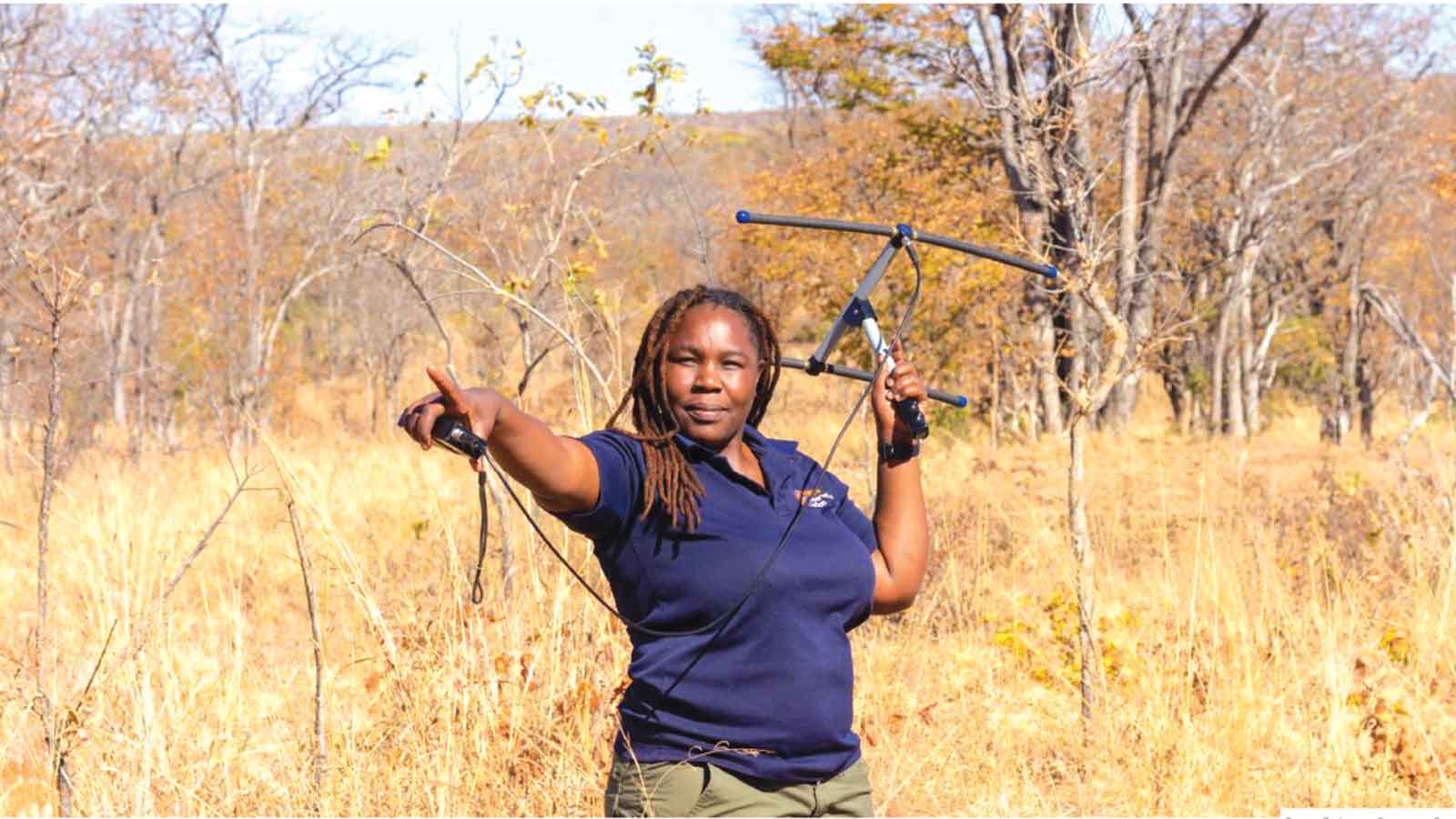
Sifelani Tsiko
Fact Check Editor
ZIMBABWEAN conservationist Moreangels Mbizah has won a top global wildlife conservation award – the Whitley Awards, better known as the “Green Oscars” for her work to reduce the human-wildlife conflict between lions and livestock in the Zambezi Valley.
The prize money will fund the expansion of the Wildlife Conservation Action, an organisation she leads, in a region that is a hotspot for human – wildlife conflict.
In Zimbabwe, Moreangels Mbizah and her NGO WCA are combining scientific research with community-led solutions to foster human-lion coexistence and protect both livelihoods and wildlife in Zimbabwe’s lower Zambezi Valley.
Five of this year’s six winners of the Whitley Awards set up in 1993, are women.
This year’s prestigious prizes have been awarded to six grassroots environmental activists from around the world for their efforts to save and protect wildlife and save the world’s biodiversity.
Recipients of the Whitley Fund for Nature awards were from Zimbabwe, Cameroon, India and Ghana.
“We seek to cut out the high overheads of conservation charities in the West, and to sidestep the process of parachuting well-meaning outsiders into other countries to ‘solve’ their problems for them,” Edward Whitley, founder of the Whitley Fund for Nature said. “We have found and funded extraordinary leaders, many of whom have become internationally recognised.”
Ever since it was founded, it has since channelled £26 million to 230 conservation leaders in 84 countries across the Global South, and many of those leaders are women, recognizing the vital role women play in safeguarding biodiversity.
Since 2014, Moreangels Mbizah has worked as a conservation biologist in the Hwange national park monitoring the movements of lions for her zoology PhD research.
She has worked extensively using various tools and innovations such as GPS to help tame the dwindling lion population in the country.
After garnering vast experience, she created the Wildlife Conservation Action (WCA), an organisation that puts harmony at the centre of humans and their interaction with animals.
Through the use of novel techniques and technologies that have won Mbizah a Whitley award, WCA hopes to fight threats to biodiversity in Mbire district that come as a result of human-wildlife conflict (HWC).
“We are not going to be able to protect lions without protecting the people,” she was quoted saying in the Guardian.
Livestock is a major asset for smallholder farmers in the Mid-Zambezi Valley where farmers often lose their stocks to predators such as lions. In addition, farmers often lose crops when they get trampled by elephants.
Humans often kill the animals in retaliation.
“In that case, we have losses on both sides,” she said. “People lose, wildlife loses – and that’s what HWC looks like.”
To combat the problem, she said at the award ceremony, the WCA developed community-led strategies for people to protect their livestock.
Community involvement is one of their major strategies that encourages local people who they trained to raise the alarm when GPS signals indicate predators are close.
All this, she said, allowed communities to safeguard their herds, saving their prized assets and removing the threat to both sides.
“Our model is looking at how we can involve the communities, how we can inspire the communities, how we can motivate and incentivise them to protect the wildlife that they are living alongside,” says Mbizah.
Wildlife experts say in Africa, lions have lost up to 90 percent of their habitat, with fewer than 20 000 remaining in the wild.
“As human populations expand and habitats shrink, lions increasingly move beyond protected areas in search of food, bringing them into direct conflict with people and their livestock,” an analyst said.
Mbizah grew up in Chiredzi, a district in the south-eastern part of the country where she saw first hand the impact of the human – wildlife conflict.
“Seeing the little impala jumping around the zebras, feeling like this was a place that I wanted to be and just feeling that strong connection to nature. That was the moment my career began,” she recalled.
She is among a rare crop of brave women in the wildlife conservation sector.
“It was very lonely,” she said after clinching the award.
“There was no black African woman who had founded a conservation organisation in Zimbabwe. It was something that I saw as a gap that needed to be filled.”
In addition, her organisation has reached out to young female African conservationists offering them an opportunity to gain experience through wildlife conservation mentoring.
“This has been my story, but it doesn’t have to be the story of everyone coming after me,” she said.
Her success is positive proof that courage, hard work and hope can go a long way toward creating meaningful progress in the conservation of lions.
There is no doubt that Mbizah’s effort will go a long way in supporting all efforts to fight against wildlife crime and human-induced reduction of species, which have wide-ranging economic, environmental and social impacts in the country.
Zimbabwe’s wildlife heritage continues to face threats which include poaching, illegal wildlife trade, overexploitation, illegal mining and habitat loss largely due to land development, agriculture, global warming and invasive species.
The country was working closely with other countries and multilateral agencies to take bold new steps to implement strategies to combat the illegal wildlife trade.
The strategies aim to end poaching and wildlife trafficking in the country. Some of the interventions included increased budgetary support for law enforcement and developing appropriate legislation to control, ban or restrict the use of toxic chemicals used in the indiscriminate killing of vultures, elephants, lions and other wildlife.
Zimbabwe is committed to wildlife conservation and over 26 percent of the country’s land is reserved for wildlife.
These include national parks, safari areas, recreational parks, sanctuaries, botanical gardens and botanical reserves.
Zimbabwe remains an important frontier in Africa and the world for conserving critically endangered species.



