admin
admin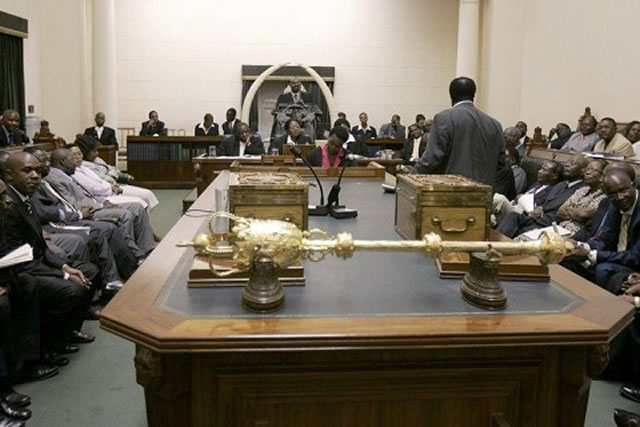

Prosper Ndlovu Business Editor
THE government has not authorised the importation of processed mealie-meal, a senior official has said. Local milling firms have reacted angrily to the influx of cheap foreign mealie-meal especially in southern parts of the country, which they blame for killing their businesses.
The Grain Millers’ Association of Zimbabwe (GMAZ) claims imports have snapped 55 percent of the local market share — forcing local players to produce about 30 percent of their total production.
The development, says GMAZ, is a threat to about 8,000 jobs in the sector following a slowdown in production capacity.
Millers say the domestic slowdown is a direct result of meali-meal import permits issued by the Ministry of Agriculture, Mechanisation and Irrigation Development.
Mutoko South MP David Chapfika waded into the dispute during a discussion in Parliament on Wednesday when he sought clarity on “the government policy on importation of refined mealie-meal in Zimbabwe” in relation to genetically modified organisms (GMOs) and value addition as stipulated in the Zim-Asset document.
The question was directed to Agriculture Minister Joseph Made and his Industry and Commerce counterpart Mike Bimha.
“It’s maize to be processed into mealie-meal when it’s in Zimbabwe. The importation that has been authorised by the government is to import maize and not mealie-meal, whether it’s GMO, which isn’t allowed in this country or not, mealie-meal, no but maize seed, yes,” Chiratidzo Mabuwa, the Deputy Minister of Industry responded.
She said grain imports, not refined mealie-meal, were justified given an insufficient harvest due to drought.
“As a result of that, the government has allowed private players to import mealie-meal for production and value addition.
“No policy has been taken into account regarding processed maize meal being called mealie-meal. The process that the government has agreed on and is currently undertaking is the importation of maize meal by private players to augment the government initiatives,” said the Deputy Minister.
Made was not around to respond.
Mabuwa said both ministries (Industry and Agriculture) were involved in determining import permits.
“The Ministry of Agriculture, Mechanisation and Irrigation Development is responsible for ascertaining and supplying information to the Ministry of Industry and Commerce on any agricultural commodities that are in short supply in so far as the agricultural produce is concerned,” she said.
Chapfika further asked whether the government had allowed the importation of GMO meali-meal not grain from South Africa or other parts of the region.
He concurred with millers that huge quantities of refined foreign mealie-meal were finding their way into the southern region.
“There’s suspicion. What measures have you put in place to ensure that we’re not inundated with GMO mealie-meal in the southern region?” asked Chapfika.
The government has approved the importation of up to 700,000 tonnes of grain from countries such as Zambia to boost strategic grain reserves and avert hunger.
The millers accuse the Ministry of Agriculture of issuing import permits for 200,000 tonnes of maize meal, contrary to government policy of promoting local industry and in support of the economic blue-print, Zim-Asset.
What is worrying millers is that the permits are being issued to middlemen and briefcase traders who are neither shop owners nor members of the GMAZ.
There have also been reports that some unscrupulous dealers were importing cheap maize meal and repackaging it locally.
The millers have approached the Competition and Tariff Commission (CTC) seeking intervention on the issue.
A 10kg of imported mealie-meal, for instance, costs about $4,70 compared to $5,35 locally.
While milling firms struggle to compete on prices with cheap imported maize-meal whose quality is suspicious, the production of stockfeed is also under threat.
Resultantly, millers have proposed a reduction of the maize producer price from the $390 pegged by the government to $140, which has provoked the ire of farmers.
Contract farming also stands to be affected if millers fail to recoup their investment due to pressure from imports.
Last season millers put about 1,500 hectares of land under contract farming but said the current war over prices would cripple future arrangements.



 Online Reporter