admin
admin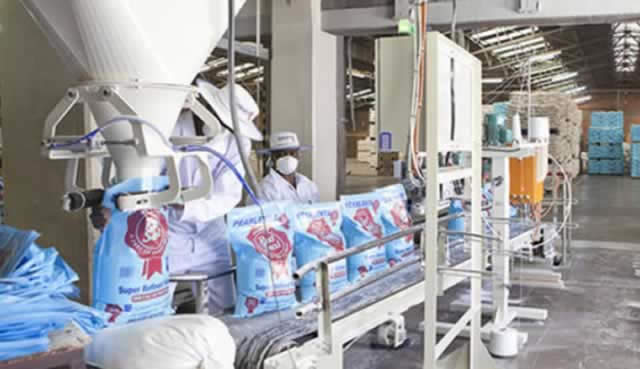
Prosper Ndlovu Business Editor—
LOCAL grain millers have called for urgent protection by the government amid reports that cheap imported mealie-meal has started flooding the local market — threatening to push them out of business. The government has agreed to the importation of up to 700,000 tonnes of maize by millers to ensure adequate mealie-meal supply in the wake of anticipated low yields due to drought.
The Grain Millers Association of Zimbabwe claims the government, through the Ministry of Agriculture, Mechanisation and Irrigation Development, has started issuing permits for mealie-meal imports without consulting them — in breach of the October 2013 stakeholder resolutions.
They have since written a letter of complaint to the ministry in which they suggest a reduction of the $390 per tonne gazetted maize producer price if their businesses are to remain viable and preserve jobs.
“The southern region of the country has now been flooded with cheap imported maize meal currently trading at $310/MT.
“In order to remain viable and competitive, local millers are now forced to match this import parity prices” GMAZ executive secretary Alois Sengwe said in the letter, a copy of which was shown to Chronicle Business.
“Consequently, it has therefore, become impossible to sustain the initial proposed producer price of circa $300/MT for white maize.
“We regret to advise you that, unless the issue of maize meal imports is addressed, local millers and traders will be buying local white maize at prices ranging from $140 to $200/MT.”
According to the minutes of the October 11, 2013 meeting between the government and millers, it was resolved that in the event of a need to import finished maize meal, there would be a consultation of concerned parties.
Agriculture Deputy Minister Davis Marapira could not comment on the issue referring all questions to Minister Joseph Made.
In separate interviews, the millers said they were already feeling the heat and warned imports would cripple the growth of their industry and result in retrenchments.
“We’re not happy with what is happening. Some people are being given permits to import maize meal of up to 100,000MT. That is tantamount to killing the whole local industry,” GMAZ southern region chair Thembinkosi Ndlovu said.
“All millers have imported grain to increase local mealie-meal stocks but we can’t sell now because of cheap imports.”
David Moyo, the owner of Ilumelang Batho milling firm in Guyu, Gwanda, said his business was suffering due to imports from South Africa.
“We bought more maize from Zambia to increase stocks to supply local communities and retailers but have nowhere to sell now. Imported mealie-meal is sold for $6 for a 12,5kg bag compared to $6 we charge for 10kg.
“We create jobs and markets for local farmers and produce at higher costs only to have others kill our business with cheap imports.”
Mike Drummond who runs Sunset Milling Company in Bulawayo echoed the same sentiments.
“I supply Maphisa, Tsholotsho, Filabusi and Gwanda but people now shun us saying we’re expensive and prefer cheap imports. This is crippling domestic production capacity and it’s not good for the economy especially for Bulawayo,” he said.
Ndlovu claimed that some unscrupulous dealers were importing cheap maize meal and repackaging it to appear as if it is locally produced.
“This is shameful and we know it’s happening. The influx of maize meal imports is now beyond acceptable levels. We’ve capacity as local producers and we offer real products that are better than the imported genetically modified mealie meal,” he said.



 Online Reporter