admin
admin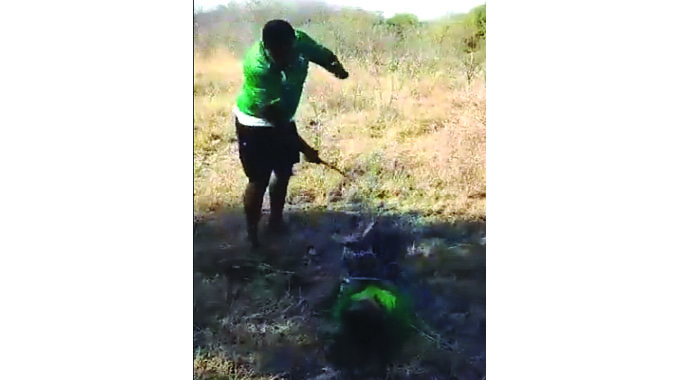
Gibson Nyikadzino
Correspondent
When President Mnangagwa proclaimed the election date for this year’s elections on May 31, the framing of that proclamation in the local daily, NewsDay, the following day proved disturbing.
“Stage set for bruising August 23 polls” read the June 1 headline in the NewsDay.
Two days prior to the election date proclamation, the same paper had carried a story headlined “Violence, torture stalk 2023 elections”, while on May 28 another online news site published a story that by announcing the election date, President Mnangagwa “Finally bows down to opposition pressure”.
On Monday, the opposition CCC and its followers on Twitter spread falsehoods against ZANU PF politicians Cde Energy Mutodi by amplifying that he was the man in a viral video who was brutally assaulting another man whose hands and legs were tied.
It was later fact-checked and discovered that occurrences filmed and captured in that video did not happen in Zimbabwe. It is undeniable that Cde Mutodi’s reputation was damaged and broken.
If one is to embark on a qualitative analysis, only assessing the types of stories and videos that private media and opposition political actors have been publishing about the August 23 general elections, it leaves no doubt that the nature of their stories are conflict oriented.
What this means is in this election, private media players, both traditional and internet-based, are highly likely going to weaponise the media to deliberately manipulate or distort information in the form of text, image or video to mislead, misinform audiences to agitate and enrage people to act unlawfully against the State.
To the private media organisations, false reports about the election will be useful to them and those they wait to please for in their assumption that will be critical to put Government under diplomatic pressuring and discredit Zimbabwe in its re-engagement, especially with the West.
Such are the lengths the private media is willing to go to promote intolerance, political animosity among citizens and extreme ideas instead on converging on the cornerstone of peace during election even in when different editorial policies.
For the sake of Zimbabwe, it is recommended that mainstream and other emerging forms of media, embark and focus of elements of national cohesion.
These elements, though seen from different editorial prisms, should however not be used to polarise the nation, but can have various ideological interpretations when the basis and foundations of national cohesion are not tampered with.
When the media is rationale and factual, that depoliticises tensions and initiate a culture of tolerance among people and have common ground in addressing any existing and visible internal contradictions.
EU Observer Mission in town
While Government has done the right thing to invite external election observers, it should be commended that such gesture is key in the promotion of democratic growth and stability, especially informed by the view that democracy is not theoretical, but a way that speaks to how those practicing it want it to turn out.
There are local media houses that have, however, benefited from funds and training facilities that have been respectively deployed and conducted by foreign countries and other organisations such that based on that engagement, local media remain subservient to the whims and interests of foreigners.
Journalists ought to be extremely careful with initiatives from Western governments and their news media, for they turn away when key developments are taking place, and for the issues they want to pay attention to, they then muddle the situation.
The genuine liberation of African and Zimbabwean minds requires power, and power does not mean money or fame.
It means the ability to be satisfied, without fear of contradiction, with the processes that govern national sovereignty including participation in elections without having the processes be associated with interfering parties.
In such an environment where some foreign powers want to be interventionists, there exists an inclination by local media operators, which cannot be out rightly dismissed, of wanting to look at this election, neither from a factual nor truthful point of view, but from the lens of those who have funded previous operations.
There is no need for the various media sectors to be carried away and act prematurely basing their media reports on speculation and an imagined framing of reality.
It remains unnecessary for journalists to be used to besmirch their country, for Zimbabwe will remain, long after many have left the face of the earth.
Resisting media, political violence
At a recent convention on the role of media and political parties in upholding peace before, during and after elections, young political leaders and their information wings said they are committed to sign a peace pledge to uphold a violence-free plebiscite.
The peace pledge is set to be signed today, through the facilitation of 4-H Zimbabwe Foundation.
It was Herbert Hoover who said: “Older men declare war. But it is youth that must fight and die. And it is youth who must inherit the tribulation, the sorrow, and the triumphs that are the aftermath of war.”
Surveys that have been conducted by 4-H Foundation Zimbabwe corroborate the view that youths have been at the fore of executing and implementing political violence, fighting in political wars whose declarations are made by their leaders.
“Our youths are no longer interested in violence. It is not an acceptable methodology and strategy of political competition. Ideas should compete,” 4-H executive director John Muchenje recently commended.
By advancing the peace cause, this is key in promoting social integration among youth as pillars of peacebuilding programmes in Zimbabwe and an expression of the need to expand young people’s political and civic engagement to reduce their risk of participation in violence or radical political movements.
The media and political actors should be ready to promote constructive avenues for political participation among youth as well as help improve their political and economic independence.
It should be “Zimbabwe first”
For the media and the politician, Zimbabwe’s interests should be protected.
On July 11 the British government enacted the National Security law which criminalises acts by citizens of “working in secret for a foreign power to use or abuse their knowledge in a way that causes harm” to the nation’s interests.
Britain is aware that nothing is more dangerous than having interests injured and undermined. Similarly, acts that seek to undermine Zimbabwe’s interests done under the guise of misinformation, disinformation and distortion of facts should be stopped to protect the national image.
This is the only Zimbabwe we share.


 Online Reporter