Lovemore Dube, lovemore.dube@chronicle .co.zw
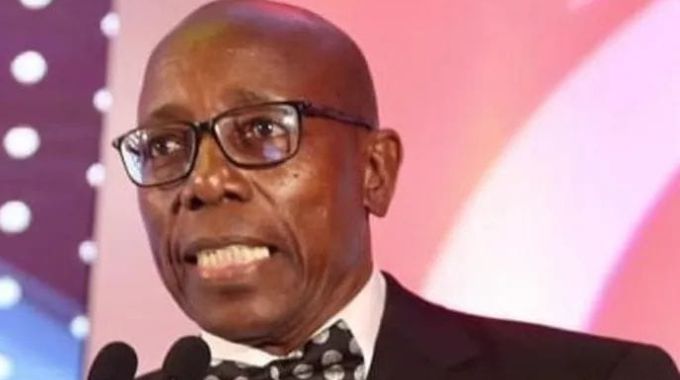
POPULAR South African media personality Thomas Kwenaite has challenged Highlanders Football Club to urgently rethink its commercial operations and reclaim its status as one of Zimbabwe’s most prestigious sporting institutions, saying the club’s recurring financial troubles are an embarrassment to its rich history.
In a strongly worded Facebook post titled, “Wake Up Highlanders – You Are Bosso!,” Kwenaite described the situation at the Bulawayo giants as a tragedy, questioning how a club with such an illustrious history, enormous following and national appeal could find itself struggling to meet basic financial obligations.
His remarks come amid growing financial difficulties at Highlanders, which recently plunged into further turmoil after players withdrew their labour over outstanding salaries, threatening the club’s participation in an official league fixture.
Kwenaite said the sight of a historically successful football institution struggling to assemble a team because players had not been paid was deeply distressing and an indictment of those entrusted with safeguarding its legacy.
“There are few sights in African football more distressing than watching a giant of the game reduced to begging for survival.
“And what is happening to Highlanders Football Club of Zimbabwe is nothing short of a tragedy,” he wrote.
He argued that Highlanders was much more than an ordinary football club, describing it as a national institution whose cultural, historical and sporting significance transcended the game itself.
Founded in 1926, Highlanders traces its origins to Albert and Rhodes Khumalo, grandsons of Ndebele King Lobengula, and has grown into one of the country’s most recognisable sporting brands.
The club celebrated its centenary this year, marking 100 years of existence and a legacy that has produced generations of celebrated footballers while establishing a passionate supporter base across Zimbabwe.
Kwenaite said the club’s history, identity and contribution to Zimbabwean football made its current predicament particularly painful, arguing that its famous black-and-white colours should command far greater respect and commercial attention.
He singled out several former Highlanders players who helped shape the club’s reputation and Zimbabwean football, including Nhamo Shambira, Ernest Maphepha, Mercedes Sibanda, Willard
Khumalo, Peter Ndlovu, Adam Ndlovu and Madinda Ndlovu.
Highlanders are among the country’s most successful football clubs in terms of silverware, with their trophy collection second only to that of traditional rivals Dynamos.
However, Kwenaite questioned why such an established institution continued to experience financial instability instead of leveraging its heritage, nationwide following and commercial appeal to secure sustainable revenue streams.
He said the club should ordinarily be an attractive proposition for corporate sponsorship, given its history, geographical identity and emotional connection with generations of football supporters.
“What is missing is perhaps the imagination, professional expertise and commercial aggressiveness to turn that enormous goodwill into sustainable revenue,” he said.
Kwenaite called for a more professional approach to the club’s business operations, suggesting that Highlanders needed competent marketing executives, strategic partnerships and a dedicated communications team capable of repositioning its brand.
He said the club should explore innovative merchandising, properly structured sponsorship packages and commercial partnerships that would enable it to generate predictable income rather than continually depending on donations and well-wishers.
According to Kwenaite, modern football requires institutions to operate beyond the traditional model of relying on membership subscriptions, individual benefactors and occasional financial contributions to meet operational expenses.
He argued that Highlanders needed people with a clear understanding of the modern football business, capable of transforming its historical appeal into a commercially viable enterprise.
The media personality’s criticism comes against the backdrop of an exceptionally difficult period for the Bulawayo club, which was plunged into mourning following the tragic death of members of its executive committee in a horrific road accident.
While acknowledging the magnitude of the loss and the emotional challenges facing the Highlanders family, Kwenaite said the tragedy should not obscure the urgent need to address the club’s longstanding financial and administrative challenges.
He stressed that the club deserved compassion and time to recover from the devastating loss but maintained that its institutional responsibilities could not be indefinitely suspended.
“Such a devastating blow would shake even the strongest institution, and the Highlanders family deserves compassion, solidarity and time to heal,” he wrote.
However, he questioned how a club of Highlanders’ standing had reached a point where it was constantly appealing for financial assistance to meet its obligations.
He said its centenary celebrations should have provided an opportunity to consolidate its legacy and strengthen its commercial foundations rather than expose the financial vulnerabilities threatening its operations.
Kwenaite also challenged the club to draw inspiration from its historical stature instead of allowing its illustrious past to become a convenient justification for failing to modernise its operations.
“Highlanders must stop wallowing in self-pity and rediscover the ambition that made them giants.
“Their history should be a launching pad, not a comfortable blanket under which successive administrations hide their shortcomings,” he said.
Kwenaite believes Highlanders should be competing for corporate partnerships rather than continually approaching companies and individuals for emergency financial assistance.
He maintained that the club’s supporters, former players and generations of football followers deserved an institution that reflected the ambition and excellence associated with its famous identity.
“Nobody is suggesting that turning around a football institution is child’s play. But neither should financial distress become a permanent excuse for institutional paralysis,” he said.
He further cautioned that historical prestige and supporter loyalty alone could not sustain a modern football club, insisting that sound financial management, professional administration and innovative commercial strategies were indispensable.
“Pride cannot pay salaries. History cannot settle outstanding bills. And nostalgia cannot run a football club,” he wrote.
Kwenaite concluded with an emphatic appeal for Highlanders to confront its challenges, rediscover its ambition and begin rebuilding an institution that has occupied a special place in Zimbabwean football for a century.
“Bosso deserves better. Its supporters deserve better. Its magnificent history deserves better.
“Wake up, Bosso, smell the coffee and put one foot ahead of the other. You are Highlanders, for goodness’ sake. Start behaving like the giant you were born to be.”