admin
adminthough media coverage of gender issues has improved it is still far from ideal — they overlooked the importance of highlighting key elements of what makes a gender story, or what gender-specific content they investigated was characterised by.
Gender writing can be looked at as equitable coverage of both men and women.
But reflecting on the situation on the ground, historically there has been little or no positive coverage of women in the media.
Therefore in essence, what we might refer to as gender writing in this context is to see more positive coverage of women’s issues, recognising the position they have historically occupied of little or nothing, and seeking to correct that anomaly.
It is important to determine whether women’s issues just being published less or is that something particular to who edits and makes the cut skews in different ratios.
Intuitively and by number, basing on some of MMPZ’s findings — it seems that more males and politics lead in terms of attracting coverage.
What accounts for it? Without understanding the roots, can this anomaly be corrected?
What can be logically theorised though at the beginning is that audiences and indeed agenda-setters often find the familiar stories they were socialised with more comforting and palatable.
They seek affirmation of what they know, even if it is perpetuation of historical stereotypes.
In principle, society is still plagued by common understandings that pre filter what they perceive.
But then again, we would like to believe that society is slowly but surely leaving the era in which being culturally male or female was a primary indicator of what options one had in life. This has also transformed the bigger picture of the cares of society.
The MMPZ’s findings reflect that media coverage was “dominated by disputes and counter-accusations of attempts to “hijack” the process and “smuggle” certain emotive aspects into the draft between Zanu-PF and the MDC formations, particularly the Tsvangirai-led outfit.
The debate revolved around the political parties’ views on “hard-core” issues like executive powers, gay rights, land reform, citizenship, security sector reforms and the status of war veterans among other issues.
Clearly, women’s issues were not considered hard- core among the principals. Simply, the media did not then cover women’s issues, because women’s issues were evidently not topical in the first instance.
The media can only but cover what is being discussed, notwithstanding their agenda-setting role.
But rather than striving to make the media balanced, it should be remembered that the media itself also operate from the principle of being the perfect mirror of society, and if society is itself not balanced, is it up to them entirely to create that balance?
Women’s issues are not like political issues, which are controlled to a degree by house policy.
The media should be an indicator of what society is prioritising, in order for the relevant actors to take action.
If the media are a perfect mirror, we should therefore not take them to task for not covering women’s issues pertaining to the constitutional process, but rather target the talking heads and opinion leaders who are themselves not concerned about those issues we think also matter — issues of women’s rights as also ‘hard-core’.
In this highly polarised context, the MMPZ itself notes that even though this amplifies the media’s role in broadening the discourse to such critical issues as women’s empowerment, those issues may not necessarily be a priority on the dueling parties’ agendas.
Which brings us to the role played by women’s organisations and the women’s movement, which exist to lobby, advocate and correct a lot of the anomalies and ensure that women’s rights issues are placed on the agenda at all levels.
Organisations are working together to “right” the constitution for gender equality and recognition of women’s rights as human rights.
Workshops are being held to conscientise men and women in influential positions to speak out on women’s concerns, and a whole range of programming is being targeted at changing mindsets in high places.
The MMPZ report is of the opinion that in the period under study (November 2011 — January 2012), one of the only three reports on gender and constitutional advocacy discussed how women activists challenged Copac pertaining to the representation of women in the new constitution.
The report highlights that only the Women’s Coalition of Zimbabwe (WCoZ) spoke out with other organizations in the women’s movement nowhere to be seen.
It must be remembered that the WCoZ is a network of women rights activists; whose central role is to provide a focal point for activism on women and girls’ rights.
The coalition represents the collective voice of the women’s movement. Therefore the assertion that women’s organisations were absent from constitutional discussions in that period is misleading, and it is important at this stage to disabuse society of that notion.
This actually demonstrates a certain level of organisation, or togetherness if you like, in the women’s movement.
What can, however, be pertinently taken away from the MMPZ’s findings are observations that in the constitutional discussion during the period under study, women hardly made it into the media as “sources” or “experts” quoted as commenting on the same issues.
Indeed, the absence of women as experts and commentators smacks of an ‘apparent lack of appetite in the media to deliberately, actively, and consciously engage female sources’ — a small tragedy really, that can hopefully be fixed soon seeing the promising transformations happening on the media landscape such as the promulgation of comprehensive gender policies in some newsrooms.
Until such a time when women’s issues also become “hard-core” each time the constitution is discussed, the women’s movement exists to change mindsets; is making real progress and will soon afford the media their field day.


Online Reporter
- Herald , none
- September 26, 2026
- 43 views
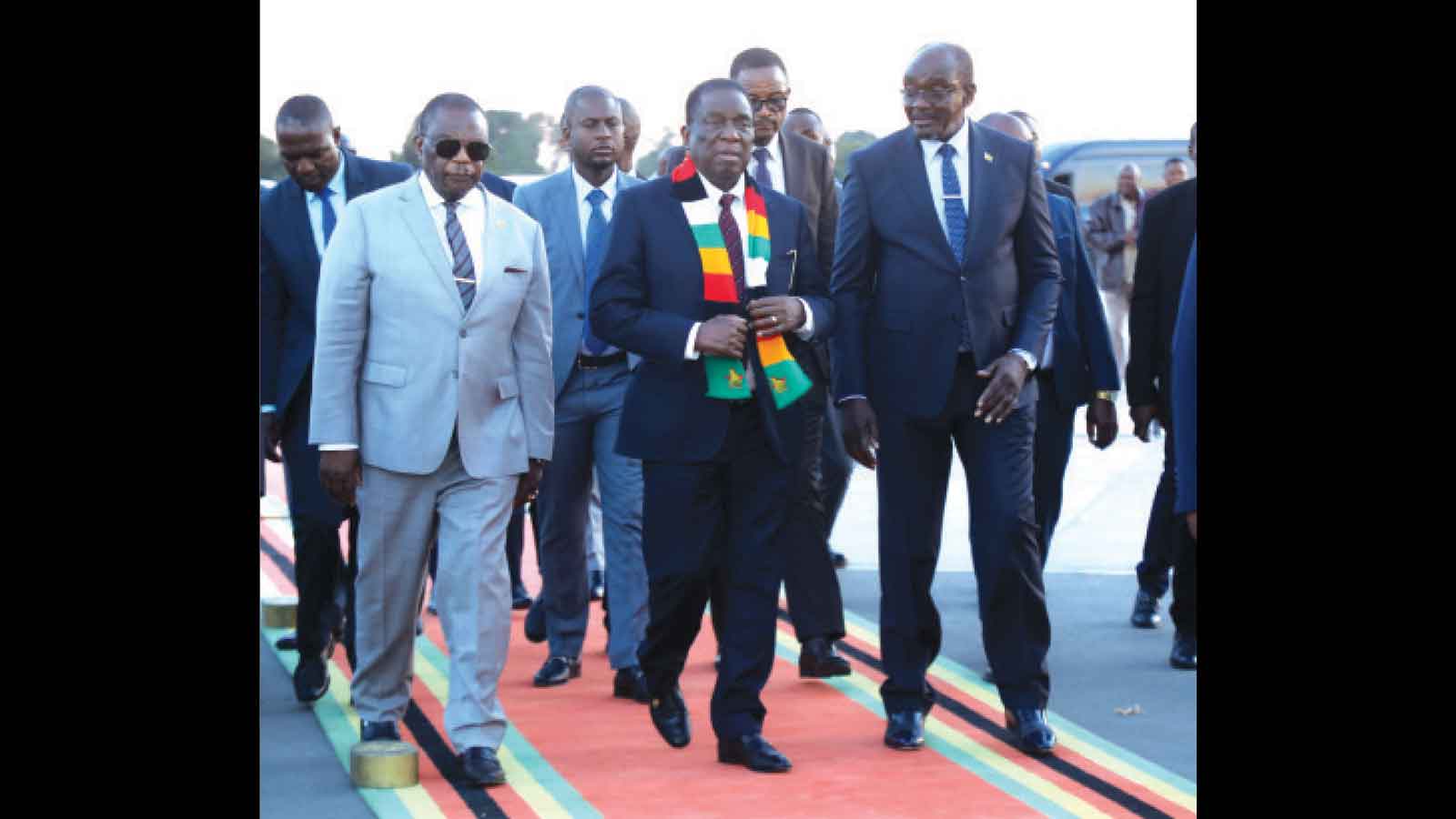
Zim earns respect of nations, businesspeople
Mukudzei Chingwere Senior Reporter ZIMBABWE’S independent foreign policy and willingness to speak its mind on global affairs are earning the country growing respect among the comity of nations and on…