

 admin
admin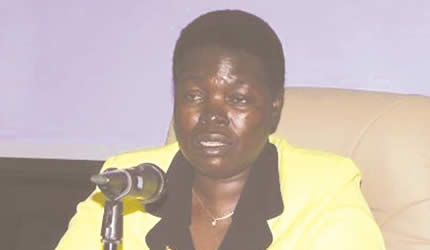
This has emerged from the fist Eastern and Southern African Climate Change Media Conference in Kampala, Uganda.
“The media is an important constituent that no one can afford to ignore as a partner to development,” Ugandan Water and Environment Minister Flavia Munaaba said, adding that a number of initiatives are being pursued at the national, regional, continental and international levels to address the impacts of climate change.
However, little has been achieved as the media continues to face various challenges in communicating and shaping public opinion on climate change.
“Climate change affects the poor of the poor whose only source of income comes directly from the land, yet most of these people have no idea of what they can do to adapt and mitigate against climate change,” she said.
“We count on you the media to assist the policy makers, non-governmental agencies and other stakeholders to reach these vulnerable people. Your pen, your script, your microphone, your voice will make a big difference.”
Chebet Maikut, one of the lead negotiators for Africa at the global climate change talks, concurred, saying that climate change is a complex, broad and cross-cutting issue that requires cooperation from all stakeholders.
He said the media has a crucial role to play as a channel for information dissemination, education and communication to provide necessary services that help to sharpen and inform decision-making at various levels.
“The media plays a pivotal role in linking various sectors to work together in solving the problems that are made worse by climate change,” he said.
The Common Market for Eastern and Southern Africa (Comesa) climate change adviser, Maclay Kanyangarara, said there was need to empower the media to report accurately on climate change.
He said climate change is a new and emerging issue, hence most journalists face some challenges in clearly articulating the issues, resulting in most people not knowing the various measures that available to mitigate and adapt to climate change.
For example, a number of small-scale farmers are still practicing old farming methods that contribute to climate change, yet there are new and better farming methods that could reduce the impacts.
“We need to make sure information is accessible to the people,” he said, adding that there is need to showcase African success stories in climate change adaptation and mitigation so that these initiatives could be replicated in other regions.
Climate change has affected socio-economic development in most countries particularly developing countries as they lack financial capacity for mitigation and adaptation.
However, Africa is the least contributor to greenhouse gas emissions that cause climate change. In this regard, Africa has set a number of conditions at the ongoing talks under the United Nations Framework Convention on Climate Change.
These include demands for technology transfer from developed to developing countries as well as capacity building and the creation of a fund of US$200 billion a year by 2020 to assist developing countries mitigate against the impacts of climate change.
Developing countries in Africa and elsewhere also want the rich nations to cut emissions to at least 40 percent below the 1990 levels by 2020.
The climate change media conference, which ran from April 24 to 26 was organised by Comesa.
Journalists drawn from eastern and southern Africa attended the conference. The highlight of the conference was the launch of an eastern and southern Africa journalist forum to champion media interventions to contribute to addressing climate change. — sardc.net



 Online Reporter