Online Reporter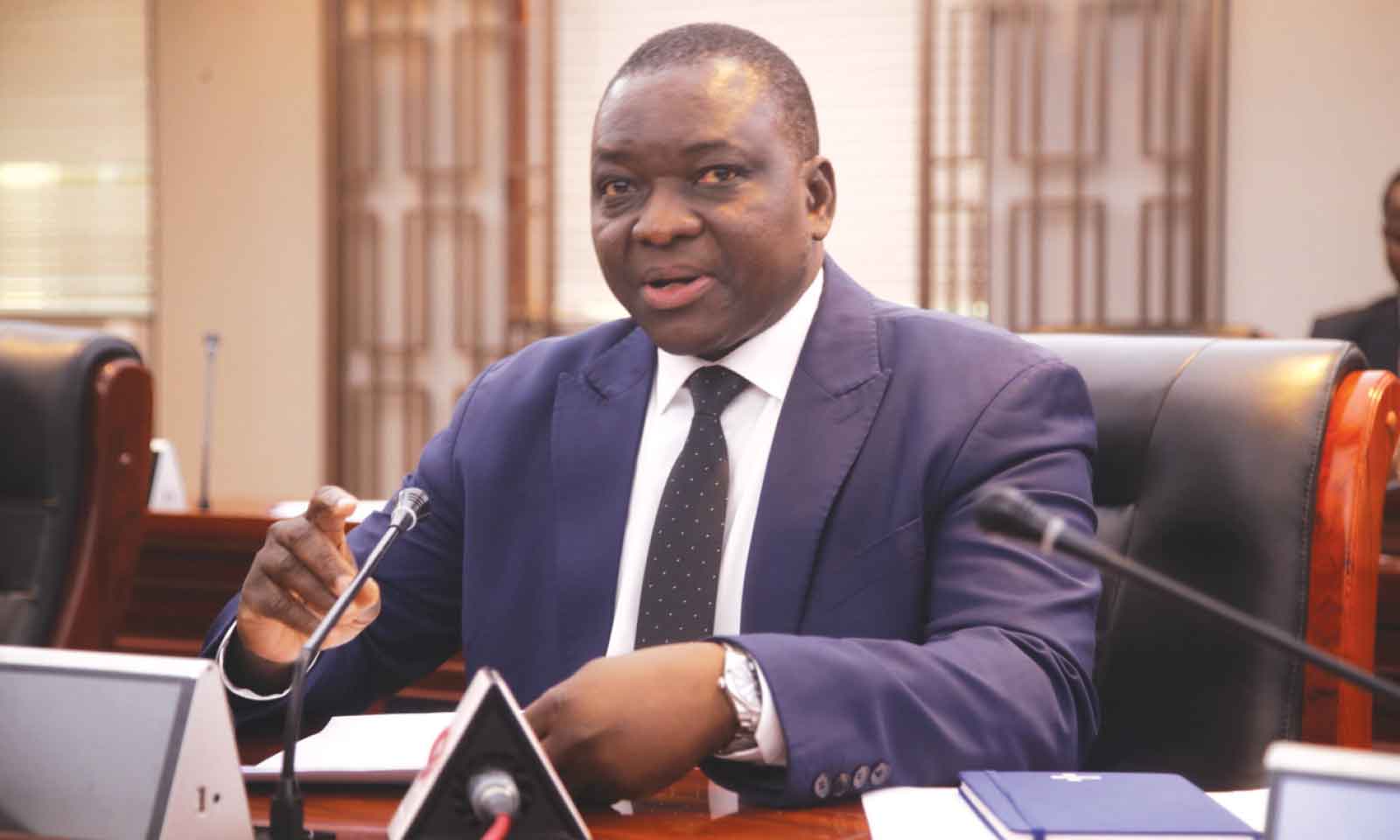
Tichaona Zindoga
The recent visit to China by the Minister of Information, Publicity and Broadcasting Services, Dr Zhemu Soda, as he led a delegation of Zimbabwean media practitioners attending the Seminar for Media Professionals in Beijing, should be a turning point in Zimbabwe-China relations.
Information and communication are key pillars in bilateral relations between any two countries, and in the case of Zimbabwe and China, the importance continues to grow.
This is in itself an undertaking within the Forum on China-Africa Cooperation (Focac), which recognises the importance of media in building an all-weather community with a shared future.
The tour by Dr Soda presents a significant opportunity to tell the story of Zimbabwe and China well so as to advance mutual understanding in a year that has been dubbed the China-Africa Year of People to People Exchanges.
For a number of years now, there has been an increase in negative framing of Zimbabwe-China relations and gaps in the development of structures and strategies to not only react to negative news, but to comprehensively build a new narrative around the relations between the two countries.
Journalists have visited China to learn and exchange perspectives with their counterparts in China. Media houses, mostly State-owned enterprises and lately private players, have signed memoranda of understanding with Chinese entities.
However, to turn memoranda into movement and cooperation into action has been a significant hurdle; meaning that the cycle could repeat over and over without tangible outcomes, with investment poured into programmes going to waste.
While the practical architecture of Zimbabwe-China co-operation has expanded significantly, the narrative architecture necessary to explain, contextualise and sustain that cooperation has not kept pace.
Reporting, commentary and analysis remains fragmented and generally not building a new information order that is key to telling the story.
Telling the Zim-China story well
My thesis of telling the Zimbabwe-China story well derives from the concept of “Telling the China story well”, which is an official party slogan and public diplomacy directive of the Communist Party of China (CCP). Formally introduced by Chinese President Xi Jinping in August 2013, the campaign commands state media, diplomats, and digital influencers to proactively shape international narratives.
The primary objective is to counter Western media hegemony, elevate China’s global discourse power, and present an appealing, benign image of the country’s governance model and rapid development.
The friendship and partnership between Zimbabwe and China makes this concept relevant — not least because the relations between the two friendly countries continue to flourish not unattended by hostile media, sometimes sponsored by detractors.
On one hand, telling the Zimbabwe-China story well should be strategic, involving planning, deployment of resources, monitoring and evaluation and continuously improving on methods and strategies to achieve reach and impact.
So far, the work in the media is largely within traditional content production with stories produced within normal frameworks and news values. A departure would entail the setting up of specialist desks focusing on creating and curating content about Zimbabwe and China.
This, of course, is not a traditional approach but a revolutionary one.
China has become big news. It has many aspects that require expertise and nuance because it is no longer an ordinary story about economy, politics and international affairs. If one were to read ongoing debates in media studies, China has very much become an ideological counterpoint.
Relatedly, the study of China in media praxis has led to a rethink of journalism paradigms. In Africa-China relations, for example, media work is being made to negotiate news values — what constitutes news — and how and when the normative “watchdog journalism” and developmental journalism can be deployed.
In Zimbabwe, although unexamined seriously, this dilemma is playing out. Is good journalism only one which bashes China and finds negative aspects in Chinese investments, Chinese community and interests? At the same time, can one report on the positives only without being accused of propaganda?
Apart from the ideological questions, a key issue is that the media space itself has evolved in terms of platforms, as traditional platforms such as the mainstream media of newspapers, radio, TV and websites are increasingly being displaced by social media.
Non-traditional journalists and storytellers have become important players, as have new skills in digital and Artificial Intelligence. All this has distorted media as we understood it, presenting both challenges and opportunities.
The visit by Dr Soda — who was accompanied by various media interests — opens the door for serious discussions on how to tell the story of Zimbabwe and China well in a fast evolving space.
The soft power debate
There could be a misconception that telling the Zimbabwe-China story well is a one-way street, with Zimbabwe acting as a recipient of information from China — and projecting the soft power of the Asian giant.
The fact is that, based on traditional friendship and mutual respect — as well as mutual affinity — there is a lot that
Zimbabwe can do to produce content that appeals and influences audiences in China. This is actually imperative.
Local media should be aware that their work should help assert the agency and soft power of Zimbabwe onto Chinese audiences. So, too, from a market perspective. There is nothing that should stop us from exporting commercial content to be consumed in China, given our own culture, sport, business, tourism, among others.
Zimbabwean and other Global South media have received training in China as part of exchange programmes, and should know what will likely sell in China. Further, potential partners from small media outlets to provincial and national media have been available during various engagements between the two sides.
It takes serious planning to unlock opportunities, which could help local media survive.
Further, Zimbabwean media and Government must invest in hosting colleagues from China so as to deepen understanding and share experiences, with our friends coming to experience and evaluate local conditions.Implementation is key
As noted above, Zimbabwe and China have, over the years, signed several memoranda of understanding covering information cooperation, media exchange and broadcasting collaboration. Such agreements reflect political intent and diplomatic goodwill, but goodwill alone does not transform institutions.
Too often, bilateral agreements are celebrated at the point of signing and then gradually lose operational momentum.
Implementation is key.
It should catalyse the development of a comprehensive Zimbabwe-China communication framework anchored in three imperatives: implementation of existing media co-operation agreements; institutionalised technological and skills exchange; and the development of an epistemological orientation towards journalism that aligns communication with national development.
For these agreements to have strategic meaning, they must now be translated into measurable programmes with timelines, institutional accountability and resource commitment.
The visit by Dr Soda should open a new chapter in Zimbabwe-China media relations, as part of the larger fruitful co-operation and win-win scenario.
*Tichaona Zindoga is the director of Ruzivo Media & Resource Centre, a local think tank that analyses global and national issues.



 derick.khumalo