Vusumuzi Dube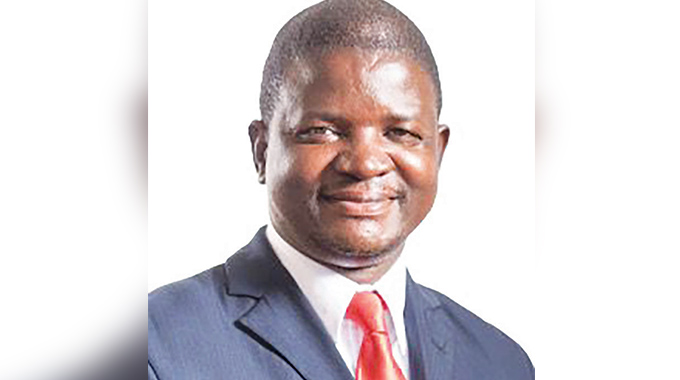
Trish Mukwazo and Michelle Musandinyoze, Zimpapers Reporters
MEDIA and information literacy is essential to achieving Vision 2030, Zimbabwe’s national development plan aimed at transforming the country into an upper-middle-income economy. This ambitious goal requires journalists to play a pivotal role in disseminating information that fosters constructive national dialogue and supports economic development.
Speaking in Bulawayo on Tuesday at a Media and Information Literacy Policy consultative meeting, Chief Director in the Ministry of Information, Publicity and Broadcasting Services, Mr Jonathan Gandari, emphasised the importance of this initiative. The meeting brought together Government agencies, media practitioners, educational institutions, civil society, and private sector representatives to share their views on what should be included in a comprehensive media and information literacy policy.
During the discussions, stakeholders raised concerns about how the policy would be validated and, crucially, how it would be disseminated to grassroots communities. Many agreed that ensuring the information reaches the people remains a significant challenge. Mr Gandari explained that the aim is to develop a policy that will awaken public consciousness, enabling individuals to identify falsehoods and act responsibly when creating and sharing content.
He stressed the importance of ethical content production.
“We don’t wish to see content that is manipulative, hateful, or misleading. We don’t manufacture; we capture.”
Mr Gandari also expressed concern about the vulnerability of rural communities to misinformation, noting that the policy seeks to address and mitigate such risks through targeted interventions.
He further highlighted that the successful implementation of the National Development Strategy (NDS1) — running from 2021 to 2025 — and the forthcoming NDS2, set to begin next year, hinges on citizens’ ability to critically evaluate information, discern credible sources, and engage meaningfully in the country’s economic development.
“To attain Vision 2030 in an age of rapid technological advancement and digital transformation, media and information literacy is critical. For the economic transformation we aspire to achieve, our citizens must possess the skills to critically assess information, identify trustworthy sources, and actively participate in our economic thrust.
Zimbabwe is open for business, and we seek equitable development that leaves no place or person behind,” Mr Gandari said.
He underscored the Government’s recognition that an informed populace is the foundation of a resilient democracy and a vibrant nation built by its people, step by step and brick by brick.
Once the consultative process is complete, Mr Gandari said the Media and Information Literacy Policy will establish a comprehensive framework that promotes responsible media consumption, supports media literacy education at all levels, and combats misinformation and disinformation.
“Today’s consultations offer stakeholders from diverse sectors the opportunity to share insights, experiences, and recommendations. These contributions will be instrumental in shaping a policy that is inclusive, effective, and sustainable,” he said.
Full article on www.chronicle.co.zw
Mr Gandari noted that in today’s technologically advanced societies, some people are overwhelmed with information while others lack access to it. Yet, across the board, people are eager to participate in governance and cultural exchange.
“In our current reality, where we live both offline and online, it is not always easy to distinguish between life on the web and real life,” he said.
He emphasised that when discussing freedom of expression, media, and information, media and information literacy must be recognised as a key competence in a rapidly evolving communicative society. Mr Gandari pointed out that 21st-century societies are driven by media and technologies, including Artificial Intelligence, and that the media space is increasingly flooded with misinformation, hate speech, disinformation, media warfare, lies, manipulation, and other illusions presented as facts.
“We know that freedom of expression cannot be contemplated without considering the media — a public sphere so vital to the functioning of society. The ongoing process of digitisation has transformed the role of media, the structures of governance, and the nature of markets. Our communication systems are changing in terms of time, space, and modes of social behaviour,” he said.



 Online Reporter