admin
admin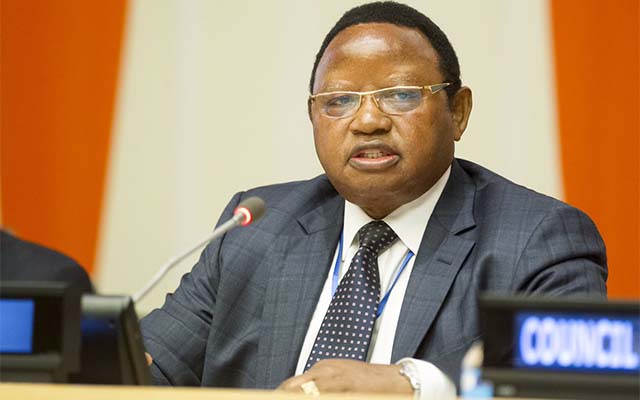
Mukudzei Chingwere Herald Reporter
In collaboration with the United Nations Environment Programme (UNEP), member States can address environmental challenges through mitigation measures, Foreign Affairs and International Trade Minister Ambassador Frederick Shava has said.
Minister Shava made the remarks when he addressed the 50th anniversary of UNEP in Kenya, running under the theme, “Strengthening UNEP for the implementation of the environmental dimension of 2030 Agenda for Sustainable Development.”
The theme is aimed at mobilising the international community to strengthen UNEP as an efficient and effective organ of development in the fight against the three planetary crises of climate change, biodiversity loss and pollution.
Minister Shava said, “We cherish UNEP’s mandate urging us to protect the environment, the backbone of our existence. A good environment is our birth right, our pride, our shelter, our medicine, our food, in fact our very survival and sustenance.”
“Zimbabwe strongly believes that member states in collaboration with UNEP can address these environmental challenges, through mitigation measures motivated to build back or forward better. The UNEP headquarters should therefore, be adequately capacitated in this endeavour.”
Minister Shava said Zimbabwe has already taken a leading step in this regard through close partnership with UNEP by successfully implementing a number of programmes and projects.
The initiatives are aimed at sustainably tapping on the country’s rich and diverse national heritage comprising the people, land and natural resources that include minerals and water.
“Key UNEP support has included assistance towards: the ratification of the Minamata Convention on mercury; development of the National Action Plan, the Minamata Initial Assessment and the integrated national solid waste management plan in addition to capacity building towards environmental law enforcement in the country.”
Minister Shava said, faced with vulnerabilities such as incessant droughts, floods and cyclones, Zimbabwe is taking steps to implement and domesticate the Paris Agreement on climate change.
“The National Climate Policy has been developed while climate change has been mainstreamed into national policies and strategies such as the National Development Strategy 1 (2021-25) has identified environmental protection, climate resilience and natural resources management as key pillars towards achievement of our vision 2030 and ultimately the Sustainable Development Goals.”
Other policies, he said, include the National Renewable Energy Policy, National Agriculture Policy Framework and Disaster Risk Management Programming.
“The National Adaptation Planning (NAP) programme that is mainstreaming climate change into National, sub-national and sectoral development planning and budgeting processes,” said Minister Shava.



 Online Reporter