admin
admin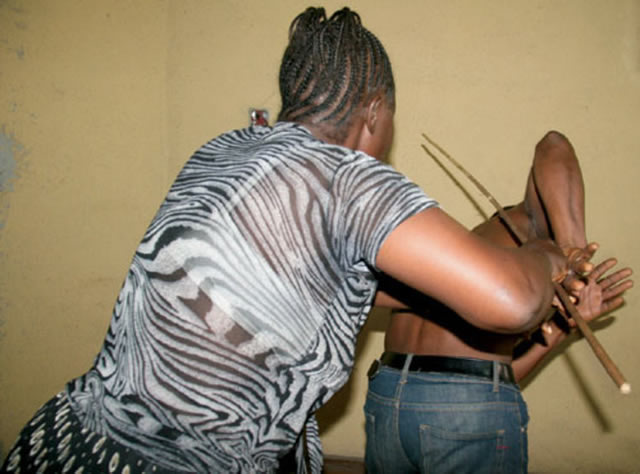
 Daisy Jeremani Gender Editor
SOCIETY’S awareness on Gender-Based Violence against women has improved considerably over the years but the same cannot be said of male victims of the same.In a society which finds the concept of physical violence towards men difficult to grasp, it would be hard to address this as a serious problem. Men often suffer physical abuse in silence because they can’t stomach being mocked and ridiculed if they speak out. On the other hand no one would dare tell a woman who has been battered blue-black by her husband that it wasn’t a big deal.
Recently in Gwanda, members of the public, through a meeting that was organised by the Ministry of Women Affairs, Gender and Community Development, called on the police to deal impartially with cases of Gender Based Violence (GBV) against men.
An attendee at the meeting said the police were in the habit of mocking male victims and this has led to under-reportage of the menace when it affects men.
It’s not only the police that have been accused of letting men down, but also other institutions that deal with Gender-Based Violence and society at large. This stems from social attitudes that span centuries that expect men to be strong and macho and be able to control their women and not vice versa.
In 18th century England when a man was abused by his wife he would be given a “Skimmington Ride” where he would be dragged throughout town strapped to a cart or he would be paraded in his whole neighbourhood beating pots and pans while people would be singing, mocking him. These attitudes have not faded one bit in the 21st century.
A police officer from the Victim Friendly Unit in Gwanda who attended the meeting said they were yet to receive a report on the ill treatment of men intending to report their cases to police officers.
He dismissed the assertion saying the police deal with all reported cases equally.
Ziphongezipho Ndebele, Padare/Enkudleni programmes officer in Bulawayo, said during their outreach programmes they have realised that there were more males who were victims of GVB than recorded.
“People dispute the statistics on GBV in Zimbabwe, which state that 99 percent of women are victims of violence, while one percent of men are abused,” he said.
“They believe there are more men who are being abused, but are too embarrassed to report, due to bad attitudes in the society.”
Though the law of Zimbabwe recognises that both men and women can be victims of abuse through the Domestic Violence Act, it would be difficult to change long held views of perceived male dominance.
If the reaction by the police is anything to go by then they need to hold refresher courses once in a while for the Victim Friendly Units, as they have responsibilities to fulfil their duties of implementing the law fully. The law should be at work in protecting all citizens, despite their personal views on a matter.
Natty Musanhu, the director of Musasa said the transformation should start with men themselves as they should recognise that they were not immune to violence and that the Domestic Violence Act is not for women only, but for everyone.
Musanhu said as long as men don’t change that narrow narrative on issues of gender it will be difficult to create a violence free society.
A violent free society can only be achieved if there are violent free homes.
“Predominantly men are police officers and it’s best to start to change their attitude towards violence against women after which they will be able to appreciate that domestic violence affects everyone, men included,” she said.
“This is not a women’s issue, but a national issue.”
The absence of men’s voice in higher places denouncing violence against both men and women has also made it difficult for men to feel comfortable to report abuse.
It has not always been easy for women to report cases of rape, but over the years they have braved the ostracism and come forward for redress and men should take a leaf from that bravery.
“There is need to create more spaces where men can speak about this social problem in a society where violence, especially against women is generally accepted.
“We need a society that does not tolerate violence against men or women,” Musanhu said.
Ultimately men needed to personalise the problem of violence and bring it closer to home and think about their mothers, sister and daughters.
Men hold unique positions in society and as such they should be in the forefront in the fight against GBV.
“Many leaders are men, as such if they speak on such issues in their positions of power they will be taken seriously. No one will laugh when men report,” she said.
Musanhu said she was not downplaying the effects of violence against men, but women have been suffering at the hands of men for a long time and the cases of GBV against men are negligible.
“For every one man that is abused there are 100 women,” she said, in a remark that echoes reported cases.
Men should be made to understand just like women in similar predicaments that physical violence and abuse is never their fault and they should not feel less of men for reporting.
“Men in abusive relations are caught in between a hard place and a rock, said Never Siziba, from Makokoba. You’ve nowhere to turn. If you tell your friends you will be the butt of all jokes for years to come, your relatives will say wadliswa. Society at large will ask you to put on a dress and give your wife the pants.”
The idea of domestic violence as a woman only problem needs to be debunked, as men suffer as well amid lack of socio-psycho support.
Society needs to rethink the notion that when people talk of domestic violence they think of women battered by their husbands or live-in boyfriends. Men are victims too!



 Online Reporter