admin
admin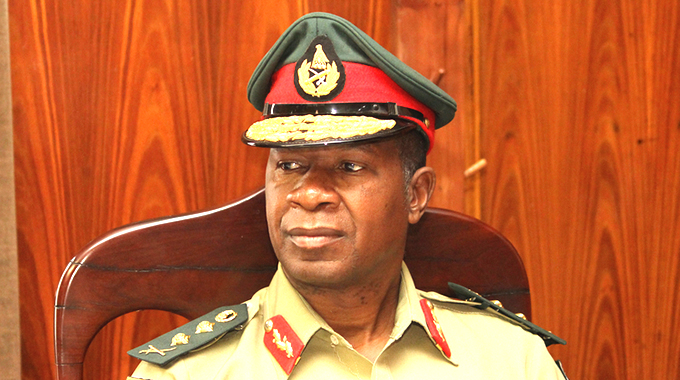
Gibson Nyikadzino Correspondent
In established or emerging democracies, military men and security service personnel often issue statements that serve as reminders, especially when values which their countries are founded on are violated or threatened.
Last year when supporters of former United States President Donald Trump violently stormed the Capitol Building on January 6, seven generals and one admiral sent an internal memo to their troops.
“Any act to disrupt the Constitutional process is not only against our traditions, values, and oath; it is against the law,” read the memo.
The intervention by the US military was a political statement serving to protect the foundations, values and traditions of the US, either socio-economic or political.
The generals’ statement was influenced from the National Military Strategy which obliges the army “to defend and protect US national interests, to promote peace and stability and, when necessary, to defeat adversaries.”
In US terms, adversaries are people, groups or states that threaten its values internally or externally. The military man is always a political man, but the political man is never a military man.
A partisan army is patriotic?
Hypothetically, suppose a political party emerges in the US that is pro-Islam and mounts a great dividend of political support among the national citizenry that it gets supporters from both the Republican and Democratic parties.
Imagine the party says once it wins the national elections, it will govern on the basis of the dictates of Sharia Law.
How will the servicemen react considering how Islamophobe America has become? It is about values! The American army will not stand by and watch that unfold. To watch the “land of the free” becoming an Islamic State is unfathomable. It means that their values will be in contra-distinction with those of the emerging party.
When such an army intervenes, it is not partisan. It is moving in to protect and save the national values.
That is the essence of a patriotic army in which it is able to defend a nation’s values, beliefs and traditions and never surrender them to those that do the bidding of the foreigner.
Likewise, there can never be a context in which an army should be labelled “partisan.” The army is the source and defender of the national values of any society.
When it rises, it stands out to protect the interests of the nation as a moral compass to how the local politics should be shaped.
Nothing separates the behaviour of the Zimbabwean army to that of the US army when it comes to protecting the values of the nation.
CCC mercenaries and the Blackwater mentality
In September 2007, 17 Iraqi civilians were killed in a shooting spree that was later labelled “Baghdad’s Bloody Sunday”.
This was terrorism.
The perpetrators were private forces, subcontractors working for the American mercenary company, Blackwater Worldwide, led by Erik Prince, a former US Navy SEAL officer.
Mostly referred to as soldiers of fortune, political philosopher Niccolò Machiavelli described them as “useless and dangerous.” The danger they pose is they do not respect a nation’s internal values.
The Blackwater Worldwide group, despite being secretive, has used deadly violence, terrorism and weaponised politics to attack national institutions and threaten their democratic constitution. When terror attacks happen, they are done on a scale that frightens and intimidates the general population using violence and fear, or attacking property.
This is what the Citizens Coalition for Change (CCC) has signalled.
Through violence, militarism and property destruction, the CCC is heading towards the path of unrealistic political determination intending to disrupt Zimbabwe’s democratic fibre by the creation of the paramilitary party wing, the Citizens Defenders (CDs).
In this context, it is an intellectual difficulty if one supposes the army does nothing, overtly or covertly.
Military actions always happen in a political context and a nation’s army is a tool of state authority, whose duty is to protect the country from internal or external adversaries.
The CCC’s mercenary activities already sets the “political party” aside as one that advocates for militant democracy.
The violence at Moreblessing Ali’s funeral last week points so.
The party’s CDs are angling to substitute political action with militarism with the aid of foreign help from the USA and the European Union.
National values and ethos of Zimbabwe’s founding principles only speak of democratic ballotism as the only way to democracy.
When political and national values are threatened, militaries emerge to give direction and address the threat.
Resolute Generals Zvinavashe, Sibanda
A lot of content to laugh at regards the touch-not “security sector reforms” issue continues to emerge from the mouths of the democratic pretenders and fake nationalists locally and abroad.
In pursuit of his unconstitutional usurpation of power, CCC leader Nelson Chamisa has shown his failure to understand the values of the army which he claimed “the army is prepared to ditch Mnangagwa in the coming elections.”
Perhaps he has forgotten the 2002 announcement that became known as the Zvinavashe Doctrine by the then late Commander Zimbabwe Defence Forces (ZDF) General Vitalis Zvinavashe.
“We wish to make it very clear to all Zimbabwean citizens that the security organisation will stand in support for those political leaders that will pursue Zimbabwe’s values, traditions, beliefs for which thousands of lives were lost in pursuit of Zimbabwe’s hard won independence, sovereignty, integrity and the national interest,” said then Gen Zvinavashe.
Despite the Zvinavashe Doctrine being separated by nearly two decades of time with the current ZDF Commander General Phillip Valerio Sibanda’s statement early this month, the consistency of thought between the two is plausible.
“It remains a challenge to us all to defend the values that they stood and fought for. We must always remember that to be who we are today, it is because somebody shed their sweat or blood as the late Chanakira and many others did.
“Let us never lose sight of this important fact, no matter kuti tinenge tadziigwa sei (how comfortable we have become),” recently said Gen Sibanda.
Being apolitical is counterproductive?
The opposition body politic overestimate its importance in understanding our national values, beliefs and traditions that the military men and women thrive to protect. One recommendation that this writer intends to share without remorse in defence of Zimbabwe’s nationalist values is that the country’s service men and women should be conscious of political developments to serve the best interests of the country.
Claiming that the military should be passive to politics will pacify their efforts in protecting the ethos of the state’s foundation, a counterproductive measure that will only benefit the CCC mercenaries that want to use violence to achieve political goals.
It is their esteemed values which remain the watch tower of our future aspirations, like any other military of the world.



 Online Reporter