admin
admin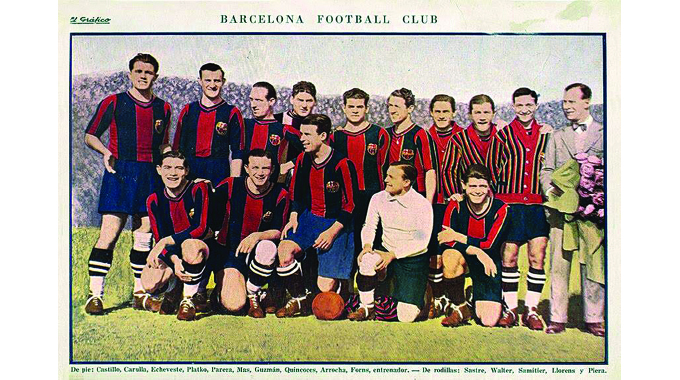
Sharuko On Saturday
IF you are not obsessed with history, which means you are someone different from me, it’s unlikely to concern you that this year marks the 85th anniversary of the establishment of Highlanders.
That, in just five years’ time, this iconic football club will be celebrating a century.
One hundred not out!
As they say in cricket, the ultimate game of gentlemen and women, where honesty is as much a part of its DNA as the brutality of its fast bowlers and the guile of its spinners.
Bosso are older than Orlando Pirates, the giants across the Limpopo, who occupy a special place in football, in this part of the world, as the first Southern African club, to be crowned champions of Africa.
There was an 11-year gap, between the year Bosso were established, in 1926, to the year Pirates emerged on the scene, in Soweto’s Orlando East, in 1937.
Of course, Shabanie Mine have always argued it’s wrong to claim Bosso are the oldest football club in this country.
A dozen years before Bosso established, the people of Zvishavane say Shabanie Mine had already been formed, in their mining town.
It’s a badge of honour, which they carry on their crest with pride, a reminder of their origins and the amazing journey they have travelled, over the years.
They will tell you that 1914 wasn’t just another ordinary year.
After all, in August that year, the First World War was declared as the globe, for the first time in its history, went full throttle, to try and use its military hardware, to destroy itself.
They will tell you about the Miracle of 1914 when British and German troops abandoned their trenches, on the western front, and battled each other in a football game, to celebrate Christmas Eve.
And, not for the first, football was the sport which provided a reminder of the beauty of life, and the irresistible magic of love, amid the apocalyptic images of destruction.
They will tell you it was the year the Portuguese Football Federation was founded, setting the stage for immortals like Eusebio, Luis Figo and Cristiano Ronaldo to later come along, and showcase their amazing talents.
Crucially, they will also tell you that 1914 was also the year when the foundation for real football, which would be played at the turn of the millennium, was laid.
The conductor of that orchestra, where an English Premiership club would complete the entire season unbeaten, on their way to winning the league championship, was a French football professor.
His name is Arsene Wenger.
In May 2004, Wenger’s Gunners were crowned English champions, without losing even a single game, and that success story was written on a special anniversary of the club.
Somehow, it had to happen on the 90th anniversary of the year, when the Gunners changed their identity, from Woolwich Arsenal, to simply Arsenal, in 1914.
But, in Shabanie’s case, others have been arguing the club’s claims, of being established in 1914, do not tally with the reality that mining operations only started in the area in 1916.
And, crucially, a town management board, which is usually responsible for the setting up of such structures, like a football club to serve the community, was only established in 1930.
That’s exactly four years, after Bosso’s establishment, within the confines of royalty, by King Lobengula’s grandsons, Albert and Rhodes, in 1926.
While the debate over which is the oldest football club in this country is likely to rage on forever, what can’t be disputed is that Highlanders found a way to transform themselves into a giant, with national appeal, in this country.
Only Dynamos are bigger than them and this, too, is a subject which provokes intense debate, depending on where you are, with a sizeable number of Bosso loyalists, arguing otherwise.
What can’t be disputed, though, is that when Bosso are in good health, and winning silverware, there is no better sight, in local football, than a packed Barbourfields, in full cry.
Especially, when their eternal rivals, the Glamour Boys, come into town and their fans transform the Mpilo End into their island of blue-and-white defiance, in a raging ocean of black-and-white giant waves.
It’s a pity David Livingstone didn’t get a chance to be a witness to this beautiful poetry, when it is in full motion.
Otherwise the great explorer would also have possibly remarked that “scenes so lovely must have been gazed upon by angels in their flight,” as was the case when he first caught sight of the mighty Victoria Falls.
IN A WAY, IN 1926, THEY BOTH CAME ON BOARD
Bosso have not won a league championship for 15 years now, with their last success story, in the race, which separates boys from men, and defines greatness, coming in 2006.
It was also the same year Barcelona were crowned champions of Europe in Paris, after late goals, broke the hearts of the Arsenal fans, in the final.
In a way, I have always been fascinated by what I see as similarities, when it comes to Barca and Bosso.
Their primary identity includes having stripes, running down their jerseys, they both feel their biggest rivals, in one way or the other, have been beneficiaries of their links, perceived or otherwise, to the establishment.
Barca fans have long felt Real Madrid, who are based in the capital, are a club connected to the country’s establishment,
The involvement of the Spanish establishment, in ensuring Argentine superstar, Alfredo di Stefano, ended up playing for Real Madrid, instead of Barcelona, didn’t help matters.
And, neither did the events of their Copa del Rey semi-final showdown, against Real Madrid, in 1943, amid the gloom, and destruction, caused by World War II.
Barca comfortably won the first leg 3-0 but, in the second leg, they suffered a spectacular disintegration.
By the end of the match, the Catalan giants were at the receiving end of a 1-11 massacre and Spanish journalist, Paco Aguilar, claimed Barca players were threatened by police, in their changing rooms, before the game.
British journalist Sid Lowe, who is an expert in Spanish football, has always maintained this was the game, which changed everything, in terms of the relationship between Barca and Real.
“There have been relatively few mentions of the game (since) and it is not a result that has been particularly celebrated in Madrid,” he said.
“Indeed, the 11–1 occupies a far more prominent place in Barcelona’s history.
“This was the game that first formed the identification of Madrid as the team of the (establishment) and Barcelona as its victims.”
Forty years ago, Bosso broke ranks with the other top-flight league sides, in this country, amid anger within the club Dynamos had been given unfair advantage, to help them win the league championship.
There has always been this underlying feeling, at Bosso, the Glamour Boys always get the favours, be it in major refereeing decisions, or the privilege to play Cup finals, especially those featuring the two giants, at home in Harare.
Both Bosso and Barca have passionate support bases.
Fans who believe these two giant institutions are more than just football clubs but are sporting extensions of who they are, as a people.
The irony of it all is that it was in 1926, when King Lobengula’s grandsons established Highlanders, that the directors of Barcelona publicly claimed, for the first time, they had completed the transition of their club, into a professional football entity.
Given that it’s the professional Barca, which we now know today, and which millions of fans around the world also identify with, it’s probably safe to say this giant club’s real journey, in the trenches of this game, effectively started in 1926.
The very same year Bosso came into life.
That same year, in 1926, Barca won the Copa del Rey, after beating Atletico Madrid 3-2, in the final. It also happened to be the 26th edition of the tourney and this was Barca’s SEVENTH triumph, in Spain’s flagship knockout football tournament.
SEVEN also happens to be the number of league championships, which Highlanders — who came into being in 1926 — have won, on the domestic football scene.
And, 26 also happens to be the number of La Liga titles, which Barcelona have won, in their history.
This week, for the first time in two decades, Barcelona crashed out of the UEFA Champions League, in the group stages of the tournament, after a 0-3 defeat at the hands of Bayern Munich.
The nature of their lifeless performance, in crashing to yet another defeat, to the German champions, provoked another soul-searching exercise, as the world continues to struggle to adjust to the reality of how the mighty Barca have fallen.
It’s not like the signs haven’t been there.
After all, in August last year, Barca crashed to a humiliating 2-8 defeat, at the hands of Bayern again, in the semi-finals of the same tournament, in Lisbon.
It was already game over, by the end of the first half, with the Germans leading 4-1 and, at the end of this thorough beating, Barca were left to sift through the wreckage left behind by their humiliation.
History was reminding them, at every turn, that this was their first loss, by a six-goal margin, since a 0-6 thrashing, at the hands of Espanyol, in 1951.
And, this was the first time they had conceded eight goals, in a single match, since their 0-8 defeat to Sevilla, in 1946.
METHEMBE, MESSI, BOSSO, BARCA
The future, too, didn’t look good.
After all, the average age of their starting XI, in the huge defeat to Bayern that day in Lisbon, last year, was 29 years and 329 days – the oldest pack of players, which Barca had ever sent, into a Champions League match, in their history.
And, the contract of Lionel Messi was up and the superstar, whose genius had carried them to the edges of heaven, was leaving their broken camp.
It’s the reality of the changing football landscape that a club like Barca now find themselves unable to compete against the Money Bags of today’s game, who have dramatically been transformed, by the riches of their wealthy owners.
Barcelona are owned by their members, people who don’t have the billions, which the owners of the likes of Paris Saint Germain, Chelsea and Manchester City, to name but a few, have.
And, in trying to compete with these clubs, Barca have been testing the edges of madness, plunging themselves into significant debt which, today, threatens to drown this iconic institution.
They kept paying a fortune, which they barely could afford, to try and keep Messi within their ranks, while also splashing other millions, which they effectively didn’t have, into players who have failed to justify the investment.
Until recently, Bosso were moving in that direction, bullied by the expectations of their fans but unable to keep pace with the rich newboys, powered by the financial muscle of their platinum backers.
FC Platinum and Ngezi Platinum have changed the game in this country and only those who find pleasure in living in denial have been battling, with their conscience, to deny the obvious.
On Sunday, the two clubs met in the Chibuku Super Cup final, with FC Platinum winning the duel on penalties.
Bosso were beaten in the quarter-finals, of course by one of these platinum miners, and it’s a measure of how the Bulawayo giants have fallen, down the pecking order of the domestic game’s heavyweights, it was considered an expected loss.
Fine, some can argue that we shouldn’t forget that the same Bosso beat the same Ngezi Platinum 1-0, in the final of the same tournament, two years ago.
Of course, the same people will deliberately choose to ignore the fact that the man who scored the winner for Bosso, in that game, Prince Dube, is no longer with the Bulawayo giants.
The Pretty Prince is now playing for a modest Tanzanian club, Azam FC.
That such a club, which was not even in existence in 2002, when Bosso won the fourth of their four straight league titles, at the turn of the millennium, now have the financial power to take the best player from Highlanders, should be a cause for concern for us.
That a Tanzanian club, which was only formed in 2004, should have the financial strength to woo the gem in the Bosso crown, simply because they are offering him a better package, is an indictment of the state of our game.
Come to think of it, by 2004, when Azam FC were formed, Bosso were just two years short of celebrating the 80th anniversary of their establishment.
By the time Highlanders won their last league title, in 2006, Azam FC had just moved, into their stadium, which today is the home of the Pretty Prince.
Methembe Ndlovu was in charge of the Bosso team, which won the league championship, in 2006.
He left the following year and today he is in the United States, where he is quite a rich man, after having wedded one of the world’s richest women.
Of course, Bosso are no longer in the same financial predicament, which they were, a few months ago, when many of their best players were threatening to dump them.
The arrival of Sakunda Holdings, who took over as their flagship sponsors, have changed things, in a big way, and all the players have committed themselves to remaining at the club.
But Bosso, just like Barca, need to recruit quality players, for them to find their way out of the darkness, in which they have been staggering, for some time now.
There is hope for Bosso, of course, with Sakunda Holdings insisting they are in this partnership to make a huge difference for this iconic club.
A club which, just like Barca, when it comes to Spanish football, means a lot to Zimbabwean football.
I’m not sure if Barca’s demise is good for world football.
What I’m very sure about is that Bosso’s demise was not good for our football because the Bulawayo giants are part of the DNA of our game.
I can’t imagine our football, without Highlanders, the same way I struggle to imagine our football, without Dynamos or without CAPS United.
Try to imagine the City of Kings, without Bosso, and if that doesn’t give you nightmares, then you must have spent the last 95 years, living on Mars.
To God Be The Glory!
Peace to the GEPA Chief, the Big Fish, George Norton, Daily Service, Sitting Bull, Crazy Horse and all the Chakariboys still in the struggle.
Come on United!!!!!!!!!!!!!!!!!!!!!!!!!
Ronaldooooooooooooooooo!
Text Feedback 0772545199
WhatsApp 0772545199
Email – [email protected]; [email protected]
You can also interact with me on Twitter (@Chakariboy), Facebook, Instagram (sharukor) and Skype (sharuko58) and GamePlan, the authoritative football magazine show on ZTV, where I interact with the legendary Charles Mabika, is back every Wednesday night at 9.30pm



 Online Reporter