


 Online Reporter
Vusumuzi Dube, Deputy Radar Editor
A STORM is brewing in Bulawayo after city council admitted to have estimated nearly seven out of every 10 water bills it issued last year, with residents demanding an investigation into the issue saying they received high water bills for the water that was rarely available due to a prolonged water shedding regime.
Only 31 percent of consumers received bills based on recorded usage, according to the council’s latest report.
The disclosure comes amid complaints from residents that up to now, their monthly water charges are soaring even as taps are almost always dry.
In some suburbs, households report going five days or more without running water, a reality that has deepened frustration and raised questions about how consumption is being calculated.
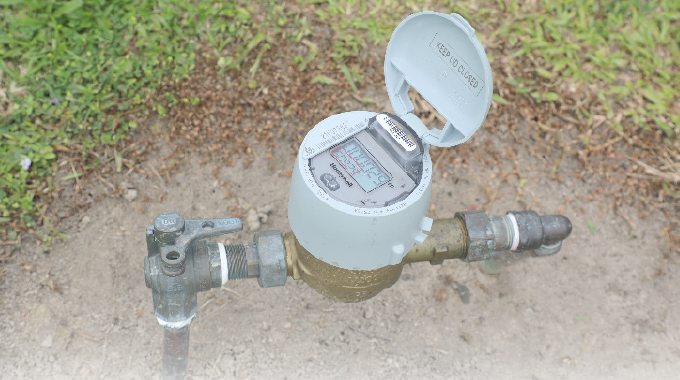
Council data shows that 1,1million water bills were estimated between January and December 2025, accounting for 69,4 percent of all bills issued during the year.
April and May recorded the highest reliance on estimates, with 85 percent of bills issued during those months based on projections rather than meter readings. January was the most accurate billing month, though even then, 47 percent of bills were still estimates.
For the remainder of the year, the proportion of estimated bills remained consistently above 60 percent, ranging between 61 percent and 85 percent. By year’s end, the average rate of estimated billing stood at 69 percent, a figure that underscores the scale of the city’s metering and billing challenges.
“The total number of meters city wide in the month of December 2025 is 138 388,74 percent of the meters (102 406) were estimated, whilst 26 percent (35 982) were visited for the purpose of obtaining readings,” reads the report.
The local authority revealed that the billing process is designed to begin with physical meter readings to determine the volume of water consumed.
“The billing process begins with reading of meters to ascertain the volume of water consumed. Regular reading of meters helps consumers to detect leakages in their pipes, monitor and manage water usage and also identify the status of their meter,” reads part of the report.
The local authority further revealed the collection ration average — of the bills as compared to receipts received — or the year was pegged at 65 percent.
The total issued bills amounted to ZWG3 billion of which they received ZWG1,9 billion.
“Billing for December 2025 was ZWG264 million equivalent to USD$10,1million. Collection efficiency in the month of November 2025 was the highest at 73 percent. The January 2026 receipts will be measured against the December 2025 billing in the next month’s report.
“Throughout the year 2025, the amount received was less than the amount billed. Additional equipment, material and human resources are required to improve collection to current billing plus a portion of arrears so as to reduce the amount owed by debtors and increase cash availability for service delivery,” reads the council report.
Over the years, residents have argued that estimated billing has contributed to inflated charges that do not reflect actual consumption, particularly during prolonged dry spells when little or no water is available.
Some ratepayers have called for improved efficiency in meter reading, greater transparency in billing calculations and the introduction of digital systems to minimise reliance on estimates.
The revelation, by the local authority, also highlights administrative and revenue collection challenges facing the local authority, which depends heavily on ratepayer payments to fund water treatment chemicals, infrastructure maintenance and pumping operations.
Bulawayo United Residents Association’s chairperson, Winos Dube took a swipe at the local authority saying for quite some time residents have been complaining about their high bills with the local authority playing innocent.
“It is worrying that they admit now that they have been estimating these bills, yet we have been complaining about these unexplained high bills when most of us go for over five days without water, while council claimed there was nothing amiss.
“This is something that has to be investigated as a matter of urgency because it honestly does not make any sense at all,” said Mr Dube.


