admin
admin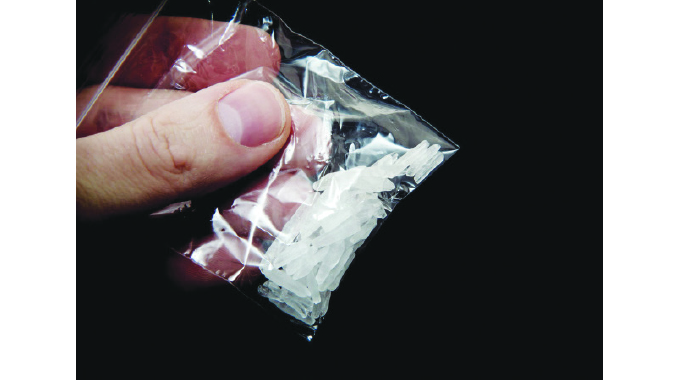
Roselyne Sachiti
Features, Health & Society Editor
“I miss my 22-year-old twin sons who I lost to crystal meth addiction. I love them and am praying that they come back home so that we become family again. I want them to return to school.”
A desperate tearful plea by a heartbroken mother Mrs Martha Maramba (not real name) whose twin sons Tawanda and Takudzwa (names protected) dropped out of the University of Zimbabwe to pursue a life of drugs.
Today, they are hooked on crystal meth.
Also known as mutoriro, dombo, buwe or guka makafela in Zimbabwe’s street lingo, Mrs Maramba’s sons have been addicted for almost a year.
Though they are above 18-years-old (Zimbabwe’s legal age of majority) and some may argue the twins can make their own decisions, the pain Mrs Maramba is going through speaks strongly of the bond between mother and child.
Mrs Maramba cries uncontrollably, meth has stolen the bond between her and her twins.
The pain of losing her sons seems to choke her. She tries to speak, taking deep breaths in between the uncontrollable crying.
Moments later, she calms down, gathers her strength and reveals that the twins are now staying at a drug base known as Gaza, along Mangwende Street in Harare’s high-density suburb of Mbare.
Locals say Gaza also has a studio used by young boys and girls as a hideout for taking illicit drugs. Here, girls are allegedly being raped and stories of bribery are common.
She has not seen them in months, is worried for their safety, health as well as state of mind.
“Tawanda was a final year law student while Takudzwa was studying towards a degree in urban planning (3rd year) at the same university. I have lost my sons,” the heartbroken mother continues.
Today, she says, the two live at the base in Mbare, the source of the illicit drug.
Red Flags
It all started during last year’s total Covid-19 induced lockdown when Tawanda and Takudzwa developed an unusual liking of Mbare. Each day they left their Waterfalls home in the morning only returning at sunset.
“They said they had friends there and wanted to share notes from school. But, I would notice some light bulbs in their pockets. I did not know what these were for, dismissed them as just items in boys’ rooms and threw them away. When I kept seeing the bulbs in their bedrooms, I became suspicious,” she explains.
Curious, she finally came face-to-face with the truth, but still had her doubts.
How could her kids who were excelling in school, sport and in the national rugby team be involved in such vice?
Little did she know this was just the first red flag, more disturbing events were to follow, spiralling out of control and shattering the peace that once lived in their home.
More Red Flags
“Whenever they returned home from Mbare, Tawanda would fry 10 eggs. I was worried why one person would want to eat so many eggs at once, alone,” she explains.
Being widowed last year, Mrs Maramba, a business woman, tried to do all she could to maintain the lifestyle her kids were used to when their father was still alive.
Yet, the drugs were merciless, unforgiving and seemed not to notice her efforts.
“They also started sleeping for abnormally long hours each time they returned from Mbare. I would get worried over the sleep patterns.
“I could see my children had changed. They said things that worry me to this day. They could say anything, and no longer spoke of school or life,” she further explains.
Mrs Maramba was pushed to the limit when items and clothes started disappearing from home.
“They started selling things even their clothes so that they could sustain their drug habit. A small sachet of crystal meth costs US$5.With help from the police, I managed to retrieve the clothes and items in Mbare,” she reveals.
She is in pain, so are the twins’ two siblings.
“I am hurt. Sometimes I wake up at night and cry. I do not sleep thinking of where they are. I am so bitter especially towards people who are selling drugs to young people. They took my children from university to a drug house,” she points out.
She wants the world and policy makers to fully understand the extent to which crystal meth and other hard drugs has shattered the lives of many families.
Mrs Maramba urges other mothers going through the same problem to openly speak about youth substance abuse.
“Some mums hide information when their children start doing drugs. They are embarrassed. We need to talk about the huge challenge of substance abuse by the youth so that government can help. This, hopefully, will lead to the arrests of those supplying drugs,” she suggests.
The challenge now, she bemoans, is some people being arrested for selling drugs are released back into communities and go on as if nothing has happened.
“Some people selling mutoriro are also mothers. You cannot do it to another person’s child if you have children. We should start taking other people’s children as ours,” she adds.
The journey has been a learning curve, especially when she met a team from Mubatirapamwe Trust.
“Savannah consoled me. I feel better as they are helping me fight for my kids,” she reveals.
“Mubatirapamwe Trust assured me they will not rest when it comes to getting back my kids. We will fight to have them back so they go for rehabilitation.”
She said through the journey, her extended family has been supportive not judging her or her twins in any way.
They have been assisting her with ideas on how we can get back the boys.
Should her twins get an opportunity for rehabilitation, there is hope.
Success stories like that of Tamary Mundirwira (20) also known as Tamar, who is recovering from her addiction to crystal meth (mutoriro) at a local rehabilitation centre in Harare are proof that life can go back to normal.
Mrs Maramba prays for the day her twins will do the same.
A former student at Girls High School in Harare’s CBD, Tamar as she is known tells The Herald she has always wanted to become a lawyer.
Given her wit and confidence, Tamary is determined to make it and become the face of hope for other kids trapped in the web of hard drugs.
In 2016, peer pressure led her to a dark passage churning a chain of events she now regrets.
She ran away from home and started staying with a friend and taking crystal meth at a drug base in Chitungwiza.
“I was a naughty child. While in Form 4, and due to peer pressure I left school and I started by doing mbanje at a corner we call Adidas because of the three leaves. I was pushed out home because of my uncontrollable behavior,” she says.
Tamar , a second and last child adds her older brother has mental health issues, and this could also have affected her.
In 2018, she indulged in crystal meth. She admits that the drugs changed her into a new person, who she herself cannot identify today.
“This affected me, I had hallucinations, indulged in prostitution. I saw someone being stabbed 15 times, but what I saw was animation, a cartoon being stabbed not a person. I also participated in robberies,” she painfully recalls.
Having experienced this first hand, she says crystal meth is a deadly drug, it stops those taking it from eating, drinking water, kills brain cells and some may end up with a heart attack.
“Six of us stayed in the drug house. We used it as a base as we sold musombodiya. Some people were using diapers and sanitisers calling them two shots to get high though I stayed away from these,” she reminisces.
Here, she experienced all forms of vices, also falling in the trap of sexual gender based violence (SGBV).
“As a stubborn child my family did not follow to check on me. While high on mutoriro, men would take turns to sleep with me and my friend.”
Tamar took a chance to change when she met the team from Mubatirapamwe Trust.
“I met aunt Savanna through her brother Mega Jani who I used to smoke with. They took me to a rehabilitation centre. For detox I first went to Annex Clinic, and received treatment for six weeks. It can be done, you can change your life through rehabilitation.”
She has regrets.
“I spoiled my life. Standing right here is for children who are not able to do it for themselves. It is not a mistake to do a first mistake, but is when you repeat. I have noticed my mistake and decided to rectify it. There are some children who do not know what they are doing. This is a deadly drug. It is affecting so many people’s lives,” she further explains.
Her friends have not rehabilitated.
“They have not changed. You can take a donkey to the river, but you cannot force it to drink. I took a stand for myself that I needed to change. When Aunt Savanna came to help, I volunteered. I saved myself,” she expounds.
She is worried for some young girls as young as 13 and 16 who are addicts, and are marrying early.
“My message is no to guka, more to life.
“It is never too late to make a change so start changing and make decisions for yourself. Do not allow anyone to make your decisions because at the end of the day I used to do things to please my friends, yet destroying my own life. More to good friends that teach you life.”
She adds in the era of Covid-19, crystal meth users often ignore social distancing.
“We are talking about social distancing this lockdown. When we share the bulb, there is no social distancing. Over seven people are sharing the same pipe. This is direct contact through saliva. You also keep changing a drug base and share another pipe with new people. It’s a high risk area of Covid-19,” she adds.
She says she wants to talk to youths as she understands the language used by addicts.
“If someone says ndiri kuteerwa (I am being followed), I am able to classify which drug they have been taking. These drugs have code names,” she reveals.
It has been tough for her family to accept her back, but the Mubatirapamwe Trust team has been talking to them bit by bit taking them through her journey to recovery.
Savanna Madamombe says she bumped into the sad reality of crystal meth through her brother, Mega Jani a dancehall artist who was hooked on it.
“He was handed something at night as they were recording and was told it will keep him awake,” she reveals.
At a funeral in their rural area, Mega Jani, looked sick and Savannah wanted to know what was going on with him. She confided in her that he was hooked on meth and this was a huge challenge in high density areas.
“I stay in New York, US and had returned home to escape Covid-19.
“This was a learning curve as he took me to Chitungwiza where we grew up to show me the extent of the damage meth had done on the youth, some who dropped out of school,” she says.
What she saw there was shocking. The rooms were dark and filthy.
“We went to 15 bases in Chitungwiza where we saw 10 to 15 people crowded in a small room. I realised there was a bigger problem and asked my sister, who has an organisation Mubatirapamwe Trust to try and establish a solution,” she adds.
The two sisters immediately started social media campaigns, which received overwhelming responses.
When one parent asked what mutoriro was, a ponderous box opened.
“When we explained, we each had more than 100 calls within a short space of time from parents who were sharing their experiences. This was a clear message, there was a huge challenge,” she notes.
Savanna’s sister Christina Kiri Madamombe the founder of Mubatirapamwe Trust said they established the organisation to offer immediate relief and linkages to the problem of drug abuse.
She says they identified the challenge of substance abuse in urban areas.
“We learnt many parents were in distress, and were living with violent children. We heard of cases where sons beat up mothers, others used pots as toilets. We heard of children dropping out of all universities across the country,” she explains.
As part of their work, they link with various government ministries and departments so they assist.
“This problem is not about one person, it needs everyone. Ministry of health has centres that are taking care of such people, but they are not enough,” she notes.
According to Madamombe, since the centres cannot take care of many people, parents are taking their children back home, where even with medication, are relapsing.
“We are advocating for hospitals like Parirenyatwa and many others to have a ward that focuses mainly on crystal meth cases. I know there may be problems of staff that will be looking after the affected youths, but this is something government can look into.”
When treated, she said, the affected youths should go for rehabilitation and isolation, to remove them from enablers.
“We have rehabilitation centres in Zimbabwe, but they are expensive. Some cost up to more than US$100 per day,” she points out.
She says many parents of affected youth cannot afford paying this money.
“We are calling on the private sector to come and help because if this challenge persists, we will lose a huge chunk of the workforce,” she adds.
She reveals they have created a database of people who need help and have been working with doctors and counsellors offering free services.
Challenges include transport, fuel for easy movement to affected communities.
She said they also need more safe houses for those going through rehabilitation.
As the crystal meth addiction soars, mothers like Mrs Maramba are crying out for help, youths like Tamar raising hope and organisations like Mubatirapamwe Trust helping to rehabilitate affected youth and their families.
Feedback – [email protected] or [email protected]
•



 Online Reporter