Online Reporter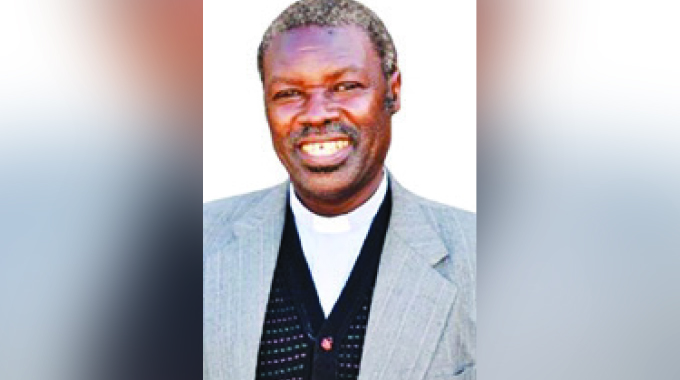
Remember Deketeke
THE United Methodist Church (UMC) has firmly restated its opposition to homosexuality and same-sex marriages, asserting that such practices are incompatible with Christian teachings and Zimbabwean cultural values.
Speaking at a Press conference yesterday in Harare, UMC Bishop Dr Gift Machinga addressed growing concerns among congregants following a contentious decision by the General Conference of the United Methodist Church to remove restrictions on homosexuality within the wider denomination.
Last year, the global UMC voted 692 to 51 in favour of eliminating a 52-year-old statement declaring that “the practice of homosexuality was incompatible with Christian teaching”.
“We wish to reassure our members that the Zimbabwe Episcopal Area remains unwavering in its theological and cultural position,” said Dr Machinga.
“Homosexuality is incompatible with Christian teaching, a belief rooted in our understanding of scripture, the infallible and authoritative word of God.”
He said the church’s stance aligns not only with its biblical interpretation but also with Zimbabwean law.
“Our Constitution and the Criminal Law Act explicitly prohibit same-sex marriage and criminalise homosexuality.
This alignment between national law and our faith-based principles strengthens our resolve.
“Persons of the same sex are prohibited from marrying each other. This is the law of the land, and we, as a law-abiding church, will uphold it.”
He also expressed gratitude for the church’s autonomy in maintaining its doctrine.
“Even though some African customs permit polygamy, the union remains between a man and a woman,” said Bishop Machinga.
“Our church upholds marriage as a sacred covenant between one man and one woman, and we will not perform same-sex weddings under any circumstance.”
He also highlighted the adoption of the worldwide regionalisation framework by the General Conference.
This policy allows various regions of the church, previously known as Central Conferences, to adapt their governance and disciplinary practices to their respective cultural, legal and theological contexts.
“This is a pivotal moment for our denomination,” he said.
“Regionalisation will enable us to develop and adopt our own Book of Discipline, preserving theological positions that reflect our context, including our stance on marriage.”
He cited the 1996 African Central Conference Book of Discipline as an early example of this contextual approach, and added that the full refinement and implementation of regionalisation is expected by the end of 2026.
“This move is not a division of the church, but a reaffirmation of its unity through diversity.
“We are still one church, but with flexibility that respects local realities,” he said.
Addressing concerns within the local church community, Bishop Machinga urged calm and focus.
“Let us not be swayed by misleading narratives. The mission of our Lord Jesus Christ remains our priority,” he said.
“We must continue to form disciples who love boldly, serve joyfully and lead courageously in our communities.”
The bishop called for unity and proactive engagement.
“You will be seeing your delegates to the General and Central Conferences travelling across districts to educate and consult with you on these changes,” he said.



 derick.khumalo