Vusumuzi Dube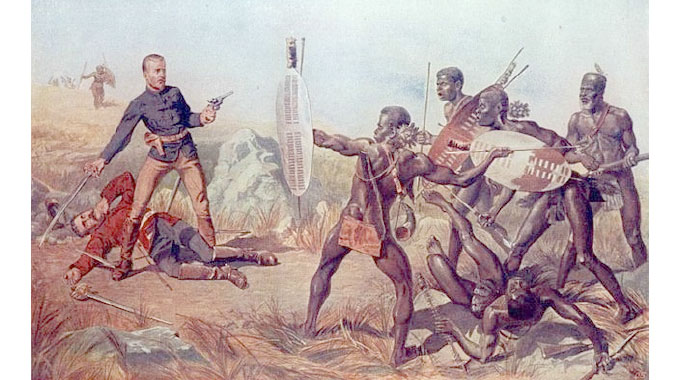
Mfecane refers to wars which took place among then Nguni people around the 18th century. Nguni people included many groups speaking dialects e.g. Zulu, Mthethwa, Xhosa, Hlubi, Mpondo, Zizi etc.
New states were found due to military power and trading. By 1820s, one state had emerged to dominate others (Mthethwa of Dingiswayo, Ngwane of Sobhuza) that is Zulu state. Other states were forced to migrate from Nguniland for example Ndebele of Mzilikazi and Kololo of Sebetwane. A lot of destruction resulted as warfare spread to Central Africa as death and destruction were greatly experienced. This time was called Mfecane by the Zulu meaning “Great crushing” and Difaqane by the Sotho meaning “Scattering”. It was also referred to as time of suffering, trouble, movement etc.
Causes of Mfecane: Economic and Political development
Northern Nguni people were farmers during the 19th century and heavy rainfall was received leading to good crop yields, The area had good soils and vegetation leading to surpluses. As a result population increased. As population increased herds also increased in size and therefore could not be moved freely to the hills and villages for grazing. There was an imbalance in population density and available resources so competition to control the best lands for agriculture and grazing purposes developed.
Age regiments
As states grew age regiments increased. The role of the army became more important and initiation ceremonies were banned so that young men would participate in the army.
Hunting and Gathering
This led to a large scale destruction of wild game. Powerful states could get larger areas for hunting as they could overpower weaker states. Elephant hunting led to a greater demand for ivory at Delagoa Bay by the Europeans, good control of such trade meant a lot of wealth to a particular state, and this also meant good rewards to subjects. The desire to control trade led to growth of states.
Drought
Series of droughts were experienced for about ten years. Crops failed, pastures withered leading to wide spread famine. This became known as Madlatule famine meaning “let him eat and keep quiet”. Competition for scarce resources became severe as people raided each other for cattle and stores of grain.
Course of Mfecane
Raiding started and some chiefdoms migrated to other areas. Chiefdoms were terrified of the Zulu and its raids so much that they moved to safer lands while some remained and paid tribute to the Zulu. Ngwane of Sobhuza was defeated by Ndwandwe of Zwide and moved to the north part of Pongola River, his soldiers adapted the tactics of the Zulu, Mthethwa and Ndwandwe. This made him conquer other weak groups and incorporated them into his new kingdom (Swaziland). Soshangane of Gaza-Nguni was in Zwide’s army as one of the chief officers, when Tshaka defeated the Ndwandwe in 1818 he escaped and absorbed some immigrants (Northwards) and he was able to conquer Southern Zimbabwe and Mozambique but was not as successful as Sobhuza as his political influence was weak. Zwangendaba of the Ngoni also escaped when the Ndwandwe were defeated, he followed Soshangane but parted when the two clashed and lost the battle in 1831 and the Ngoni travelled to Northwest Zimbabwe.
Zwangendaba had a series of battles with the Shona under Changamire dynasty, failing to subdue them completely.
He crossed the Zambezi River and finally settled in Tanzania. After Zwangendaba’s death, they separated, one group settled in Eastern Zambia and the other group caused havoc in Southern Tanzania and Malawi as they used Nguni warfare to overwhelm weaker groups.
Mzilikazi of the Khumalo was also part of the Ndwandwe, but presided over the Khumalo clan as he was loyal to Tshaka, Zwide had conflicted with Mashobane, Mzilikazi’s father so as a result there was hatred between the groups and Mzilikazi sided with Tshaka, but sooner conflicted because of resources as he preferred to give them to the Khumalo than the Zulu.
Impact of Mfecane
Death of many people due to hunger as they lost their cattle, sheep and goats. Abandonment of circumcision as it kept young boys away from active duty for a long time i.e. in the army. Destruction of chiefdoms which began Mfecane e.g. Ndwandwe, Mthethwa, Ngwane and new ones emerged e.g. Kololo of Sebetwane and Ndebele of Mzilikazi.Some large areas were left depopulated e.g. South of Tugela river Spread of Nguni culture and language through assimilation. However, in some instances the Nguni language was destroyed. New war tactics were spread in Southern and Central Africa. People from stronger chiefdoms benefited from the loot taken from weaker chiefdoms. Leaders were appointed due to talent and rather than inheriting. A balance between human population and land available was established leading to stability in the region.
Dr Manners Msongelwa is the president of History Teacher’s of Zimbabwe and a Teacher at Camelot College in Kwekwe



 Online Reporter