

 admin
admin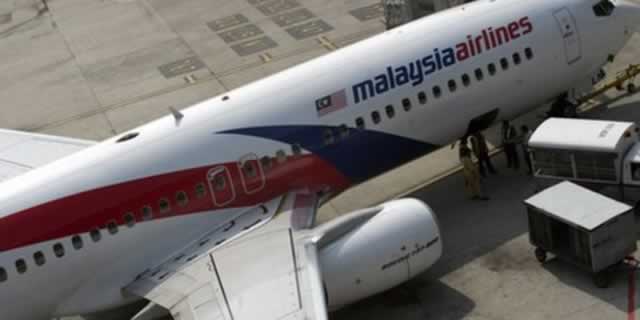
 Multinational search teams have resumed the hunt for the wreckage from Malaysia Airlines Flight MH370 after weather conditions improved over the southern part of the Indian Ocean. A total of 12 planes and two ships from Australia, New Zealand, the United States, China, Japan and South Korea were participating in yesterday’s search, hoping to find even a single piece of the Malaysia Airlines plane that could offer tangible evidence of a crash.
“Today’s search is split into three areas within the same proximity, covering a cumulative 80,000 square kilometres,” said the Australian Maritime Safety Authority (AMSA), which is coordinating yesterday’s operation.
AMSA said four Chinese ships had reached the search area.
While the most recent data has vastly shrunk the search zone it remains large, at an estimated 1.6 million square kilometres.
“This is about the most inaccessible spot imaginable. It’s thousands of kilometres from anywhere,” Tony Abbott, the Australian prime minister, said.
David Ferreira, an oceanographer at the University of Reading in Britain, said little was known about the detailed topography of the seabed where the plane was believed to have crashed.
“We know much more about the surface of the moon than we do about the ocean floor in that part of the Indian Ocean,’’ Ferreira told the Associated Press.
Malaysia announced earlier this week that a mathematical analysis of the final known satellite signals from the plane had proven beyond doubt it gone down in the sea, taking the lives of all 239 people on board.
China had criticised the announcement for coming to the conclusion without having found any physical evidence of the plane’s remains.
Many passengers’ families also believe that the Malaysian officials have not been transparent or swift in communicating information with them about the status of the search of the ill-fated flight.
Meanwhile, what sets MH370 apart from other disasters, experts say, is the unique set of circumstances surrounding the plane’s disappearance and the protracted search, now in its third week.
Nearly two-thirds of the passengers were from China. Compounding the heartbreak is that as a result of the country’s one-child policy, many of those lost were only children.
China was swift to criticise Kuala Lumpur’s handling of the crisis soon after the plane disappeared, and state-run media has run a series of scathing editorials calling for more effort and transparency.
And in a country where authorities keep a tight rein on protests, Tuesday’s rowdy demonstration was permitted to proceed and police blocked traffic to allow the marchers through.
The most fundamental stumbling block towards acceptance is the lack so far of physical evidence showing that the Boeing 777 indeed plunged into the southern Indian Ocean, or any passengers’ remains.
“Remember that after 9/11, they actually spent a lot of time finding the DNA of the human remains in order to confirm who was on the death list,” said Amy Chow, an associate professor at the University of Hong Kong. — AFP



 Online Reporter