Walter Nyamukondiwa in Mhangura
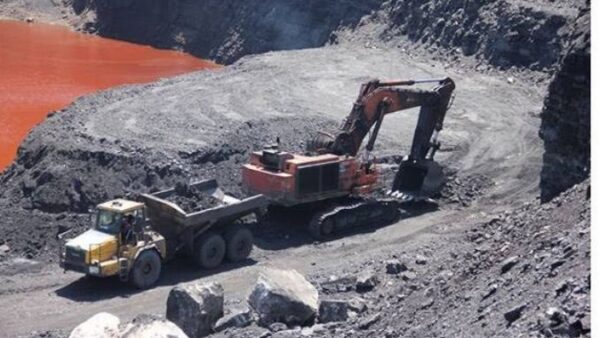
WHEN Mhangura Mine closed, it took away more than jobs.
For many families in the former mining community, the closure meant shrinking incomes, fewer opportunities and an uncertain future.
But for eight women, a Government skills training programme opened a new door and ultimately enabled them to help build a hostel that could keep girls in school.
The women were among 25 locals trained by Belvedere Technical Teachers College under the Government’s Integrated Skills Expansion Outreach Programme.
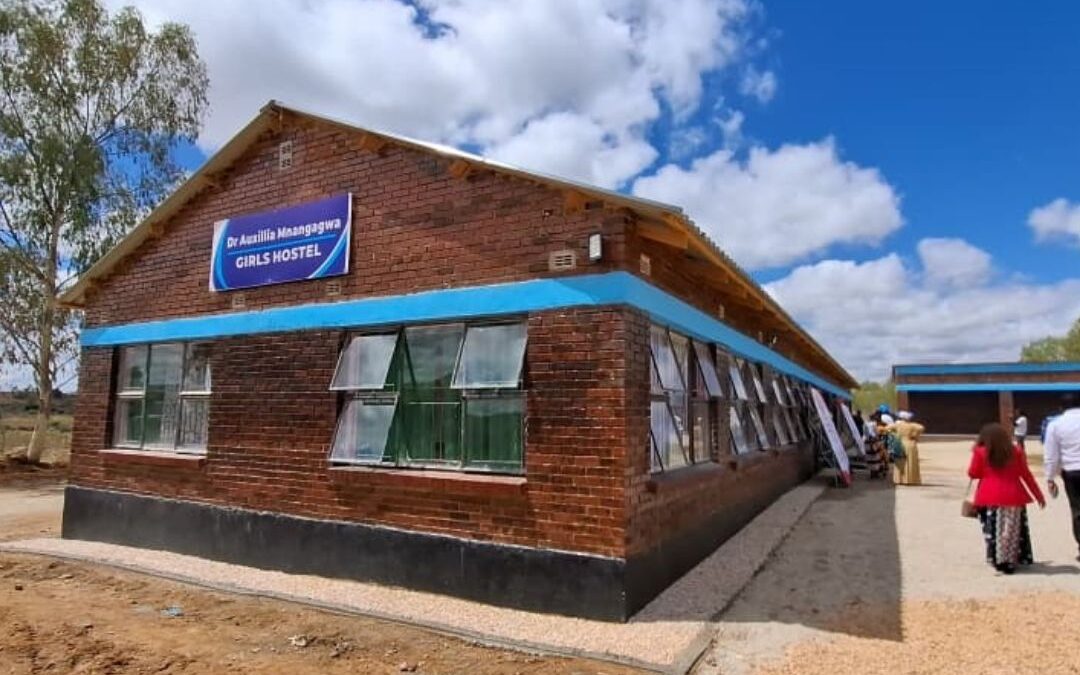
After seven months of training in brick and block laying, plastering, carpentry and flooring, they put their skills into practice, helping construct a 50-bed girls’ hostel at Ridziwi High School in
Makonde District.
The Dr Auxillia Mnangagwa Girls Hostel was commissioned by Health and Child Care Minister Dr Douglas Mombeshora, representing the First Lady Dr Mnangagwa, on the sidelines of the World
Breastfeeding Week 2026 National Commemorations.
For Mrs Sabina Mukwepi, one of the eight women trained, the project represented more than a construction job.
It was a chance to rebuild her livelihood after the closure of Mhangura Mine.
“Mhangura Mine closed a long time ago and Makonde RDC called us to participate in the programme, which allowed us to work and fend for ourselves,” she said.
“This programme has helped us to survive in the community and we have attained Class 3 and 2 artisans qualifications.”
The women started by learning the trade before putting their skills to work on the hostel.
Ms Fortunate Chingagwe said their determination to stick together had paid off.
“We are now a formidable team that can take up any construction-related job,” she said.
“The Dr Auxillia Mnangagwa hostel is now complete and it will help inspire girls who will be accommodated here to be resilient and believe in themselves.”
The project comes as Ridziwi High School seeks to address a longstanding barrier to education which is long distances travelled by students.
Some pupils were walking more than 10 kilometres to school, a burden that disproportionately affected girls.
Mashonaland West Provincial Education Services chief director Mrs Rebecca Gora said the long journeys had contributed to some girls dropping out while others struggled to perform well academically.
“The construction of this hostel is going to ease the problem,” she said.
The facility has 50 beds and an ablution block comprising 14 cubicles eight bathrooms and six toilets.
Makonde Rural District Council chief executive officer Dr Paradzai Munyede said the council initiated the project by bringing together farmers, local businesses, former students and Government departments to mobilise resources.
Construction began in December and the council has already turned its attention to the next phase.
“We have prioritised the issue of girls because the statistics are showing that, at least, we are losing a minimum of 20 girls annually at this school,” Dr Munyede said.
“But are equally affected and we are going to prioritise them in the next phase.”
A boys’ boarding facility is planned for Ridziwi in 2027, while Kenzamba and Chitomborwizi primary schools are also earmarked for similar infrastructure under the National Development Strategy 2.
Dr Munyede said the long-term goal was to ensure that learners across Makonde had access to quality education closer to home.
For Belvedere Technical Teachers College principal Mr Fidelis Mushayi, the hostel demonstrates the practical impact of taking skills training into communities.
The 25 trainees, eight women and 17 men have already passed theory tests at Class Two and Class Three levels and are expected to proceed to full artisan certification through the Industrial
Training and Trade Testing Department.
“We are still expecting to continue partnering schools and communities out here so that, at the end of the day, we continue to impart skills,” Mr Mushayi said.
The project forms part of the Integrated Skills Expansion Outreach Programme, an extension of Education 5.0 that seeks to take practical training into communities while producing people capable of creating goods and services.
Ministry of Higher and Tertiary Education, Innovation, Science and Technology Development director for skills development Mr Wyclif Sonono said such projects were part of the drive to make
practical skills accessible beyond traditional training institutions.
“The President insisted on education that produced goods and services, resulting in the adoption of Education 5.0,” he said.
“Such projects as we are witnessing today are part of the Integrated Skills Expansion Outreach Programme.”
For the women of Mhangura, the hostel is a tangible testament to what can happen when skills, community participation and opportunity converge.
They entered the programme looking for a way to survive after the mine closure.
They emerged with artisan qualifications, construction experience and a building that could give girls in their community a better chance of staying in school.
In a town once defined by mining, the women are now helping build a different future one brick at a time.