admin
admin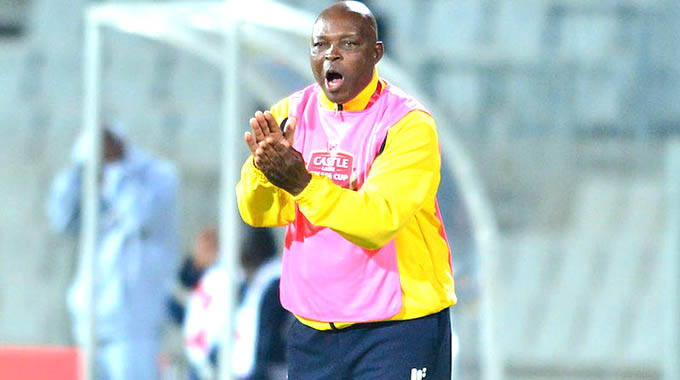
Robson Sharuko Senior Sports Editor
IT’S a measure of the massive influence Sunday Chidzambwa has cast on the Battle of Zambezi over a period of almost three decades, his absence during today’s COSAFA Cup semi-final will be felt on either side of the divide as this explosive derby takes another step towards its 40th anniversary.
The match gets underway at 7.30pm tonight at the Moses Mabhida Stadium in Durban.
Hours earlier, in rural Mhondoro in Mashonaland West, Chidzambwa would have laid to rest his father, Ezekiel, who died in Harare on Sunday, a day with a similar name to the one he gave his son, just two years short of celebrating a century in this garden of the living.
The veteran coach, who was forced to leave his Warriors behind in Durban to mourn his father, will then be expected to fly back to South Africa tomorrow to join his team on the trip to Nigeria for a high-profile international friendly against the Super Eagles in Asaba on Saturday.
It has been a trying time for Chidzambwa, who was forced to find a balance between performing his national commitments and dealing with his father’s deteriorating health, which led him to miss the unveiling of the squad he chose for the COSAFA Cup and Nations Cup finals.
And, today, he will wave goodbye to the man who shaped him into this superman — teaching him about the virtues of respect, the importance of hard work, the benefits of humility, the value of a never-say-die spirit, the dividends that come with chasing his dreams.
To believe barriers could be broken, including ending decades of failure by the Warriors to qualify for the AFCON finals, which came to pass in 2003 with Chidzambwa in charge of the national team, finally exorcising a ghost that has stalked the team for 23 years and devoured many foreign coaches.
The father of one of domestic football’s most influential family might not have lived his life in the media spotlight where his sons have walked for the better part of their adult lives, but he leaves behind a legacy of having played a huge part in helping change the face of our national sport:
Sunday was the first captain of the Warriors at Independence when the country returned to the international football family after years of isolation.
His younger brother Misheck was the first captain of the Warriors to lead the team to their first silverware when they captured the CECAFA Cup at Rufaro in 1985.
Sunday became the first and only coach to lead a domestic club to the final of the CAF Champions League when Dynamos came within 90 minutes of becoming African champions in 1998.
Two years later, Misheck became the first coach to guide the Warriors to their first COSAFA Cup success story after a 6-0 thrashing of Lesotho, over two legs, in the final.
In 2003, it was the chance of his brother Sunday to end the Warriors’ lengthy wait for their first dance at the AFCON finals when they booked a ticket to the 2004 Nations Cup finals in Tunisia.
Half-a-dozen years later, Sunday wrote another chapter in the glorious tale of their family’s success story by leading his Warriors to success in the COSAFA Cup with a 3-1 demolition of Zambia in the final at Rufaro.
Two years ago, Sunday was back again, becoming the first local coach to guide the Warriors to a second COSAFA Cup success, with the Zambians once again being the losing side in the final after a 1-3 loss in South Africa.
And, last year Sunday added another COSAFA Cup title to his impressive silverware cabinet, with the Zambians, for the third time in his confrontations with them in the final of the regional tournament, again the big losers.
In March this year, Sunday became the first coach to lead the Warriors to two appearances at the AFCON finals when his men completed a campaign they dominated from start to finish, by beating Congo-Brazzaville 2-0 at the National Sports Stadium. Today, Sunday will be missing from the Warriors’ dug-out as the Warriors take on eternal rivals —Zambia — in the semi-final of the COSAFA Cup.
It’s yet another confrontation between Zimbabwe and Zambia on a football pitch in a contest where Sunday has made a huge impact, both as player and coach, in almost four decades.
Fittingly for this derby, it all started under a blaze of controversy, a bizarre and enduring quote about a jumbo jet pilot and a stunning comeback by the Warriors inside the stadium they used to call their spiritual home before migrating to settle in the golden shadows of their national heroes.
That was 39 years ago.
Interestingly, the contentious April 20 showdown at Rufaro wasn’t the first football showdown between the two countries, with the first one coming in the pre-Independence era for both nations, just a year after the end of World War II.
The Zambians won that friendly encounter 4-0. Ten more friendly matches would be played for the next dozen years, with the locals winning five of them, the Zambians winning three and one ending in a draw.
But the one in 1958, which the Zambians won 2-0, would mark the end of those contests, the curtain coming down on those matches ironically in the very year the world got its first introduction to the genius of a 17-year-old Pele, who with the passage of time, would transform himself into the greatest of all-time.
Twenty two years would pass without any football battles between the two countries until the Zambians arrived, this time in the company of the Malawians and the Mozambicans in April 1980 at the grand four-nation football party to celebrate Zimbabwe’s Independence.
After the Warriors had thrashed Mozambique 6-0 in the semi-final, and the Zambians had taken care of Malawi, the two went toe-to-toe in the final before a capacity crowd at Rufaro.
The Zambians took the lead in that match, David “Yogi’’ Mandigora headed home the equaliser, and amid an outpouring wave of nationalism by the newly-independent home fans, the late Shacky Tauro met a cross from Oliver Kateya and directed his header home for the winner.
The Zambians were enraged.
“It was a clearly offside goal,’’ the then Zambian skipper Jani Simulambo said after the match.
“Even a pilot in a jumbo jet could have seen that Shacky Tauro was offside.’’
It was a defining quote and a defining moment for the rivalry between the two teams, and in that instant, the fireworks that now characterise the Battle of Zambezi Derby were born.


 Online Reporter