Online Reporter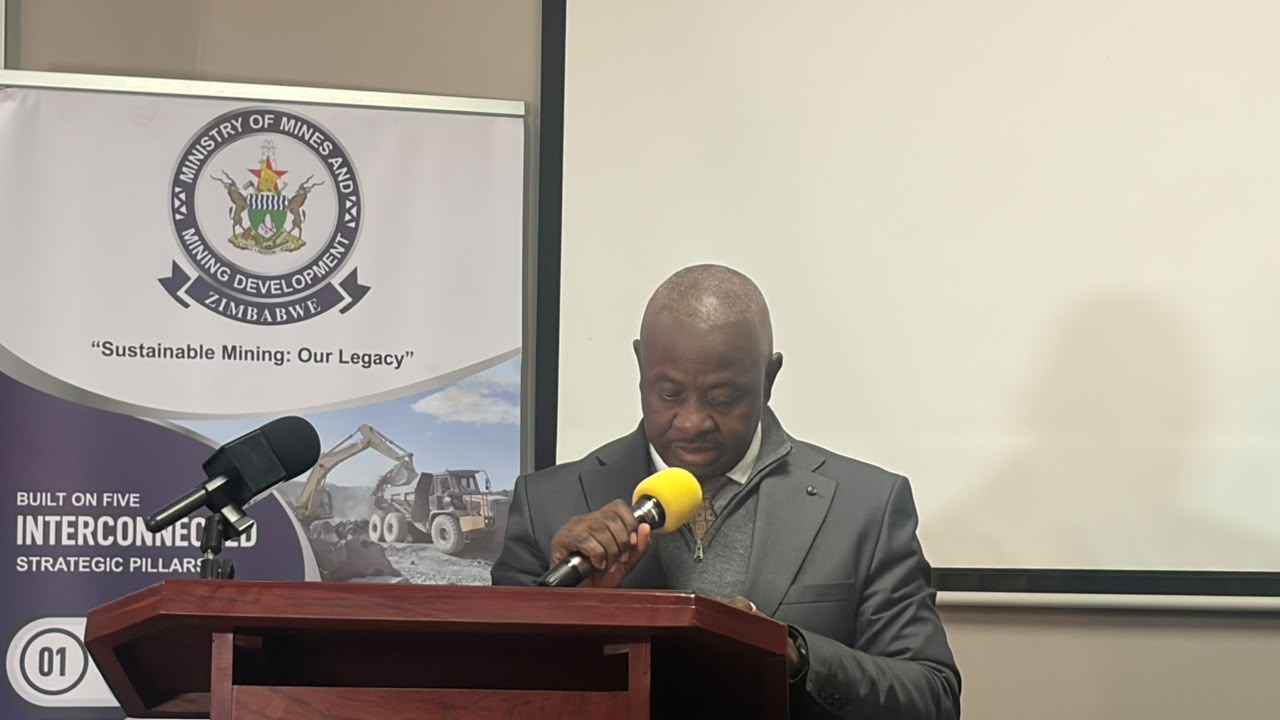
Online Reporter
The Ministry of Mines and Mining Development has reaffirmed its commitment to transforming Zimbabwe’s mining industry from a predominantly extractive sector into a major engine for industrialisation, with beneficiation and value addition taking centre stage in the country’s economic transformation agenda.
This emerged during the Ministry’s 2026 Mid-Term Performance Review and Second Half Reset Workshop, which opened in Kadoma on Monday under the theme, “Accelerating Value Addition and Beneficiation for Economic Transformation.”
The workshop comes at a time when Zimbabwe is intensifying efforts to maximise returns from its mineral wealth in line with the National Development Strategy 2 (NDS2) and Vision 2030, which seek to position the country as an upper-middle-income economy by the end of the decade.
Welcoming delegates, Secretary for Mines and Mining Development Dr T. U. Wushe said the country’s mineral resources must become the foundation for broader economic development through responsible mining, increased local processing and the growth of downstream industries.
“The future of mining lies not only in extraction, but in beneficiation, value addition and the creation of industries that generate employment and sustainable economic growth,” he said.
Zimbabwe is endowed with vast deposits of gold, platinum, chrome, lithium, diamonds and iron ore, resources that have historically contributed significantly to export earnings. However, policymakers are increasingly shifting their attention towards ensuring that minerals are processed locally to create greater economic value.
The Government believes that beneficiation has the potential to stimulate the growth of new industries, attract investment, promote skills development and strengthen linkages between mining and manufacturing.
Projects such as the country’s expanding lithium-processing sector and investments in iron and steel production are expected to play a crucial role in reshaping Zimbabwe’s industrial landscape.
The Kadoma workshop also provided an opportunity for the Ministry to assess progress made during the first half of the year under its four strategic pillars: governance and administration, mining sector growth, environmental protection and investment promotion.
According to the Ministry, service delivery continues to improve, with the Client Satisfaction Index rising to 71,6 percent, surpassing both the mid-year target and last year’s performance.
Efforts to modernise the country’s metallurgical infrastructure are also progressing, with the Metallurgical Laboratory moving towards international accreditation standards that will enhance mineral testing and beneficiation capabilities.
At the same time, officials acknowledged challenges affecting some programmes, particularly in areas such as safety training, environmental awareness campaigns and inspection services.
Participants at the workshop are expected to use the deliberations to identify gaps, realign priorities and formulate practical strategies to ensure that annual targets are met.
The workshop has drawn participation from key stakeholders, including the Chamber of Mines of Zimbabwe, the Zimbabwe Miners Federation, Fidelity Gold Refinery, the Environmental Management Agency and representatives from various Government ministries.
As Zimbabwe pushes ahead with its industrialisation agenda, experts believe that value addition and beneficiation will determine the extent to which the country benefits from its abundant natural resources.
With Vision 2030 drawing closer, the mining sector is increasingly being called upon to move beyond extraction and become a catalyst for industrial growth, innovation and economic prosperity.
The message emerging from Kadoma is clear: Zimbabwe’s mineral wealth will achieve its true value only when it is transformed into finished products that create jobs, strengthen industries and improve the lives of its people.