


 tawandamusarurwa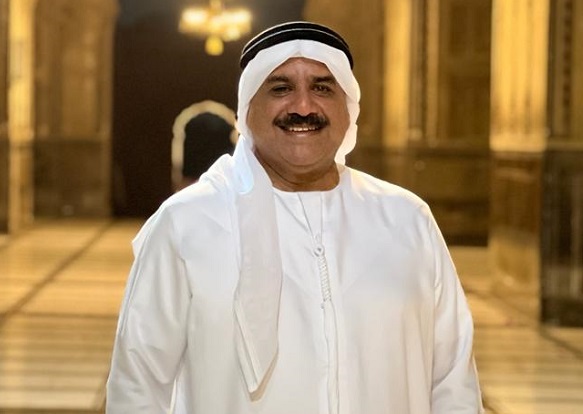
IN January this year, President Mnangagwa appointed Mr Mohamed Jassat(MJ) as Zimbabwe’s Business Ambassador to the Middle East. Mr Jassat believes the region is a new frontier for business. He recently spoke to The Sunday Mail (SM) about the intricacies of attracting investment from this predominantly Muslim region.
****************
SM: On January 17, 2023, President Mnangagwa appointed you Zimbabwe’s Business Ambassador to the Middle East. Briefly tell us about yourself and how this appointment came about?
MJ: I am a fourth generation Zimbabwean. I was born and grew up in Bulawayo, where we had a farm. We also had a printing business, as partners with my brothers. I then started a fabric business called Fabric Factory and became one of the biggest fabric distributors in Zimbabwe, winning an award as Businessman of the Year in 1997.
I also stayed in Australia for about 12 years and then came back.
A few years ago, I bought Mazowe Citrus Estate in a 50-50 partnership with Mr Abdel Hadi Abuseedo, who is from the Middle East.
I am the executive chairperson of Interfresh, which owns Mazowe Citrus Estate.
As for my appointment as Business Ambassador to the Middle East, I work extensively in the Middle East, doing work in Dubai, Abu Dhabi and Saudi Arabia. Due to my business contacts, I was able to bring business from the Middle East to Zimbabwe.
The people I usually mix with also have contacts in the Middle East. This is how I grew my network in the Middle East and have connections in various governments in that region.
As you know, there has been this big misconception about what is happening in Zimbabwe. As an investor and as a Zimbabwean, I have been able to give businesspeople from the Middle East advice on how to invest in Zimbabwe.
His Excellency, President Mnangagwa, heard about what I was doing and called me to his office. I met him several times and I think he recognised my strengths to be able to do business in the Middle East. It has a lot to do with tradition and culture.
SM: When you say you explain to people what is happening in Zimbabwe, what exactly will you be saying?
MJ: There is a lot of bad propaganda out there, but when you see what is actually happening in Zimbabwe, you wonder where all the negative publicity is coming from. As someone who lives in Zimbabwe, you get surprised by lies told about our country.
As for me, because I am entrenched in the business arena, I understand what is happening in business and I can tell you I have never seen opportunities like I have seen in Zimbabwe.
Now, because of my knowledge of Zimbabwe, having lived here and done a lot of business, I am able to advise businesspeople from the Middle East in a manner that gets them excited to come to Zimbabwe.
Yes, Zimbabwe has its own problems just like any other country, but the problems we have are not as serious as the Western world makes them out there.
SM: Zimbabwe has rich resources in agriculture, mining and so on. Is the investment climate conducive to attract meaningful investment?
MJ: There is a lot of bad propaganda about Zimbabwe out there in the West, but if you ask me who owns the biggest mines in Zimbabwe, I tell you they are Americans, Australians, Canadians and the British.
In addition, if you were to interview any of the chief executive officers (CEOs) of these companies, they will tell you Zimbabwe is a very good destination for investment.
So, on one hand, you have people saying Zimbabwe is not good for business and on the other hand, the same people are biggest investors in Zimbabwe. You can see double standards there.
I can tell you there are many businesspeople from Europe and America who want to come to Zimbabwe. They sponsor bad propaganda because they are dying to be here.
It is not a secret that due to history, our Government has close relations with the Middle East, China and Russia. Obviously, the West feels left out, but President Mnangagwa is always saying Zimbabwe is open for business.
SM: As Business Ambassador for the Middle East, what mandate were you given by President Mnangagwa?
MJ: My mandate is to attract investment into Zimbabwe from the Middle East, help businesspeople from the Middle East and guide them on how to invest here. My mandate is to ensure there is no bureaucracy and to give investors a true Zimbabwean experience as they invest in the country.
The other mandate is to lobby governments in the Middle East to come and invest in our country on a government-to-government basis. I will engage the Saudi government, the UAE (United Arab Emirates) government, the Kuwait government and other countries in the Middle East and tell them that, as a Government, we welcome them here in Zimbabwe.
I honestly believe there is no other country in the world that has opportunities like we have in Zimbabwe.
SM: How difficult is it to attract investment from the Middle East?
MJ: It is difficult if you do not understand the culture of the people. I understand, for example, that women and men do not mix. I understand that when you meet a woman, you do not shake hands with her. I understand everything about our religion and our culture, and so it is very easy for me to fit in with them.
What tends to happen is that, because they feel I am a brother, they often invite me to other social functions because I have become one of them. When you become one of them, it becomes very easy to relate and do business together. I think many business deals are clinched in an informal setting, when people know who you are and open up.
If you understand people’s traditions and culture, it is very easy to relate with them and it is easy for them to trust you. For example, with me, we go to the mosque together and we celebrate Ramadan together. So, we are doing common things together and become brothers.
SM: Since your appointment in January, what have you been up to?
MJ: I have been busy laying the groundwork. I had a meeting with UAE Minister of State, Sheik Shakboot bin Nahyan Al Nahyan, and his team. I invited them to Zimbabwe on behalf of President Mnangagwa. The team came to Zimbabwe about three weeks ago and we discussed investment opportunities. Their main areas of interest are agriculture, mining and clean energy.
We also spoke about developing good government-to-government relations.
I took the delegation on a helicopter ride to see Zimbabwe and have a feel of what Zimbabwe is all about. As we were flying, they kept on referring to Zimbabwe as “Jannah”, which is the Arabic word for paradise. They were really impressed.
President Mnangagwa has also tasked me to open a consulate in Saudi Arabia. I met the Saudi Ambassador, Shiek Osamah MM Krenshi, in Lusaka. I presented my credentials and we are in the process of making an application to open a consulate in Saudi Arabia.
From Saudi Arabia, we have very large entities that are keen to start doing business in Zimbabwe in the mining and agriculture sectors. I have lined up quite a number of meetings with some of these entities and soon, I will be travelling to Saudi Arabia.
Even though my portfolio covers the Middle East, I am dealing with all Muslim countries. So, I went to see the Pakistan Ambassador to Zimbabwe and after several visits, he invited me to Pakistan.
I went to Pakistan with him. I attended a Trade Expo in Pakistan. We met the Governor of Lahore and other senior government officials. They are also keen to invest in Zimbabwe. Their areas of interest include mining, telecommunications and textiles. They want to mine lithium, process it and start a battery manufacturing company in Zimbabwe.
SM: The Middle East covers which countries exactly?
MJ: The main countries I will focus on include UAE, Saudi Arabia, Qatar and Kuwait. I will also work with Pakistan, Indonesia, Malaysia, Jordan and Lebanon. Turkey does not fall under the Middle East but I will be working with them as well. As a Muslim, I am going to work with a lot of Muslim countries.
SM: Do you think the Middle East is the new frontier in business and investment?
MJ: The best way to answer this question is to say, a few weeks ago on television, the Crown Prince of Saudi Arabia, Mohammed bin Salman Al Saud, said the Middle East is the new Europe. The Middle East is now becoming a superpower. The good thing is that we have extremely good ties with the Middle East. They do not get involved in our politics. They see Zimbabwe as an equal partner, so getting investors from the Middle East will not be much of a problem.
SM: Is there real money in the Middle East?
MJ: Anyone who has been to Dubai will tell you there is serious money. They turned a desert, in a short space of time, into one of the most important destinations in the world. People from all over the world are flocking to Dubai. If you see infrastructure they have built in Dubai, you will understand what I am talking about. On the other hand, Saudi Arabia is the largest petroleum producer in the world. There is no doubt the Middle East is the new frontier in business.
Even though they have all the money, they have limited resources in terms of minerals and agricultural products.
This is where our opportunity is. It is not a perception that people in the Middle East are extremely rich. It is a fact!
SM: What is the difference between the Middle East and Europe in terms of business and investment?
MJ: Europeans want us to operate the way they want, as if we are still under colonialism. They do not understand and accept that Zimbabwe is now a free country and has moved on. We have new friends. We do not have such issues with the Middle East. There is no bitter past. The Middle East has always been very friendly and they do not get involved in your business. They respect people and their way of living.
SM: What advice would you give Government officials from Zimbabwe on attracting investment from the Middle East?
MJ: The biggest problem we have in Zimbabwe is that sometimes we become too complacent. We need to think about attracting investment into our country like we are running a business. Customer is always king; always be attentive. If someone makes an enquiry about buying goods, the success of your business depends on the way you respond. There are a lot of countries in Africa that also want to attract investment from the Middle East. If we want to be at the forefront, we need to show them we want the business.
Another worrying thing is that we have a culture — and I do not mean to say this in a bad way — of sometimes saying “eeeeh, can you buy me lunch?” We should not even say things like that. When investors come into the country, they should be treated like they are welcome.
Rwanda has made a name for itself because you can register a company, open a bank account, have a SIM card in three hours. The Government should apply the same principle.
SM: How would you describe the work ethic of the Second Republic?
MJ: I know that His Excellency wakes up very early in the morning and works late into the night. He is committed to make sure that, indeed, Zimbabwe is open for business. I have had several meetings with him and I can tell you he is very genuine that he wants to transform Zimbabwe.
SM: Looking into the future, what do you think Zimbabwe’s relations with the Middle East will be like in, say, five years?
MJ: With my new role, the biggest advantage I have is that I am able to interact with people who make decisions.
In the UAE, they got the message that Zimbabwe is open for business and they are preparing to invest in Zimbabwe in a very big way.
I am 99 percent sure that we are going to see a lot of investment coming from the UAE.
In Saudi Arabia, I have identified and met some of the biggest investors. They are very keen to invest in Zimbabwe and soon we will be seeing movement on the ground.
The same will happen with Qatar, Kuwait and so on. You see, if businesspeople in the Middle East see one of their own investing in a country, they follow suit. I can see the Middle East becoming a very good trading partner with Zimbabwe in a short space of time.


 Bongani Ndlovu
 Online Reporter